How to Calm an Angry Child


Managing your own anger when things get heated will make it easier to teach kids to do the same. To help tame a temper, try to be your child’s ally. 


While your own patience may be frayed by your child’s negative emotions, it’s during these episodes that you need your patience most. Reacting to kids’ meltdowns with yelling and outbursts of your own will only teach them to do the same. But keeping your cool and calmly working through a frustrating situation lets you show and teach appropriate ways to handle anger and frustration. 


Teaching by example is your most powerful tool. Speak calmly, clearly, and firmly — not with anger, blame, harsh criticisms, threats, or putdowns. Of course, that’s easier said than done.  


Remember that you’re trying to teach your kids how to handle anger. If you yell or threaten, you’ll model and ingrain the exact kinds of behavior you want to discourage. Your kids will see that you’re so angry and unable to control your own temper that you can’t help but scream — and that won’t help them learn not to scream. 


Be clear about what is and what is not acceptable without using threats, accusations, or putdowns. Your kids will get the message if you make clear, simple statements about what’s off limits and explain what you do want them to do. 


Coach Benjamin Mizrahi. Educator. Learning Specialist. Family Coach. Father. Husband.   

More articles on www.MrMizrahi.blog  


Why Phonemic Awareness so Important?


The stronger the Phonemic awareness, the stronger the mapping. Just a few repetitions are needed for permanent mapping. Once a word is mapped, the recollection never fades, and students will have the capacity to decode any word containing the same graphemes. 
 

Phonemic awareness is important well beyond the primary grades. In middle school, phonemic manipulation gaps are COMMON! This deficit comes to light in students’ decoding and encoding of multisyllabic words. It indicates that phoneme-grapheme relationships have not been mapped/anchored for permanent retrieval. 


Knowledge of phonemes is critical to learn a language, but language learning is an unconscious process that only requires immersion in an active linguistic environment; explicit instruction is not necessary. In accomplishing this remarkable feat, the child’s language learning system responds to information at the phonemic level without the need for conscious awareness of that level. Learning to read that language, if it is represented alphabetically, does require explicit knowledge of the phoneme since, unlike learning language, learning to read is a process that requires more 


Coach Benjamin Mizrahi. Educator. Learning Specialist. Family Coach. Father. Husband.   

More articles on EXECUTIVE FUNCTIONS COACHING (mrmizrahi.com)


Helpful ADHD Relationship Tips

Relationships thrive when you act lovingly towards one another, willing to make an effort to grow, and committed to working on themselves. 

Follow these ways to live peacefully with ADHD: 

SLOW DOWN 

Life with ADHD is often frantic. Leaving the house, finishing projects, and showing up for appointments on time can be stressful for the person with ADHD. Each day whizzes by. Sometimes you can’t even remember where you went, what you did, and who you were with. ADHD is fast-moving, in the body and in the mind. Take time to slow down your body. Intentionally, move slower. Your mind will follow. 

ACCEPT IMPERFECTIONS 

People with ADHD have a few more challenges than most. However, everyone is imperfect. Even you. Once you accept your own flaws, you will think differently about your partner’s imperfections. We are human; all of us are struggling through life individually, yet together. Judgmental, critical thoughts distance you from peace and love. 

LOOK FOR THE GOOD 

Every trait has a positive and a negative side to it. The trait that drives you crazy is probably the same trait that brings a benefit to your life. Start by giving compliments. Say something nice. Sometimes you have to look hard to find it, but if you value your relationship, it’s worth the effort.    

BE ON THE SAME TEAM 

One of the most important things you can do is join forces. Be on the same team. Bickering, competing, and criticizing are unhealthy habits. When you’re amid negativity, be it an argument or just the voice in your head, remember to regroup, readjust, and realign your thoughts so that you feel united. 

PRACTICE COMPASSION 

This is indispensable within any relationship. A person with ADHD often feels disappointed, overwhelmed, and frustrated. When a person with ADHD appears to be acting selfishly, it may be that he or she is feeling overwhelmed with their own thoughts. ADHD takes up a lot of mental and emotional bandwidth. It’s exhausting and often the ADHDer is struggling to get through the next task. Slow down, be compassionate, and refrain from judgment. Your ADHD loved one will respond lovingly to your kindness. 

Coach Benjamin Mizrahi. Educator. Learning Specialist. Family Coach. Father. Husband.   

More articles on www.MrMizrahi.blog  

6 Ways to Show Faith in Your Child

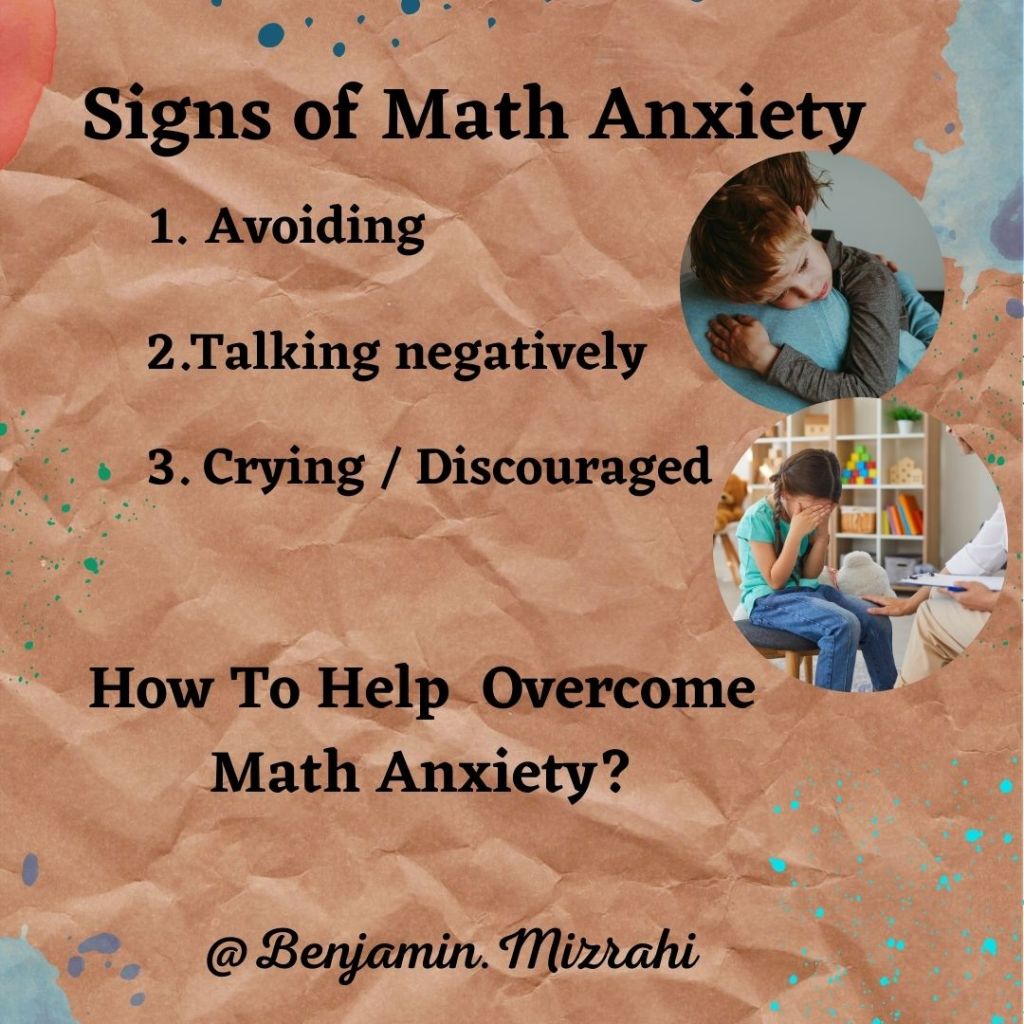
How to Help Overcome Math Anxiety?

Math anxiety can range from general discomfort and mental disorganization to feelings of panic and physical nervousness. For many students, math anxiety turns into a cycle of failure because the more worried they become, the less they learn. 

  1. Surround the child with positive reinforcement. 
  1. Supplement teaching with a qualified tutor. 
  1. Have the child write down his or he worries about math before doing It so they can realize the unfounded fears. 
  1. Try to create positive emotions by making math fun. 

Coach Benjamin Mizrahi. Educator. Learning Specialist. Family Coach. Father. Husband.   

More articles on www.MrMizrahi.blog  
Discipline Your Child with Love Not Fear

Discipline is an important and effective tool but use it in a way that keeps your child’s dignity intact. They need to understand the ways their actions affect other people, and which behaviors others will and won’t tolerate. 

Effective discipline requires guiding and redirecting your child with love, not fear. Here are some tips to help you discipline with love:  

  • Make corrections about learning rather than getting in trouble. Don’t just tell your child not to run around with food in his mouth. Explain why this rule is important. Tell your child that it isn’t safe because they could choke, and that your job is to help keep them from getting hurt. Make explanations short. Kids tune out of long-winded speeches. 
  • Yell less. Try to stay calm. Loving discipline requires us to keep a clear head so that we can talk to our children and reach their hearts as well as their ears. 
  • Teach your child healthy behavior habits. Be pro-active by working with your child to create a daily schedule and a list of responsibilities (including a chore chart). This gives them much-needed structure, and a chance to practice self-discipline by completing necessary tasks. 
  • Model good behavior. The more we model how to respond to disappointment, sadness, boredom, and not getting what we want, the more our children learn emotional discipline.
  • Acknowledge your child’s feelings. Your child may be angry and uncooperative because a playdate just ended. You can say, “I see you are feeling upset because Jack left, but you still need to pick up your train set.” 
  • Never hit, spank, shake, or slap your child. Fear-based discipline simply doesn’t work if you want to raise a healthy, well-adjusted child. 
  • Be logical about consequences. Issue consequences that make sense and are appropriate for the situation. And make sure they’re something you’re willing and able to follow through on. 
  • Hug often. Physical affection outside of discipline time is a crucial element of disciplining with love. And if you’ve established a bond of touch in your relationship with your child, it will be more natural to conclude your time of discipline with a reassuring and reconnecting hug. 

We want to inspire our children to gain our approval and that inspiration doesn’t come from fear. Rather, it comes from discipline that is positive and based on a respectful, healthy relationship between parent and child. 

How do you discipline your children with love? 

Coach Benjamin Mizrahi. Educator. Learning Specialist. Family Coach. Father. Husband.   

More articles on EXECUTIVE FUNCTIONS COACHING (mrmizrahi.com)

Help Kids Develop Healthy Self-Esteem

Good self-esteem helps children try new things, take healthy risks and solve problems. It gives them a solid foundation for their learning and development. Parents can promote healthy self-esteem by showing encouragement. 

Use the following strategies to help your child feel good about themselves:  

1. Be spontaneous and affectionate. Your love will help boost your child’s self-esteem. Every child should believe that no matter what they do—success or failure— their parents still love them and will continue to be there for them.  

2. Help your child to set achievable goals. Work with your child to establish these goals. Begin with goals that are very easy to accomplish. Give your child a taste of success and the confidence boost that goes along with it. 

3. Encourage persistence. One way you can help your child is to set a good example. Demonstrate what it means to persevere. 

4. Give your child choices. This can be as simple as giving them two options for lunch or allowing them to choose which shoes, they wear that day.  

5. Discourage perfection. Your child’s self-esteem will suffer when they realize that they can never be perfect. Show your child that you value effort and progress.  

6. Avoid over-praising. Praise your child for making a good effort. It should be noted that excessive praise has been shown to hurt a child’s confidence rather than boost it. 

7. Allow your child to overhear you complimenting them. A child gets a big boost to their self-esteem when they hear a parent praising them to another adult. Your children are always watching you. 

8. Take good care of yourself. Taking good care of yourself shows your child that you’re important. They will believe that they’re important and should take care of themselves as well. 

9. Be a positive role model. If you’re excessively harsh on yourself, pessimistic, or unrealistic about your abilities and limitations, your kids might eventually mirror you. Nurture your own self-esteem and they’ll have a great role model. 

There’s no doubt that a child with high self-esteem is happier and more confident. Teach your children to love and believe in themselves, and they’ll reap the benefits throughout their entire lives. 


Coach Benjamin Mizrahi. Educator. Learning Specialist. Family Coach. Father. Husband.   

More articles on Mr Mizrahi’s Blog – Benjamin Mizrahi

Set Limit With As Little Emotion As Possible

While totally exasperating, tantrums and pushing the limits signal a leap in your child’s development. ⁠ 
⁠ 
💡 Set your limit with as little emotion (and as few words) as possible. The more matter of fact you can be, the better. Talk in a low, steady voice and be aware of the nonverbal messages you’re sending with your facial expression and body language. Using a kind and compassionate tone can be calming to your child. (And, it’s also a way to soothe yourself during a stressful time.)⁠ 

Coach Benjamin Mizrahi. Educator. Learning Specialist. Family Coach. Father. Husband.   

More articles on EXECUTIVE FUNCTIONS COACHING (mrmizrahi.com)

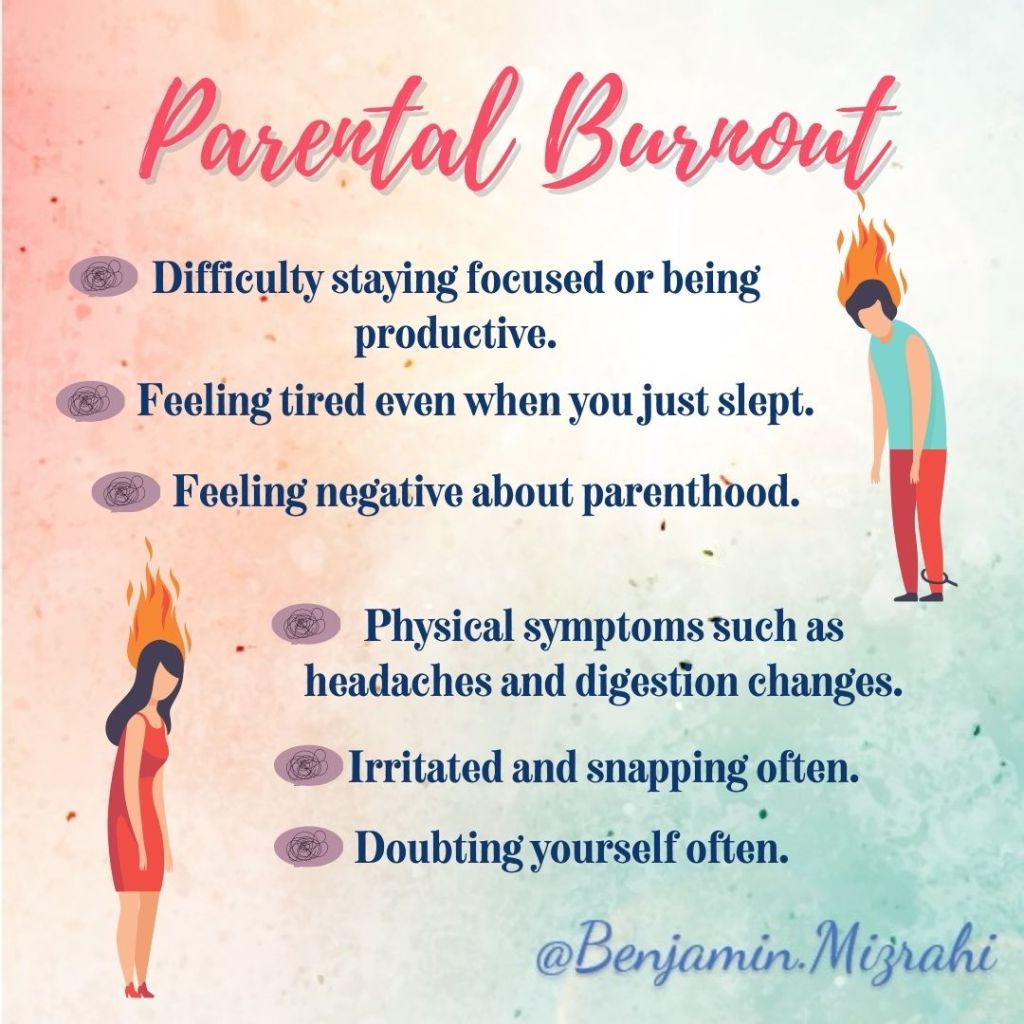
Prevent Parent Burnout

Parents of children and adolescents who have ADHD, Oppositional Defiant Disorder (ODD), and/or other psychological or neurodevelopmental conditions are at greater risk for burnout due to the challenging nature of these conditions, and particularly when the conditions are not effectively managed. When ADHD difficulties pile up and become overwhelming over time, burnout can accelerate and intensify. 

The key is to acknowledge the need to change, be kinder to yourself and others about these challenges, and start to make adjustments.  The symptoms of burnout can be an invitation to take a new path through the forest. Here are the 10 ways to address ADHD parent burnout. 

  1. Move toward acceptance of ADHD. 
  1. Get support from other parents of children and adolescents with ADHD. 
  1. Stay positive.  
  1. Create a plan to manage stressful and frustrating parenting experiences when they occur in the moment. 
  1. Enhance your self-care. 
  1. Work on improving your relationship with your child or teen. 
  1. Explore if undetected coexisting conditions exist. 
  1. Use more effective parenting skills. 
  1. Obtain and maximize treatment for your child or teen. 
  1. Consider obtaining professional help for yourself. 

Avoiding parent burnout requires real effort. When parents do better, the family improves. 

Coach Benjamin Mizrahi. Educator. Learning Specialist. Family Coach. Father. Husband.   

More articles on www.MrMizrahi.blog 
Misbehaviors Are the Clues, Not the Cause


When your child is misbehaving and they throw a huge tantrum, not listen, yell, or hit (the list could go on) of course, your instinct is to stop the misbehavior with force, to punish or to yell. I know it’s hard to keep cool in the heat of the moment, I really do. 
 
But misbehaviors are perfectly normal…. However, there is ALWAYS something beneath a child’s behavior that is motivating the child’s negative behavior. 
 
Think of it this way: Your role is not to get your child’s misbehavior to stop, your role is to guide them and teach your children with empathy and connection. 
 
The idea here is to not stop the negative behavior and make their feelings go away but to help your child work through it, manage it, and understand it- with you being there to support them with love and patience. 
 
So, when your child is misbehaving empathize, put their feelings into words, validate, talk through it with them to help them understand it better, and practice expressing big emotions in healthy ways. 
 
But don’t just stop there! During calm moments during the day talk or even play (act out) different situations and how to manage and cope with them in healthy ways. 
 
Your conversation may look something like this: 
 
✅ “It seems like you are feeling frustrated which made you want to hit…I understand that you are mad because your sister took your toy without asking.” 
 
✅ “It’s okay to feel mad and frustrated.” 
 
✅ “I am not willing to allow you to hit your sister. Why don’t you and I go sit over here together and take some deep breaths?’’ Encourage your child to talk about the situation and what they could do next time instead of hitting. 
 
✅ “How do you think your sister feels when you hit her? Yeah…sad, what do you think we could do?’’  You are providing an opportunity for your child to empathize with the other person, and you are encouraging them to apologize without making an apology a demand. 
 
Do you think you could give this a try? 


Coach Benjamin Mizrahi. Educator. Learning Specialist. Family Coach. Father. Husband.   

More articles on EXECUTIVE FUNCTIONS COACHING (mrmizrahi.com)

Help Children Learn from Mistakes

Research shows that praising children for their intelligence can make them less likely to persist in the face of a challenge. 

Giving meaningful and specific praise motivates children who are learning from mistakes. Praise should focus on developing their character strengths, helping them understand their internal abilities. It is an opportunity to develop a child’s resilience. 

Here are the ten ways to help your children and teens learn from mistakes: 

  1. Acknowledge that you don’t expect them to be perfect. 
  1. Let them know your love is unconditional, regardless of their mistakes or lapses in judgment. 
  1. Don’t rescue kids from their mistakes. Instead, focus on solutions. 
  1. Provide examples of your own mistakes, the consequences, and how you learned from them. 
  1. Encourage children to take responsibility for their mistakes and not blame others. 
  1. Avoid pointing out your child’s past mistakes. Instead, focus on the one at hand. 
  1. Praise children for their ability to admit their mistakes. 
  1. Praise children for their efforts and courage to overcome setbacks. 
  1. Mentor your child on how to apologize when their mistakes have hurt others. 
  1. Help kids look at the good side of getting things wrong. 

Learning from mistakes and failures isn’t easy. All children need encouragement to learn and succeed. Positive words from parents, teachers, and mentors during difficult learning challenges are essential for children’s growth and development. 

Coach Benjamin Mizrahi. Educator. Learning Specialist. Family Coach. Father. Husband. 

More articles on www.MrMizrahi.blog  
Importance of Setting Family Ground Rules

The toddler/kid years are chaotic. They’re messy + loud. BUT we have hacks that can calm the chaos in our daily lives. One of them? Family ground rules. 
 
When we repeat these “ground rules” often, two important things happen: 
 
1. We shape their inner voice: these “ground rules” start to become part of who they are. Each time we repeat these ground rules, our kid is one step closer to becoming a kind, respectful, resilient person. 
 
2. When things do go off track – like, your toddler hits their brother in the face – you’ll have your clear family rules to draw back on and help you hold boundaries. 
 
What ground rules should we start with? For toddlers, we want to stick to things that we repeat often and are important at this age. Here are a few ground rules to practice daily: 
 
– We are kind, even when we don’t agree 
Different opinions/perspectives are part of life! A great way to teach this is to model – have a different opinion with your partner or a friend and show how you can have differences yet be kind/respectful. 
 
– We can feel angry AND be safe at the same time 
All feelings are OK, certain behaviors are NOT ok. Feeling angry? Perfectly healthy. Hitting when angry? Not ok. 
 
-Body Boundaries – We stop rough play/touching when someone says “stop” 
Make it a rule that when someone says “stop” you put your hands up and stop touching them. This goes both ways, so you want to teach your toddler to put their hands up when someone says “stop,” but also teach them that when someone is playing too rough/tickling and they don’t want to? Say “stop!” 
 
Crucial: Follow these guidelines with your toddler! When you’re tickling, etc., if your toddler says “stop,” stop. Put your hands up, and make it known that you – and others – listen to their no! 
 

Family Ground rules are helpful for children to understand what the limits are and what behavior is expected. They are also helpful for adults to prevent arguments with their child and address concerns appropriately in the family. Effective ground rules can promote better communication, autonomy and discipline. However, ground rules are only effective when we make them realistic, achievable rules, stick to them, and give reasonable consequences when the rules are not followed. 

Coach Benjamin Mizrahi. Educator. Learning Specialist. Family Coach. Father. Husband.   

More articles on www.MrMizrahi.blog  

Don’t Miss the Joy of Family Life

Enjoying your child and sharing in the awe of discovering what it means to be alive, to be a person in a wondrous world, is crucial for the development of your child’s positive sense of self. 
 
When we are respectful and compassionate toward ourselves and our children, we often gain a fresh perspective that can enrich our enjoyment of life together. Remembering and reflecting on the experiences of day-to-day life creates a deep sense of feeling connected and understood. 
 
When parents feel pressure in their busy lives, they may often feel strained to keep up with all the details of managing family schedules. Children need to be enjoyed and valued, not managed. 
 
We often focus on the problems of life rather than on the possibilities for enjoyment and the learning available to us. 
 
When we are too busy doing things for our children, we forget how important it is to simply be with them. We can delight in the opportunity to join with our children in the amazing experience of growing together. 
 
Learning to share in the joy of living is at the heart of a rewarding parent- child relationship.

Coach Benjamin Mizrahi. Educator. Learning Specialist. Family Coach. Father. Husband.   

More articles on www.MrMizrahi.blog