Last night, my wife and I went to the theater to see the movie Wonder.
WONDER tells the inspiring and heartwarming story of August Pullman. Born with facial deformation that, up until 5th grade, had prevented him from going to a mainstream school, Auggie becomes the most unlikely of heroes when he enters his fifth-grade class.
Wonder is an earnest and emotional family drama. Auggie meets both cruel bullies and good friends as he attends school for the first time; his supportive family (including his parents, played by Julia Roberts and Owen Wilson) is always there for him — even when he tries to push them away. The movie has clear positive messages about choosing kindness, appreciating everyone for who they are (rather than what they look like), true friendship; empathy and perseverance.
If you’re looking for your next family activity and your kids are middle schooler or older, take them to see Wonder. It’s important to get involved in your kids’ media lives -– and your kids will love it too.
Talk about it. Help them become critical media consumers. When credits roll or the next day, make time to chat about what you watched. Kids might be interested in learning more about animation or Hollywood history. Visit the library to follow up on interests piqued by the movie. Talking with kids about how movie characters handled situations can be a subtle way to reinforce your family’s values or get kids to open up about their lives.
Check out these conversation starters:
TALK TO YOUR KIDS ABOUT …
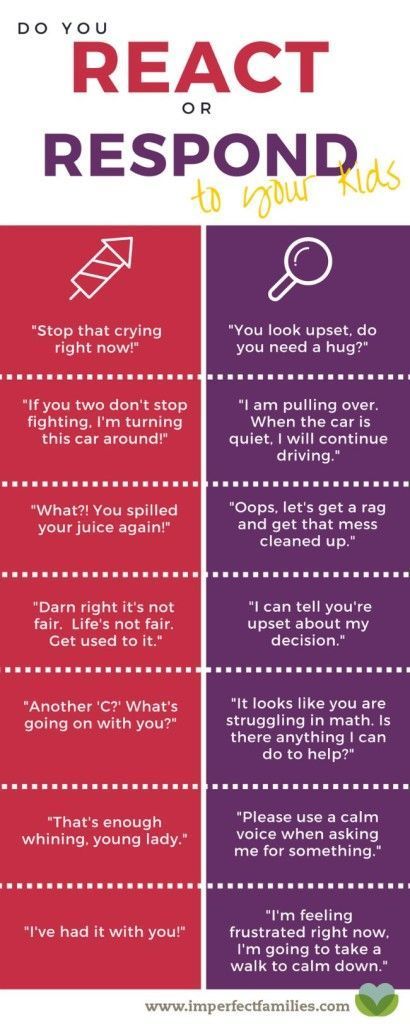
Families can talk about how the other kids react to Auggie in Wonder. What do they learn about him over the course of the movie? What do you think you’d do in their position?
How does being bullied affect Auggie? How did you feel about Julian by the time the movie was over? What role does peer pressure play in some of the bullyings? How would you handle the situation that Jack Will faces?
Have you ever noticed that staying organized — or getting started on a project and seeing it through to completion — are all in a day’s work for some people, but for others, they don’t know where to begin?
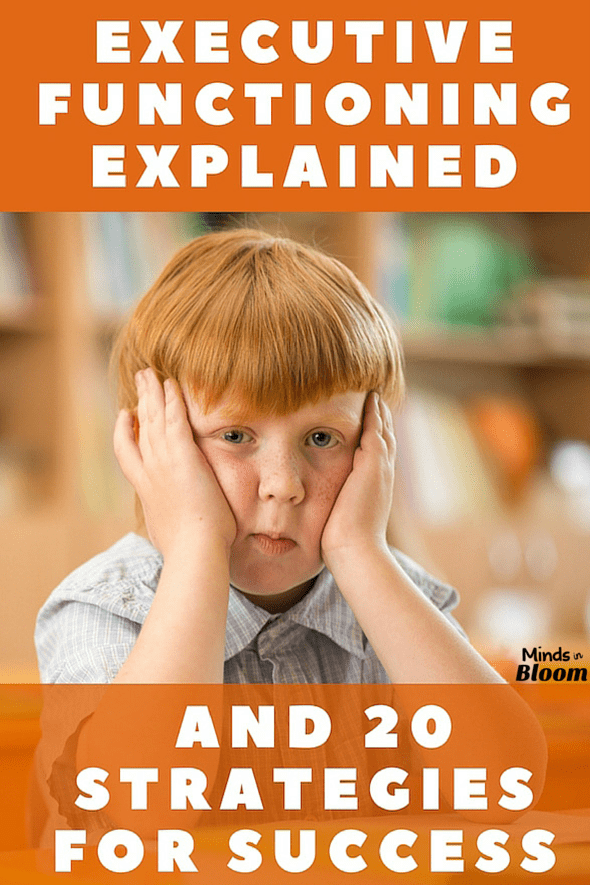
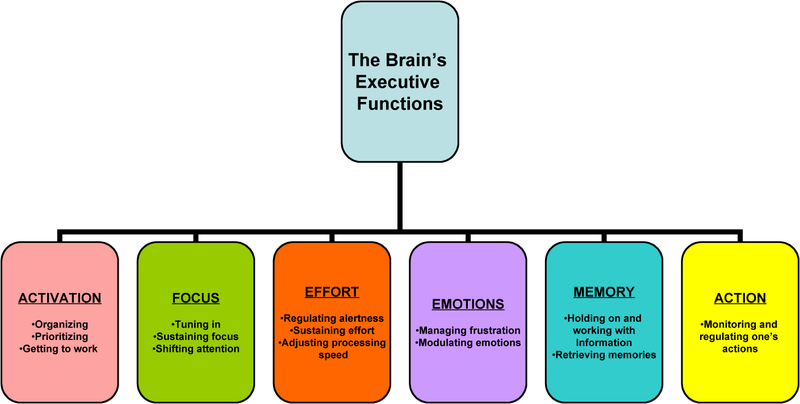
Well, that might be due to executive functions and how well they are working — or not working. Executive functions are the cognitive skills that give us the ability to focus, plan, and act in a goal-directed manner — and current research shows that these functions are responsible for how effective we are at managing ourselves. Basically, these functions are the CEOs of our brains.
For the most part, we don’t need to consciously access these skills for day-to-day habits or routines. However, when we face new challenges or stressors that is when the CEO must take charge. And when it is not managing effectively, that’s when we forget things, can’t get organized, can’t get started, lose track of time, and lose our stream of thought. It’s behavior that makes some children look unmotivated, uncaring, and, well, unintelligent — while nothing could be further from the truth. By and large, these children are really suffering from a neurologically based difficulty, which results from incomplete or immature development of their frontal/prefrontal cortex of their brains. It’s not that these kids won’t perform, it’s that they can’t on their own … yet.
So how can we help? There are two distinct approaches. First, modify the environment. Help structure your child’s work- space, modify his work, and provide more prompts. Second, model actions and behaviors and join in with him as he works on his skills. Don’t be concerned that you may enable your child. Before he is ready to be independent, he needs to develop the necessary skills. Once the skills are developed, you will be able to gradually lessen your active involvement with your child. It is important to recognize that weaknesses in executive functions are real and neurologically based. There is no shortage of strategies and devices to help children — and adults — improve their executive functioning. Children need modeling. The skills they need to be organized and manage their time effectively are not difficult, but they are not necessarily intuitive. Providing support and guidance, either directly or with outside support, will go a long way in helping your child be and feel successful. Here are some tips for your child to organize school materials and remember important information:
Day planner
• Think of an agenda book or day planner as your calendar for your whole life, not just school. • Write all of your school assignments, after-school activities, and social plans here. • Use a large paper clip to mark the page you need to be on for quicker entry. Binders and notebooks • Use different colors for each subject binder and notebook. • For each subject, you will have two three-ring binders. One will be the everyday binder, and the second will be the reserve binder, where all of your papers will be moved to after tests. This allows you to straighten out and empty excess papers so you can focus on the current work. (Note: Check with each subject teacher before removing papers from your binder.) • Both binders for each subject should be the same color (blue for math, green for science, etc.) and have the same labeled dividers. • Keep one master reference binder with dividers for each subject. Here, you can keep any material that you might need to use in years to come, such as math formulas, social studies facts or periodic tables. • Perhaps two of your subjects can be combined into one larger binder or notebook for less to carry. • Be sure to label everything! Big bumper stickers work great. Have fun, and be creative!
Master folder Consider a multi-pocket folder to keep with you all day. It can hold the day’s hand- outs, work to be turned in, and your agenda book. This is an excellent tool for the overall organization of papers to go to and from school. It should be cleaned out each week, by transferring the appropriate papers to either binders or the recycle bin. (An excellent sturdy folder can be found at Nick’s Folders for $3.50. Not an affiliate.)
Locker • Clean out your locker and/or workspace every week, to lessen the chance of losing papers. • Consider small trays to keep extra pens, pencils, tissues, erasers, etc. • Keep a dry-erase board or small notepad for writing reminders. • Try to keep your backpack on the hook, so there is more room to store items. Backpack • Keep an extra pen and pencil inside at all times. • Look in your assignment book and check your locker’s dry-erase board before packing up for the day. • When you get home, empty the entire bag near your workspace and sort the contents for homework and notes for parents. • Pack it up before you go to sleep at night, which will decrease the odds of forgetting things.
Alarms • A kitchen timer is great for keeping you on task and allowing for time-limited breaks.Set it for various intervals to see if you are on task and on track. What works for you? Set a start time or break time on your computer or cellphone alarm for a discreet nudge. Set an alarm for the time you want to go to sleep as a reminder to pack up, brush teeth, etc.
Lists • Keep a dry-erase board or a small pad of paper by your workspace and use it to jot down things on your mind, so they can be done later and not distract you now. Write out your homework plan for the day — what you will do and in what order? It’s a great feeling to cross items off! Use it to plan out long-term projects or for math problems and other quick temporary notes.
Structures A structure is any device that reminds you, visually, of something important. They work because they interrupt your ordinary mind flow and grab your attention. Some of the best structures come from your intuition and may not seem to make sense at first. Be creative — experiment with different ways to jolt your memory! Here are some examples: • Wear a rubber band on your wrist when you want to remember to do something, such as breathe deeply, speak powerfully, sit up straight, or take home your violin. • Put a chair by your door to remind yourself to take along important items tomorrow. • Send yourself an e-mail, text or voice mail to request that a certain task be done. • Have some friends over once a month. This can be a structure for cleaning your room or keeping up relationships with friends. • Devise an intentionally fabricated deadline on the day you start a project — such as scheduling a time to show a friend or family member your completed project. • Schedule study time with one friend a week for two months to get you to study a particular subject. • Counting is helpful to make you aware of your behavior. For instance, count how often you participate in class and work on increasing the number each day. Counting does not require you to do anything other than notice, but noting every time you do something heightens your awareness. • A special slogan on your key chain can be a structure to remember to smile or be positive.
• A toy lion on your desk can remind you to be ferocious in pursuit of a goal. • Put your keys in the refrigerator so you remember your lunch. • Make a sign around your work area: “Don’t give in to the impulse!” • Create a screen saver with one-line, motivational statements. • A coach is one of the best structures. Text or e-mail your coach every day when a certain task is done. • “To do” lists are not meant as nag lists — just a place to hold important things. Be creative where you put your notes; try to have it somewhere in your field of vision on a regular basis: the refrigerator, your desk, next to your bed. Try to develop a consistent habit of where you write and keep important notes.
Many students are now being diagnosed with executive functioning problems, and schools are scrambling to meet the needs of this population of learners. Because many teachers and administrators don’t understand the difficulties associated with this problem, countless students with these difficulties are mislabeled as careless, lazy, or unmotivated. Unfortunately, these misunderstood learners often become discouraged, and many experience feelings of helplessness, depression and anxiety.
So What Can We Do to Help?
First, we need to understand the complex nature of executive functioning. Then, we need to educate teachers and administrators on what they can do to accommodate these capable learners.
What Is Executive Functioning?
Executive Functioning (EF) is the command and control center of the brain. Much like an air traffic controller, EF manages and manipulates information traveling in and out of our consciousness. It’s a place where learned experiences and present actions connect. Another appropriate metaphor is to think of EF as the conductor of cognitive skills. EF directs the cognitive performance played by our senses.
How Does EF Impact a Learner’s Cognitive Performance?
Slows processing speed
Impairs motivation
Undermines stamina
Sabotages goal-directed persistence
Impedes one’s ability to hold and manipulate information
Blocks one’s ability to retrieve information
Triggers impulsive behaviors
Minimizes one’s ability to sustain attention
How Does EF Impact a Learner’s Emotional Regulation?
Minimizes one’s ability to manage frustrating situations
Triggers an overall negative attitude
Sparks feelings of anxiety
Blocks one’s ability to prioritize
Inhibits one’s ability to self-regulate
How Does EF Impact Schooling?
All of these internal difficulties can have a profound impact on a learner’s educational experience. Common manifestations include:
Difficulties initiating schoolwork
Problems recording assignments
Issues locating and handing in assignments
Problems maintaining an organized book bag, locker, and homework space
Trouble arriving to class on time and keeping appointments
What Are Some General Strategies that Can Help Those Who Struggle with EF?
Participate in Cognitive Behavioral Therapy
Embrace meditation and mindfulness training
Pursue cognitive remedial therapy in areas such as working memory and emotional regulation
Maintain a structured daily routine
Use planners and PDA technology
What Are Some Academic Solutions?
Create a structured routine for completing homework
Make to-do checklists
Help student motivation by offering incentives and positive reinforcement
Create and use graphic organizers for writing
Use technology, such as a smartphone, to create reminders
Work with someone who can help:
Set and monitor priorities
Break large assignments into manageable chunks
Demonstrate note-taking skills
Teach study skills and test-taking strategies
Generate memory strategies
Teach metacognitive skills by thinking through the process aloud
Academic Tools for Success
There are a number of tools on the market that can help support the needs of students with executive functioning challenges. Here are some free sample pages from my publication, Planning Time Management and Organization for Success. If you want to strengthen executive functioning while having fun, try my Executive Functioning Card Games.
Executive functions develop gradually and slowly from birth to the end of adolescence or early adulthood.
If the first manifestations of executive functions are visible from the first year of life, the process of maturation is slow and the development of these abilities also involves learning. It is therefore normal for children to have difficulty in controlling themselves, to focus their attention for a certain time, to adapt to changes, to stop an activity to start a different type of activity, to follow rules, to manage complex tasks, to give up immediate gratification …
The progressive development of executive functions explains that one or more EF deficiencies exist during childhood and persists partly in adolescents. The development of executive functions is rapid during the preschool years and accelerates again in adolescence. It must be emphasized that individual variations are common.
At 3 years, children are able to perform tasks that have two different rules (for example: if you see a red apple on the screen, press such button, if you see a green apple, press another button). They are able to focus their attention on one of the two rules the time necessary to reach the goal and to inhibit the other rule, the two instructions being maintained in the short-term memory.
While it is difficult for 3-years-old to consider several representations of the same object, from 4 years old, children can recognize an object for what it is and its resemblance to another (it is a sponge, it looks like a pebble).
After the age of 3, the efficiency of the inhibitory control increases, the child gradually becomes able to defer a reward to obtain a greater one. He controls his desires and emotions.
At age 5, the child can inhibit one rule to activate another even when it concerns two characteristics of the same object (if the red object is round, press a button, if the red object is square, press a other button). He can successfully resolve a conflict and inhibit an action that has become routine (after pressing a button several times for the red object, it must change the button if the object is also square). As memory develops, the child remembers the places and objects he has already explored, and he can think of different strategies and imagine alternatives.
The executive functions of 7 years old children approach those of adults, if we stick to what can be visualized in brain imaging, ie concerning the development of neural connections involved in executive control. Children of this age can focus their attention on a task. The self-regulatory capacity continues to develop between 10 years old until the end of adolescence.
The development of executive control also implies a diversification of the processes involved, a specialization (the child is gradually able to remain focused on a goal and choose the behaviors best adapted to a situation) and a control more and more self-directed ( it depends less and less on the adult and the context to self-regulate) and anticipated (he is capable of more planning).
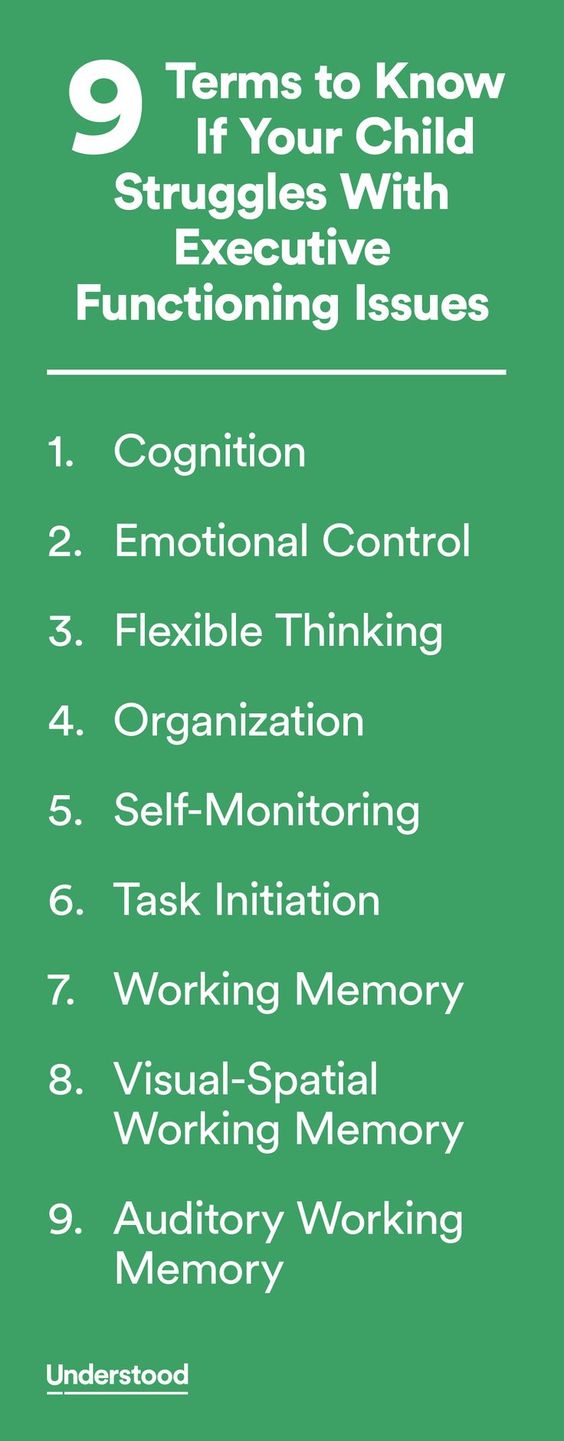
Executive Functions (EF) include high-order cognitive processes that control, manage, plan cognitive, emotional, and behavioral functions aimed at achieving a goal. EF are required for monitoring and adapting your behavior to new contextual conditions. They can be thought of as the set of skills necessary to voluntarily guide behavior aimed at a goal, especially in new and unusual situations.
Different sub domains of the EF may exist, some of which are defined as nuclear or basic:
working memory;
inhibition;
interference control;
cognitive flexibility, which includes creativity and ability to adapt quickly and flexibly to changing external circumstances (Diamond, 2013).
These Nuclear EF are the basis of other top-level EF such as reasoning, problem solving, and planning.
A large literature suggests that in children with neuro-developmental disorders, some EF sub-domains may be compromised. In particular, children with Language Disorder often show poorer skills than typical developmental peers in evidence that evaluates work memory, inhibition, and cognitive flexibility.
Increasing attention to the study of EF has helped generate evaluation tools that can be used since the preschool age.
Detecting the behavior of children in relation to their EF can be achieved by standardized neuropsychological tests administered in a structured situation, or through systematic observation of the behavior of children in different life contexts.
As a parent or a teacher, you play a leading role in building self-esteem in children with learning difficulties. How can you help him reach his full potential?
What is self-esteem?
Self-esteem is defined as the awareness of one’s personal worth, that is, of one’s strengths, difficulties and personal limits in different spheres of one’s life (Duclos). It represents a positive value that one attributes to oneself as an individual. It varies according to different factors, including the successes and failures of the child.
Self-esteem and motivation
Therefore, a child with learning difficulties is likely to have his self-esteem severely undermined by some difficult school challenges. As a result, school performance influences a student’s self-esteem. Thus, it often happens that the school motivation of the student in difficulty is shaken because he is confronted with his daily deficiencies in the classroom.
In order to increase the child’s academic motivation and self-esteem, it is important that the child be able to perceive his or her strengths in school in order to seriously engage in school tasks and persevere in learning. despite his difficulties.
Moreover, it is through the interaction with its environment (teachers, peers and parents) that the child becomes aware of his / her personal value, hence the importance of working on your child’s relationship with you and his / her teacher. . In this sense, the quality of the parent-child relationship has a direct impact on self-esteem, as children who receive little attention from their parents often have low self-esteem.
To increase your child’s self-esteem, here are some helpful strategies.
Strategies to increase the child’s self-esteem at home
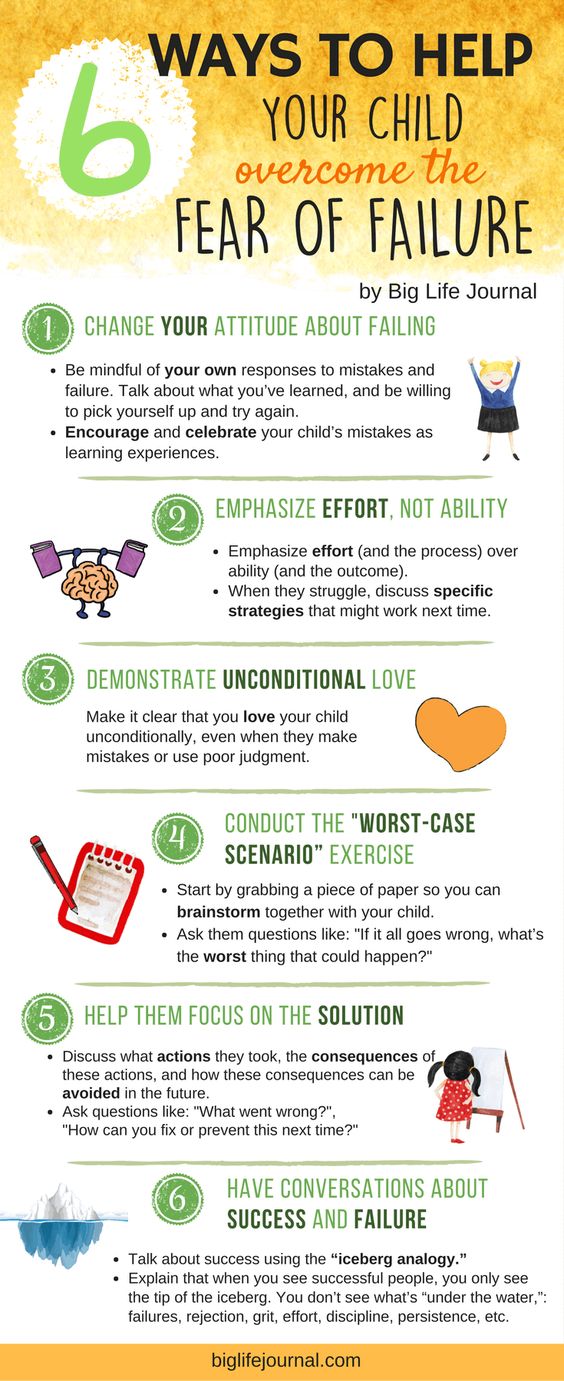
Demonstrate your unconditional love and meet his needs with consistency. Be available and reliable every day. Make promises and commitments that you can keep. Better to say “no” and change your mind than the opposite. In addition, be very vigilant when criticizing your child. Negative connotations (hyperactive, lost, irritating) stigmatize the child and undermine the construction of his identity.
Have realistic expectations of him and make sure he sets goals for himself. Make sure his expectations are not only realistic, but tailored to his abilities. In addition, your child should be valued for their progress in school and the effort they provide rather than their academic performance.
Give him proportionate responsibilities at home: Offer your child tasks to promote his sense of competence. It is essential to give him responsibilities according to his age. Also, make sure that he understands what he needs to do by accompanying him for the first time so that he can achieve success. Tasks like taking care of the plants and feeding the animals offer the opportunity for the children to see that they are indispensable at home.
Provide a reassuring home setting: Clear and understood rules and boundaries are essential to provide a safe living environment. A known schedule and a stable daily routine are essential to avoid stress in the child.
Promote its autonomy: avoid overprotecting your child. Let him take initiatives and risks and explore his environment so that he learns. In this way, he will gain confidence in his own ability to assess situations.
Focus on his strengths rather than difficulties. Highlight what your child does well at home rather than what he not doing as well.Value your child’s efforts and especially his non-school-related skills, such as artistic or manual skills.
Highlight his successes and past successes in reactivating his sense of competence.
Find a place (bulletin board) where you show off his success or find a box where you keep a record of them. As the saying goes: “Words vanish, writing remains”.
Have fun with your child: it’s important to laugh with him. Use humor to play down mistakes or failures. Help him see the positive in every unsuccessful challenge. Take the time to play with your child or spend quality time with him. The more time you spend with him, the more he will feel that he is important to you.
Register him for an activity or workshop he likes (karate, visual arts, singing). Your child must develop strengths in areas other than the school sphere. Even if he does not want or tells you that nothing interest him, insist! Expose him gradually to something new, if he feels anxious about joining a new group, help him for example by accompanying him or warning the person in charge.
Strategies to increase the child’s self-esteem at school
Respect the rhythm of the child. Children with learning difficulties need to be monitored diligently and patiently. We must be sure to respect their abilities. Moreover, for a child to be successful, it is important to have realistic goals with the certainty that they can reach them. In psycho education, we are talking about challenges that are graduated and proportional to the child’s abilities. In class, it is essential to adapt the requirements to the child’s skills.
Provide tasks that are appropriate to the student’s abilities and strengths. Give the struggling child special responsibilities: take care of the class e-mail, take attendance, etc.
Emphasize all efforts and consistently offer encouragement. It is essential that the child be recognized for his efforts, however small they may be.
It is very important to value initiatives and creativity. A weaker school child can draw paintings or plans worthy of an architect. Try to make the most out of the strengths of the child with difficulties.
Increase his sense of belonging to the school by encouraging the child to make friends at school, developing social skills, and having them deal with conflicts themselves. Strongly insist that he participate in extracurricular activities that interest him so that he develops a sense of attachment to his school.
Plan an intervention plan adapted to the needs of the child. Make sure your child can benefit from additional supports at school if they have a diagnosis of a learning disability, language impairment or mental health. In addition, it is essential that he understands the usefulness of the means contained in the intervention plan. Involve him / her in the development of the means and regularly review the strategies developed with this one.
Have a caring presence for the child. The teacher’s attitude clearly influences the child’s self-esteem and motivation. Thus, the teacher must be a driver of change and emphasize the quality of the relationship with his students.
Plan a code with the child if the child is discouraged by a task. It may be interesting to identify a code that the child can use when he feels uncomfortable or wants to ask for help discreetly.
Establish constant communication with parents. It is important to communicate to parents the good deeds of their child, whether in the diary or by email, so that the child feels recognition for his efforts.
Some activities to increase self-esteem at school You can give a small box or paper bag to each student that they can personalize. Then, each student will have to write a quality, compliment or positive sentence on a piece of paper for each student in their class. Thereafter, the teacher will accumulate the small pieces of paper of each student and will deposit them in the bags or boxes of each one. It may be appropriate to read the messages to ensure that they are respectful.
Identify the student who did his best or persevered during the week with a special hat or scarf.
Celebratory chair! For your student’s birthday, ask him to sit in front of the class and everyone in the class tell him what makes him great and special.
Remember
Self-esteem is defined as the awareness of one’s strengths, difficulties and limitations.
A student with learning difficulties may have low self-esteem, which reduces motivation.
Parents can help their child’s self-esteem at home by giving them responsibilities commensurate with their abilities, spending time with them, and maintaining realistic expectations.
Teachers can also promote the child’s self-esteem, including valuing his efforts and working based on the kid’s pace.
Source used: Duclos, G. (2000). L’estime de soi : un passeport pour la vie, éditions Hôpital Sainte-Justine, Montréal.







 EXECUTIVE FUNCTIONS COACHING