What do we tell parents when they’re worried about their child’s development? We say “every baby is different.” We understand that children hit milestones when they’re ready, but what about parents? We’re all so different. Some of us meet our babies and it’s love at first sight; others take a bit to really feel connected… Some parents transition to parenthood and feel like it was a natural process, for others it can feel foreign… It’s okay! We’re all different. We all develop on our own time. Don’t be consumed by where you “should be.” We’re all doing the best we can. Did you feel like your development as a parent was different than you expected? What was harder than you anticipated? What felt more natural?
Coach Benjamin Mizrahi. Educator. Learning Specialist. Family Coach. Father. Husband.
Diet and behavior go hand in hand so it’s no surprise that many of the symptoms of ADHD like hyperactivity and inability to focus can sometimes be improved by changing the way your child eats. Studies have shown that eating foods high in protein, controlling sugar intake, and avoiding artificial additives can go a long way towards managing ADHD naturally.
The following foods are kid-friendly and offer nutrients that are commonly known to improve cognitive function.
🔹Walnuts(Omega 3’s): Studies show that Omega-3’s help control behavior and improve memory. Surprisingly, Walnuts are a great source of Omega 3’s and are perfect for snacking. They can also be used to replace less healthful ingredients in recipes by adding them to breads, salads, and casseroles. Or try including them in your favorite cookie recipe which will help to add protein and trace minerals such as magnesium, manganese and phosphorus to an already delicious treat.
🔹Crab Cakes (Zinc): Seafood like crab and lobster are rich in the mineral zinc. Zinc is important to cognitive function and plays a key role in modulating spatial learning and memory. Try working zinc into your child’s diet by making crab cakes once a week for dinner. This gluten free crab cake recipe is a great option for restricted diets! Roasted pumpkin seeds are another good source of zinc and can be easily incorporated into your child’s diet for lunch or as a healthy snack. Other good sources are beef, spinach, cashews and beans. It’s also important to note that too much zinc has been found to have the opposite effect – actually impairing memory and learning.
🔹Bananas (Magnesium): Foods rich in magnesium like bananas and black beans can help with sleep and relaxation. A well-rested, calm child can concentrate much better than one who has been tossing and turning all night or who is irritable, weak and exhausted – common symptoms of magnesium deficiency. That concentration leads to better focus and memory. Research has also suggested that B vitamins (especially vitamin B6) promote the absorption of magnesium in the gut.
🔹Spinach (Iron): A 2004 study showed that iron deficiencies in children may contribute to ADHD symptoms and therefore iron supplementation may result in improved attention for children with ADHD. Spinach is a commonly known source of iron and packs a double punch because it is also rich in magnesium. Other iron rich foods include red meats, lentils and sesame seeds.
🔹Citrus Fruits (Vitamin C): Vitamin C is a powerful antioxidant and is necessary for production of the neurotransmitter norepinephrine, which is responsible for controlling attention and responding actions. Vitamin C also offers a boost to the immune system. Important to Note: Vitamin C should not be taken less than an hour before or after taking ADHD meds as it can prevent the med from being absorbed.
🔹Peanut Butter (Protein): Foods rich in protein are key to increasing attentiveness and focus. Assuming your child does not have a peanut allergy, peanut butter is a great kid-friendly source of protein. While PB&J sandwiches are a common childhood favorite, you can also serve with celery sticks or bananas if your child is gluten-free. If your child is a picky eater, protein shakes are another option for the sensory sensitive – who usually find comfort in drinking thick drinks through a straw. Look for brands that are low in sugar and free of artificial flavors and preservatives. This peanut butter banana smoothie recipe includes spinach and is gluten-free!
Sometimes our kids do things that make us scratch our heads.
They freak out over small things, like what color cup they got at dinner, for seemingly no reason (no adults ever do that, right?
One of the things we can do as caregivers or parents is to become curious about our children’s behavior.
Almost like a detective
Slow down and take time to consider WHY your child might be acting a certain way or engaging in a certain behavior.
If you can figure out the WHY, it becomes much easier to respond.
And your child might feel better understood by you.
You won’t always be able to figure it out, or you may be way off base and that’s okay.
Remain curious and caring.
P.S. Of course this becomes easier when your kids are older and are better able to communicate what’s going on in their inner world. But maintain your curiosity. It can help your preteen, teen, etc. know that you care.
Coach Benjamin Mizrahi. Educator. Learning Specialist. Family Coach. Father. Husband.
There are often challenges that come with parenting a child with ADHD, often centering around positive ways to encourage a child to stay focused for example on household tasks like cleaning up a room or doing homework. Challenges can spill into school as well, sitting back and watching your child slip behind in school because they simply can’t focus can be heartbreaking. Although medication and behavioral techniques are options that families explore to help their child, here are five positive ways that are sensitive to the needs of a child that may have ADHD that many families find helpful to encourage more focus:
1. Diet – As the saying goes, “you are what you eat.” Practicing a balanced diet of healthy foods can help the child focus. Using brain-enhancing foods such as eggs and berries can help align your child’s thoughts while providing the nutrition they require. Use more fruits and vegetables for after-school snacks instead of brownies or candy. Another aspect to diet is that some cases of ADHD were linked to an allergic reaction to a food that the child consumes. Once the food was removed, the child started to level out.
2. Speak Directly – Yelling up the stairs for your child to do something does not work well. Besides, it’s better to converse one-on-one, especially for the child that needs help focusing. Have them focus on you while you provide instruction. This may be difficult if the child fidgets a lot, but speaking directly to him or her can help them absorb what needs to be done. Touching a child’s arm while speaking can be very beneficial as well.
3. Silence – When giving a child instruction, it is better to eliminate any audible distractions to help him or her focus on you. Even the slightest of background noises can pull his or her attention away from you. The child isn’t doing this to purposely make you angry. He or she simply doesn’t know any better and some impulses are overwhelming. Turning off the television, music, and anything else that can be a distraction will help greatly.
4. Patience – It can be greatly frustrating for a parent to try and speak to a child that continuously moves about or has a mind that wanders. You need to keep yourself centered and realize that this is a challenge that the child is still learning to cope with. It may get better over time, but for now you need to be patient. If your child won’t understand why you are angry with them – that can be devastating for a little one.
5. Homeschooling – If you live in an area where one-on-one instruction from a teacher’s aide or other qualified professional is unavailable in school, it may be in your child’s best interest to try homeschooling. Many ADHD children have problems learning while in large groups of students. Since they are easily distracted. A one-on-one approach to learning can be greatly beneficial to teach your child everything they will need to know in order to succeed.
While your child may seem like a little ball of energy, you can help focus that power to the child’s benefit. It’s not going to become an overnight fix, and you will have to put work into helping your child succeed. Just keep in mind that many of the experiences your child is facing right now are new concepts for him or her. Don’t judge what you think should be easy based on your decades worth of experience. Practice patience for your child and everything will piece together.
Coach Benjamin Mizrahi. Educator. Learning Specialist. Family Coach. Father. Husband.
As parents, we want our kids to grow up confident, with an amazing sense of self-worth, a whole lot of resilience and respect for others, and the world around them. As adults, we know persistence and tenacity are important traits when the going becomes tough.
Children are a blank slate when they are born. It is a scary thought, but in the early years, children may well become what adults tell them they are. The child who is told they are stupid and worthless will believe that is what they are. A child who is nurtured to believe in him or herself, encouraged to take risks and is continuously reinforced for their efforts with positive affirmations and respect, will most likely develop a strong belief in him or herself and their capabilities.
Kids don’t want your power at all. They want their own. They want to feel like they have a say, a sense of control over their space and their lives.
It’s hard to have that experience when they are bombarded with tons of rules, restrictions, and hearing ‘no’ a lot.
Instead, find ways to empower your kids. What does empower mean?
Empower: to make someone stronger and more confident, especially in controlling their life and claiming their rights.
It is possible to do this with all kids of all ages. It’s actually quite liberating for them and for you.
Here are tips to empower your kids:
And yes, as they grow, their peers and teachers will and do influence their sense of self, but we can only hope the positive foundations we have nurtured are solidly in place. Here are 8 tips to empower kids so they can develop into confident, happy, respectful, well-adjusted and resilient teenagers and adults.
1. Give your child a choice.
From a young age, encourage your child to make decisions that directly relate to them. For example, allow your child to choose between cereal or toast for breakfast; the red, pink, blue or green toothbrush; the orange T-shirt or the striped T-shirt. Choosing their own outfits is always interesting! Choice and voice go together. Allowing your child choices gives them a voice in what directly relates to them and their daily life.
2. Listen to your child.
Not only listen to your child’s voice but note their moods and listen for what is NOT being said. When you ask your child how they are after school, REALLY ask them how they are. Stop what you are doing and engage. Find out what may be upsetting them or what may be giving them joy. Ensure nothing is off the table and ensure your child can tell you or ask you about anything. And if your child doesn’t like someone or doesn’t wish to go with a certain person, listen. I don’t wish to scare you unnecessarily, but this is one of the signs a child may indirectly provide if they are being sexually abused.
3. Teach your child Body Safety.
There is nothing more empowering than teaching your child age-appropriate Body Safety Education. Providing children with knowledge about their personal boundaries and their rights is incredibly empowering. A child educated in Body Safety knows to tell if they are touched inappropriately, and they are far less likely to become a victim of sexual abuse.
4. Allow your child to take risks.
Trust your child to explore their environment and this means taking risks. If possible, try to stop yourself from reaching out. Trust your child to climb that tree, go down that big slide and swim a lap alone. Risking on purpose is important for your child to develop self-confidence. Hold yourself back, not your child, and allow them to explore their world.
5. Use your words wisely.
Encourage your child’s endeavors with words such as smart, amazing, strong, creative, talented, etc. Particularly with daughters — try not to focus on their physical appearance and focus on their talents and creative pursuits. When in “discussions” with older kids, remember what has been said can’t be unsaid. As you child drifts off to sleep, whisper something positive about the day’s activities that relates directly to them. Going to sleep feeling positive, loved and safe is empowering!
6. Encourage your child to follow their interests.
Your child’s interests may not always be your interests but if your child loves to dance or play football then be as supportive and encouraging as you can. I know! This should go without saying!
7. Allow your child to greet others in a way they are comfortable with.
When greeting relatives or friends allow your child to greet others with a high five or a hand-shake if they don’t wish to be hugged or kissed. Just because your child is a child doesn’t mean they should be forced to show affection. This only gives them the message that their wishes don’t matter. Your child should give hugs and kisses willingly, and all adults and other children need to respect this.
8. Encourage perseverance, resilience and integrity
Life is not always easy, so encourage your child to try and keep on trying until they succeed or come close to it! I must admit I am a bit of a trier and it has held me in good stead. Encourage and model perseverance, resilience and integrity through daily activities and conversations.
Coach Benjamin Mizrahi. Educator. Learning Specialist. Family Coach. Father. Husband.
Children with ADHD know what to do but they don’t do what they know. Consequently, parents might not know when to be firm and when to be patient.
Plus, parents have to deal with the tricky balance of believing in your child’s abilities while protecting him from the pitfalls of his ADHD. You might wonder how much accommodation and special treatment is best and worry that you’re fostering dependence or self-doubt in your child.
Fortunately, while there are many challenges that come with raising kids with ADHD, there are also effective strategies and rewards.
1. Stay calm.
Once the parent is out of control, the child’s anger becomes even more escalated, assuring that the interaction will result in a non-productive outcome. Pay attention to yourself if you have a tendency toward ADHD behaviors, such as reactivity. Arguing simply creates a diversion that delays homework even longer.
2. Set limits on your own behavior.
If you’re inclined to be a worried, rescuing parent, remind yourself that the more you do for your child, the less he does for himself. The key is to support, but don’t get into the driver’s seat.
For example, during a homework session, it’s fine to ask “Do you need more of those papers with the lines and boxes on them to finish these long division problems?” she says. But taking your child’s pencil and saying you’ll both work on that long division can be problematic.
3. Set structure—but make it pressure-free.
Structure involves star charts for young children, calendars and planners for older ones, and clear rules and sensible routines, especially at bedtime. Structure helps reduce disorganization and distractibility. Set a consistent time to do homework, with certain privileges only available to the child after they’ve successfully completed their assignments.
It’s best to avoid imposing pressure. So, what does pressure-free structure look like? It includes “not using threats or unreasonable deadlines and punishments that contribute to hostility, fear or drama.
4. Give your kids the chance to make wise choices.
Parents must provide ample opportunities for children to be faced with choices of how to respond.
Using a technique called “structured choice,” which gives your child two choices that steer him or her in the right direction. For example, you might ask “Do you want to do your math or your science assignment next?” or “Before we can go, your room needs to be cleaned up. Do you want to start with the clothes on the bed or clear the top of your desk first?”
5. Use reasonable consequences for rule-breaking.
Parents ask their child what the consequences should be if he or she breaks a rule. This helps kids create commitments that they can actually own.
In addition, create and consistently enforce positive consequences for positive behaviors and negative consequences for negative behaviors. This helps your child recognize that positive behaviors result in positive consequences, and negative behaviors result in negative ones.
6. Expect rule-breaking, and don’t take it personally.
It’s in your child’s “job description” to occasionally break the rules. When your child breaks the rules, correct him the way a police officer gives you a ticket. He doesn’t take it personally or groan or yell, ‘I can’t believe you did that again! Why do you do this to me?’ Like the officer, be respectful, consistent, and matter-of-fact.”
7. Advocate for your child when appropriate.
Certain accommodations might be necessary for your child because of his or her ADHD. However, you still want to encourage kids to cultivate their abilities.
An example of finding this tricky balance: stand up for his right for an accommodation like talking books, but encourage and expect him to learn to read fluently, giving him time, attention, a tutor, and most especially, your belief that he can.
8. Avoid muting a headstrong child.
One of the mistakes parents can make is trying to turn a spirited, willful child into one that never questions authority and accepts all that is said ‘just because I said so’ as a parent.
Instead, parents accept that some children will protest and talk back, and parents must set a limit that on the one hand realizes that children need at least some way to express their frustration, while still enforcing reasonable standards and rules.
Yelling loses effectiveness over time. A child who gets yelled at on a regular basis will begin to tune you out. Another problem with yelling is that it doesn’t teach kids how to manage their behavior. If a child gets yelled at for hitting their sibling, they won’t learn how to resolve problems peacefully. Here’s how to discipline without yelling.
💗 Be clear about rules and expectations. When it comes to learning how to discipline a child without yelling, one of the best tips is to clearly outline the rules you have for your child so he or she knows exactly what is expected of him or her, and enforce logical consequences when these rules aren’t followed. The easier the rules are, and the more consistently you reinforce them, the easier it is for your kids to meet your expectations. Visual schedules are a great tool to use for younger kids and/or those who require extra prompting throughout the day.
💗 Limit your reactions. When your child misbehaves, make it a point to take a 5-minute breather before you react. Make sure your child is in a safe place, and then remove yourself from the situation and take a few deep breaths. Think through the situation that occurred and your reaction to it. Is your child legitimately misbehaving, or is he or she feeling overwhelmed? Are you distracted? Is his or her behavior simply a plea for your attention? Did your child make you angry, or did something else upset you? Will lashing out at your child solve anything other than your need to release your anger? Taking a few moments to really consider these things will help put things into perspective so you can react appropriately.
💗 Think before you speak. Another great calm parenting tip is to remain silent. The problem with reacting in the moment is that we often say things we cannot take back later. We may agree to things our child is asking for simply to keep the peace, threaten punishments that don’t align with our child’s behavior, or say mean things as a way to get our own anger out. However, if we make a conscious choice not to speak until we can think rationally, everyone will be better off. You won’t negatively reinforce your child’s behavior and will avoid unnecessary feelings of guilt later.
💗Stay calm. Remember that we are our child’s biggest role models, so exercising proper self-control can go a long way in teaching your child appropriate anger management skills. Don’t be afraid to verbalize what you’re doing (‘I’m feeling angry right now, so I am going to take 20 minutes to calm down before I respond to you’) so he or she has a better understanding of the strategies you are using to stay calm as a parent.
💗 Discuss. After a difficult situation has passed and everyone has returned to a state of calm, make it a point to sit down and talk to your child. Remember that this isn’t a time to discipline or shame your child – it’s a time to work together to figure out what caused the behavior to occur in the first place, discuss how you both handled the situation, and come up with solutions for the future. The more open and honest you are in the discussion, the more comfortable your child will be in admitting the reason behind his or her behavior.
💗 Start again. If your child engaged in a poor behavior, give him or her the chance for a do-over. If you’re both just in a crabby mood after a hectic and overwhelming day, you may even suggest crawling back into your respective beds for a couple of minutes, and then get up and greet each other as if it’s a completely new day full of hope and optimism. Don’t be afraid to make this exercise silly and fun. Laughter is often the best medicine, and as long as you find a way for your child to learn from the situation, finding ways to put it behind you both will go a long way in helping you end the day on a more positive note.
During the times when things are going your way, you’ve got energy, you’ve got flow, you’ve got co-operation – and you may even think you’re nailing it. Then, in the blink of an eye, it all seems to go sideways. You feel side-swiped, confused, probably frustrated, and not a clue as to what to do with what’s erupting right in front of you.
Welcome to parenting.
One minute you’re up for it and the next, you’re reeling.
You’re being flooded by your own emotion and of course, it unsettles you. You might react before thinking, speak before realizing and move without planning.
Thing is, deep down you do know what to do, you might not know it in that very moment, so let me remind you.
You’re here to give love, and lots of it.
More than you think you’re capable of showing, possibly more than you think the child acting out in front of you ‘deserves’.
Rise above what they’ve said and what they’ve done.
Let go of trying to get them to see the error of their ways in this very moment.
See them as struggling with themselves and perhaps not against you. See them as not being able to do better than they are right now. See them as needing your love, now, more than ever. Because that’s all true, right here, right now.
Emotions will settle, words will dissipate, and love will still be there.
It always is.
Lessons are being learnt along the way, maybe not in the way you think they ought to be taught, but the learning and the growing is happening.
Right here, right now.
So, lean in and love, because that’s what you’re here to do.
Coach Benjamin Mizrahi. Educator. Learning Specialist. Family Coach. Father. Husband.
While there’s always a good reason behind whining, in our hurry to shut it down, we may inadvertently miss what that is.
Sometimes children whine because they’re tired, hungry, or not feeling well. Other times they don’t want to accept the answer we have given as a final one and they’re hoping to wear us down and change our minds.
More often than not, the biggest reason that lurks beneath all those I’ve mentioned, is the child’s deep need to release their pent-up frustration with a really good cry. By whining they’re hoping to draw us into connection, so we’ll be the ones to comfort them through their disappointment and sadness when their tears finally come.
Seldom do we see their whining behavior as an invitation for a connection because it’s so masked by their abrasive behavior. As a result, we often back out of the connection when we should be lovingly leaning in to provide it.
Coach Benjamin Mizrahi. Educator. Learning Specialist. Family Coach. Father. Husband.
What does your child do well? All children have abilities of one sort or another, though they don’t always reflect those to their parents. Your youngster might be the first in the family to have a knack for gymnastics or a penchant for the piano, or she might have a unique ability to make people laugh. Talent can appear in any form, but may need drawing out in order to shine.
Here are some tips for tapping and nurturing your child’s natural gifts.
🟦 Be on the look out
Children don’t usually recognize their talents, although they’ll pursue them instinctively. If your child shows a particular interest in the paint box, for instance, it could be a sign that she’s an artist in the making. She may not be doing much with her brush yet – apart from making a mess – but, your patience will be rewarded as her talent matures.
🟦 Provide opportunities
Talents need openings to develop. If no opportunity arises for a skill to flourish, it may remain suppressed throughout a child’s formative years, after which it may be too late to develop it to its full potential. If a kid has a flair for percussion, for example, it may not be set free until she gets to bash a drum kit. It’s important to provide a range of opportunities for your child so that any hidden talents can emerge and blossom. You can do this by introducing her to different topics, games, skills and activities, and helping her to pursue them.
🟦 Nurture identified talents
Praise and encouragement will go a long way to developing your child’s recognized talents. Let her know you’re proud of her abilities and show an interest in the subject of her passion whether or not you share it. Look out for opportunities for her to demonstrate her skills to friends and relatives, their support will reinforce yours. Her school teachers may be able to provide openings for her talents, too. But for serious development, you may need to invest in private tuition and other support such as courses, competitions and equipment.
🟦 Provide background enrichment
When nurturing a talent in your child, take every opportunity to broaden and enrich his understanding of the subject, as this will guide and inspire his drive. Introduce him to the achievements and techniques of experts and let him witness them in action. If he’s s budding jazz saxophonist, for instance, take him to some jazz concerts. If he’s a young actor, arrange a theater trip. If swimming is his forte, take him to the local contests and follow the international ones together on TV. Open these doors for him wherever you can.
A talent is only worth pursuing if it can also be enjoyed. Being a champion chess player, for instance, would be no bonus to a child’s life if she found the contests unbearably dull or the competition agonizingly stressful. Besides, her flair would not flourish in such circumstances and she could be put off the game for life. If major problems arise and no solution can be found, it may be necessary to put serious pursuit of a talent on hold for a few years. But if your child’s joy outweighs any negatives, give her gift the go-ahead!
Imagine that you are living inside a video game, where everything is coming at you at once. Every sight, sound, and sensation are a distraction. For a child with ADHD, getting through a typical day is something like that. And it explains a great deal about how they experience the world.
Children with ADHD typically have impairment of functions such as concentration, memory, impulse control, processing speed, and an inability to follow directions. Amazingly, cognitive exercises have been found to produce desired changes in how the brain works and how it looks. What this means for parents is that you now can work with your child to help improve their ADHD symptoms.
Here are a few simple exercises to get you started. While doing these exercises together, be sure to provide reinforcement in the form of praise and encouragement.
1. The Coin Game
First, you will need a small pile of assorted coins, a cardboard sheet to cover them, and a stopwatch or timer. Choose five of the coins from the pile (for this example, we’ll say three pennies and two nickels) and put them into a sequence.
Cover the coins with the cardboard. Start the timer, and then ask them to make the same pattern using the coins from the pile. When they are finished, mark the time with the timer and remove the cardboard cover.
Write down the time it takes them to complete the pattern and whether or not they are correct. If your child doesn’t complete it correctly, have them keep trying until they can do it.
You can increase the difficulty of the patterns as you go and include pennies, nickels, dimes, quarters, and half dollars. You’ll see your child’s concentration and sequencing improve the more they play, which is a great reward for both of you.
2. Relaxation and Positive Imagery
Combining simple relaxation techniques such as deep breathing with positive visual imagery helps the brain to improve or learn new skills.
In other words, kids with ADHD can imagine that they’re paying attention in class or handling teasing, which can change their behavior at school. You and your child can use your creativity and give this a try.
3. Mind-Body Integration
An example of this technique would be to have your child attempt to sit in a chair without moving. The parent times how long the child can do this. Repeated practice over several weeks will show improvement. Through this activity, the neural connections between the brain and body are strengthened, providing improved self-control.
4. Crossword Puzzles and Picture Puzzles
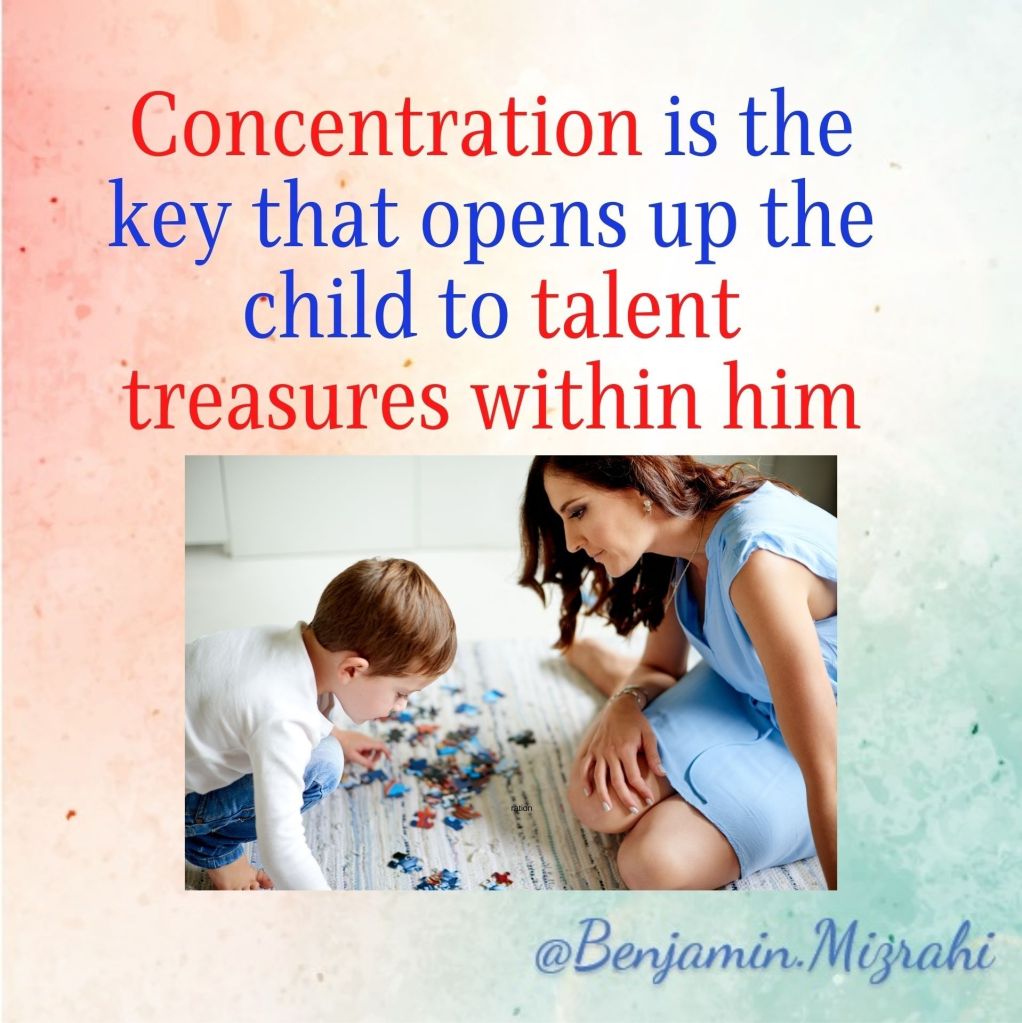
It sounds simple, but these are great tools for kids with ADHD. Crossword puzzles improve attention for words and sequencing ability. Likewise, picture puzzles, in which your younger child has to look for things that are “wrong” in the picture or look for hard-to-find objects, also improve attention and concentration.
5. Memory and Concentration Games
Children’s games, such as Simon, are great ideas for improving memory and concentration. They are quick and fun.
Memory motivates the child to remember the location of picture squares, and Simon helps them memorize sequences of visual and auditory stimuli. Through repeated playing, brain circuits are exercised and challenged, which strengthens connections and thus improves function.
Also, there are countless free online games that also improve concentration or memory.
6. Dancing Sequence Games
There are various versions to select from, depending on your child’s age and what he or she likes. These games can be played on various video game platforms, including Xbox, Wii, and others. You will also need to purchase the dance mat that goes with your system.
These games improve concentration, processing speed, planning, sequencing, and motor integration. As an added bonus, they can also be a good form of aerobic exercise.
7. Story Based Games
To play these games, all you need is a good story book and a good imagination. You can simply read a short story and give the child a pop quiz on the content. Or, you can read a paragraph or two from a story and then ask your child to come up with what they think might come next.
These games help with building working memory and concentration. They can also help in the development of logic and sense of humor.
8. Mazes
You can find mazes appropriate for the age of your child for free online. Start off with easy ones and move forward. Keep track of speed and errors. Of course, don’t forget to praise improving scores. Mazes are great for concentration, planning, sequencing, processing speed and visual-motor integration.
9. Puzzle Games
Puzzle games are very good for kids with ADHD or learning disabilities because they help build that brain muscle we were talking about, as do all these exercises. You can vary the challenges to provide a variety of games.
10. Paddle Ball
Best to start with bouncing the ball downward and when that is mastered, switch to bouncing it upward. Keep track of how long your child can keep the ball bouncing. Encourage increasing the amount of time. For older kids, you might want to talk about what it would take to set a record to motivate them.
As you do these brain exercises, work together with your child, serving as their coach. Encourage them, and track their progress as they improve. Working together is a win-win solution because it also strengthens the relationship you have with your child.
Go ahead and have some fun. Do the exercises along with your child. And who knows, you may find your brain will work a little faster and smarter, too!









 EXECUTIVE FUNCTIONS COACHING