Lead Your Child With Love Not Fear

We all have needs! But caring for our child(ren)’s needs comes first! (Always if possible). 

If we need to complete a task or do something for ourselves of course we can take care of our needs first as long as our child(ren) are safely occupied and depending on their age within eye sight. 
 
Co-caring for your needs and your child’s needs is what parenting is all about. 
 
This compassionate love we have for our children runs so deep that we sometimes get lost in our own fears and emotions we forget that they are so young and need our guidance not correction. 
 
Lead your child with love not fear and they will learn and remember what you say. 
 
If you teach your child with fear, they are more likely to live in fear and fear a relationship with you. 
 
Remember you are the bigger, stronger, wiser and kind person in your relationship with your child. Always be “humble and kind, as much as possible.” 
 
Growth comes from the light that shines upon it. Be the light your child needs to grow. 
 
If you struggle with your fears, we will talk about this one week. Your anxiety and fears are real. Just make sure you do your best, not to project your fears onto your child(ren). 

Coach Benjamin Mizrahi. Educator. Learning Specialist. Family Coach. Father. Husband.   

More articles on www.MrMizrahi.blog  

https://mrmizrahi.blog/2020/10/01/6-ways-to-show-faith-in-your-child/
Communication Tips To Help Your Child Slow Down and Pay Attention

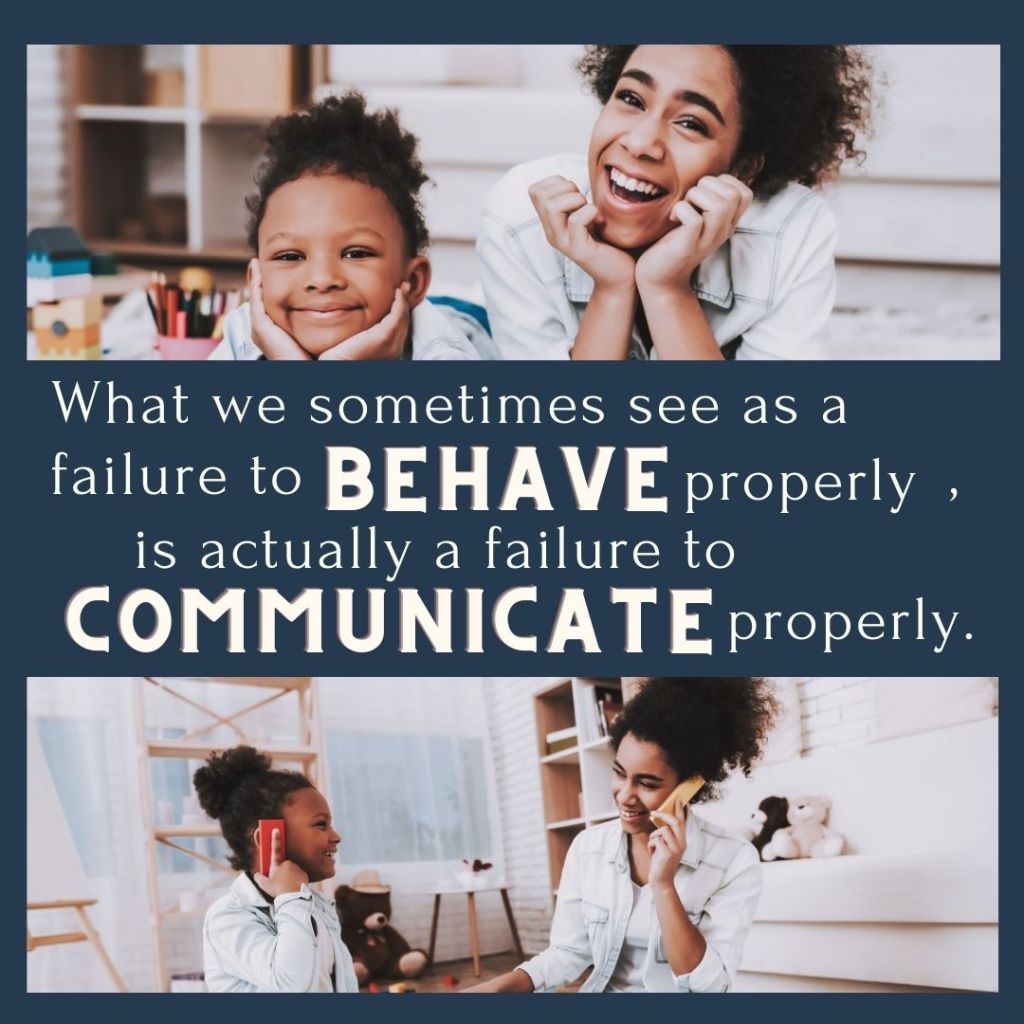
Since it is essential to communicate more effectively with our children, try these strategies: 

  • Give clear, specific directions. 
  • Try to break tasks into one or two steps so they do not feel overwhelming. 
  • Give the child choices. 
  • Ask questions instead of making statements. This forces a child to stop and think about the alternatives. 

Instead of requiring your child to maintain eye contact, let your child move around and/or have something in their hands (such as textured objects or fidgets) while you are speaking. This will actually increase attention and retention. 

Try visual and auditory reminders to keep a child on task. Use color cards (yellow for slow down, red for stop, green for go) and timers to help children turn off their video games without being asked. 

During temper tantrums parents should look at it as an opportunity to prove their personal integrity. You need to show them that you are in control and that everything is okay and they need to recognize that you are so emotionally strong that even their wildest tantrum cannot move you. When your child loses it, seek first to control yourself and remain calm. Parent may say: “When you are ready to talk, I’m all ears. But I can’t hear when you are screaming at me and your tantrum will not get what you want.” 

Communicating well with kids is essential, no matter the child’s diagnosis. If your child has ADHD or other learning or attention issues, communication can be challenging. Miscommunication and frustration can lead to tantrums. But as a parent, you can help your child learn to listen and focus with smart suggestions, statements, and questions that promote understanding. 

Coach Benjamin Mizrahi. Educator. Learning Specialist. Family Coach. Father. Husband.   

More articles on www.MrMizrahi.blog  

https://mrmizrahi.blog/2020/10/01/6-ways-to-show-faith-in-your-child/

Your Child’s First 5 Years Will Have A Big Impact On Their Future

As parents, we make it our goal to do whatever we can to improve the lives of our children. We read books, research various topics, provide social interaction, and ask lots of questions because we know early child development within the first five years of life are critical. One of the topics that become so important in parenting is our child’s physical and cognitive development. While no two children develop on the exact same timeline, there are sensitive time periods in which major developmental milestones are reached. One of the most critical time periods in child development and learning is from birth to five years old. The first five years of child development are crucial to their health, well-being, and the overall trajectory of their lives in various ways. Fortunately, there are many things that parents can do to help their children develop and grow. 

Physical growth still happens tremendously between the ages of one and five, but the developmental windows are much wider. Here are a few of the typical developmental milestones that are reached during these years:

1 to 2 Years: 

🔸Picking things up while standing up 

🔸Walking backwards 

🔸Coloring or painting by moving their entire arm 

🔸Scribbling with markers or crayons 

🔸Turning knobs and handles 

🔸Walking up and down stairs without assistance 

🔸Moving and swaying to music 

2 to 3 Years: 

🔸Running in a forward direction 

🔸Jumping in one place 

🔸Kicking a ball 

🔸Standing on one foot 

🔸Turning pages of a book 

🔸Drawing a circle 

🔸Holding a crayon or marker between the thumb and fingers 

3 to 4 Years: 

🔸Riding a tricycle or a scooter 

🔸Going down a slide without help 

🔸Throwing and catch a ball 

🔸Pulling and steering toys 

🔸Walking in a straight line 

🔸Building tall towers with toy blocks 

🔸Manipulating clay into shapes 

4 to 5 Years: 

🔸Jumping on one foot 

🔸Walking backwards 

🔸Doing somersaults 

🔸Cutting paper with safety scissors 

🔸Printing letters 

🔸Copying shapes (such as squares and crosses) 

The loving care you provide in the early years will shape how your little one’s brain develops, and early brain development lays the foundation for important skills kids need later in life. 

Coach Benjamin Mizrahi. Educator. Learning Specialist. Family Coach. Father. Husband.   

More articles on www.MrMizrahi.blog  

Strategies To Help Kids Overcome Their Sleep Problems

Does your child often struggle to get enough sleep? Getting a good night’s sleep can be a big problem for children who have ADHD. It doesn’t take much to figure out what’s going on here: When children are awake, it’s hard for parents to get any shuteye. 

Find below some tips to calm your child before bedtime and help him or her get more restorative sleep. 

🔵 Exercise daily and avoid trigger foods. 

Exercise will help them sleep better at night. Avoiding caffeine and artificial ingredients that may promote hyperactivity. 

🔵 Set a realistic  bedtime.

Whatever bedtime you establish, enforce it consistently on weekends as well as during the week. Make sure the hour before bedtime is calm and quiet and that lights are kept low so the body can produce enough melatonin, the body’s natural sleep hormone. 

🔵 Set a bedtime alarm. 

Make sure the sound of the alarm is quiet and not intrusive. Eventually, your child will naturally associate the sound of the bedtime alarm with sleepiness. 

🔵 Use white noise and blackout curtains. 

Try an air purifier or fan for white noise or download an app that offers different nature sounds. Use blackout curtains to eliminate light in the room. Too much light at bedtime can interfere with the body’s melatonin production, so avoid screen time an hour before going to bed as well. 

🔵 Try aroma therapy. 

Let your child choose a calming scent that appeals to him or her, and then dab a little oil on a cotton ball and place it in his or her pillowcase. 

🔵 Reduce anxiety. 

🔵 Sleep with a weighted blanket. 

A heavy, weighted blanket can apply deep pressure to muscles and joints throughout the night, which helps regulate a disorganized sense of self and calm an overactive central nervous system.  Organizing and calming the senses can support the body’s natural ability to fall asleep. 

A Practical And Effective Roadmap For Anger Management With Kids

Supporting your child through the storm of their anger and exploring through trial and error, which helps them to regain emotional stability, is called co-regulation and is an essential part of raising an emotionally intelligent child who can manage their anger healthily in adulthood. 

Normalize all emotions (including anger) 

Teaching your child that anger is their body’s natural way of alerting them that something isn’t quite right, will help this intense emotion feel less overwhelming. 

Be proactive, not reactive. 

Provide frequent and ongoing opportunities to talk about emotions and coping skills for anger during normal everyday life, so your child has a chance to commit these life-changing skills to memory. Team up to make a plan for how to calm down when angry before anger strikes. 

Give them a lifeline 

You are your child’s guidepost and they’re counting on you to stay in control when they can’t. If you’re not ready to hold yourself accountable when emotions are running high, you shouldn’t expect your child to. 

Explore their triggers 

Helping your child reflect on what things usually happen before ‘their anger comes out’ is a powerful way to cultivate self-awareness and become better prepared for when tricky situations reoccur in the future. 

Teach emotions vocabulary 

When you give your child a wide range of emotions vocabulary, you’re giving them a vehicle to better understand what they’re experiencing and also how to express it appropriately. 

Teach through modeling 

The most powerful way to teach your child how to deal with anger in a positive way is to model and practice healthy coping skills right in front of them.  

Body warning signs 

If your child can pay attention to their body’s physiological signs of anger, they can implement calming tools and strategies before their anger gets the best of them. 

Use visuals 

Due to what’s happening in their brain during emotional upheaval it’s much easier for your child to visually process information when they’re upset than processing what you say auditorily. 

Do You React or Respond To Your Child?

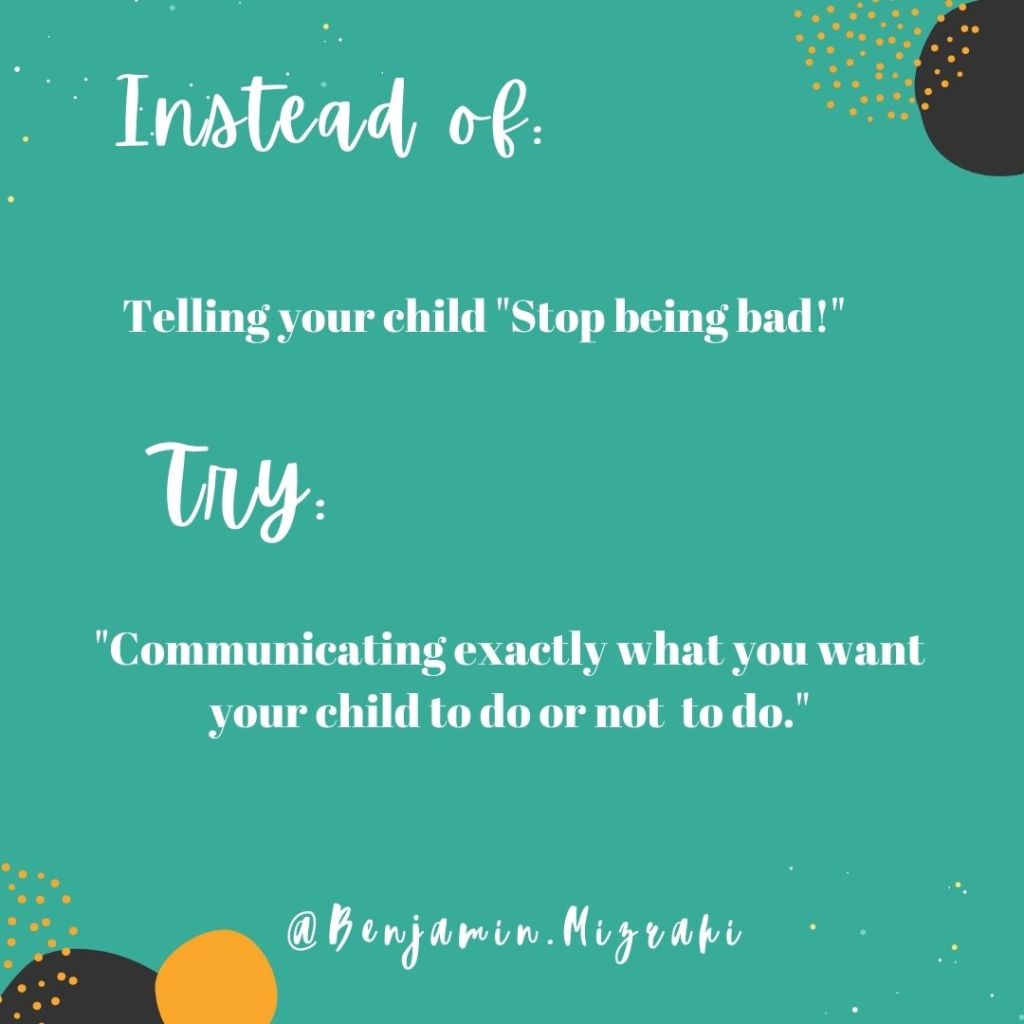
If you’ve ever yelled “stop being bad” at your child in a moment of frustration, you’re not alone. 
 
Sometimes as parents you get so irritated by whatever your kids are doing that you don’t know what to say, or you react out of anger. 
 
It happens. 
 
And when it does, the best thing you can do is to apologize to your child and reconnect with them. 
 
I also want to note that yelling at your child will only continue to fuel your frustration because your child is likely to become even more elevated and may act out more. 
 
My goal is to empower you to know how to respond so that you don’t get to the point where you are yelling and saying things you wish you hadn’t. 
 
When your child is misbehaving, the easiest thing to do is clearly communicate what you would like them to stop doing or do instead.
 
But it’s also important to consider why they might be acting in a way you wouldn’t prefer. 
 
It’s important to help them manage their behavior while also considering the following. 
 
1. They might be hungry for a snack. 
 
2. They might be stir-crazy from sitting at a desk all day and need to play and move their body. 
 
3. They might be overstimulated with all the lights and sounds and millions of other shoppers navigating the small aisles. 
 
4. They may be feeling stressed because their daily routine was thrown off. 
 
Consider these things while enforcing boundaries and keeping your child safe. You might realize that your child is not intentionally misbehaving, rather they have some needs that you can help meet. 

Coach Benjamin Mizrahi. Educator. Learning Specialist. Family Coach. Father. Husband.   

More articles on www.MrMizrahi.blog  

6 Ways to Show Faith in Your Child

Building Strength in Your Child 

Sometimes in our desire to be good, guiding parents we tend to focus on our child’s faults or mistakes so we can help them improve.  It’s a natural instinct and you’re not alone. People are programmed to notice the bad first. It’s how our earliest ancestors survived, always on the alert for signs of danger. Even though we no longer have to be on the constant lookout for trouble, we still lean toward negativity. And this can extend into our parenting.  

Focusing on your child’s strengths rather than weaknesses leads to a more positive self-image and greater self-awareness and confidence.   

✔️️ Find your child’s strengths.  

Don’t try to improve challenging areas because this may cause our child to view themselves as broken rather than focusing on their strengths.  

To begin, ask yourself the following questions:  

  • What is my child’s gift?  
  • What is their unique ability?  
  • What do they live to do?  

Nothing is more important to a child’s welfare than to be surrounded by adults who see the best in them.  Knowing your child’s strengths helps them in several ways.  

✔️ Make it fun!   

Try some awesome activities like biking, singing, board games, storytelling, acting and role playing. Fun activities help our child to learn many skills in an enjoyable way.  

✔️ Meet your child where they are.  

How else can we meet our kids where they are? Offering validation and empathy  is much more effective and compassionate.  

✔️ Create rituals and routines.  

Here are some benefits our child can gain from a consistent routine in daily life:  

  • Increased confidence and independence.  
  • Greater self-control  
  • Stress reduction  
  • Exposure to healthy habits  

✔️ Be kind to yourself.  

You weren’t planning on navigating a special needs journey when you set out to be a parent. Coming to terms with the unique challenges brought by ADHD in kids takes time, patience and self-compassion.  

Coach Benjamin Mizrahi. Educator. Learning Specialist. Family Coach. Father. Husband.    

More articles on www.MrMizrahi.blog 

Child Anxiety: What To Do If Your Child Is Anxious, Worried Or Upset?

Life is so busy for all of us nowadays, including our children. We know that they are part of our busy daily schedule (how could we forget!), but we may well forget that they are often affected by the ‘busyness’ of our plans and their schedules. Their minds can become so full and overworked that they do not realize they are becoming stressed by this.

In some cases, your child’s anxiety may come from other causes, such as a specific situation in school or with friends. In other cases, your child may suffer from low self-esteem and a lack of self-confidence. Often, some children have ‘learned’ to worry about everything: from forgetting to bring a copy to school to fretting about their parents not being there forever.

Simple, practical solutions can help ease this anxiety and incorporate well-being practice into your child’s life daily.

Talk to your child – Allow them to list out the feelings like a shopping list. Don’t ask leading questions, rather, let them express freely. 

Practice the Mindful ‘Check-In’ – Ask them to regularly ‘check-in’ with themselves. The recommendation would be that you do this with your child to begin with until they feel confident enough to do it alone. This will empower them to tune in themselves. 

Practice the P.N.B. Encourage your child to learn how to pause and breathe – This slows everything down and the more often your child practices this, the more they will be able to use it as a regular skill that is naturally incorporated into their day. 

Create a worry box – encourage your child to write down anything that is happening for them on a piece of paper and place it in the worry box daily. 

Create a calm box – This is where your child chooses certain items that make them feel happy or calm. 

Set up a relaxing space – Set up a relaxing space in your child’s bedroom where they can go to when they need to.  

✅Remember that these skills have a much better chance of working for your child in a long-term sustainable manner if they are used on a daily basis. 

Anxiety is not always a bad thing. But, when we get anxious beyond the level which is good for us, we end up having anxiety disorders, which are distressing and interfere with our normal functioning of mind and body. It is important to keep your child’s mental health in constant check and let them know they are not alone and they can come to you and freely express themselves. Working together with the love and support of family and friends can greatly impact on how they cope with worries and stresses. 

Show Your Child What Makes You Come Alive

It is so easy to get buried in the busyness of motherhood and unintentionally allow the things you deeply care about to slowly slip away.  

 
I think somewhere along the way, you picked up the idea that once you had kids, that was your 24/7 job and to do anything outside of that for yourself was “selfish.” CLEARLY, I know that’s not true.  

 
As parents who want to raise kind, compassionate, empathic kids, we try to model those things for them, right? 
 
But don’t we also want to raise kids who do things that light them up and make them come alive? Isn’t that what life is all about and when we’re most productive? (the world benefits from you doing what you love – it’s a win-win all around) 
 
So, if we want to model things we want to pass on to our children, shouldn’t we show them what it looks like to “come alive” by seeking out things we LOVE to do? (this doesn’t have be something related to a career…it could be art, sports, volunteering – anything that makes our hearts soar!) 
 
What makes you come alive? Are you integrating into your life right now? 

Coach Benjamin Mizrahi. Educator. Learning Specialist. Family Coach. Father. Husband.   

More articles on www.MrMizrahi.blog  

https://mrmizrahi.blog/2020/10/01/6-ways-to-show-faith-in-your-child/

Ways to Make Happy Family Memories

Think about and ask yourself what memories you left your child with today; was it a happy memory, a sad memory, or maybe even an angry memory? 

Memories happen regardless of what we do. Negative experiences have a particular and lasting power. But parents can counteract that power by attending to the creation of positive memories. 

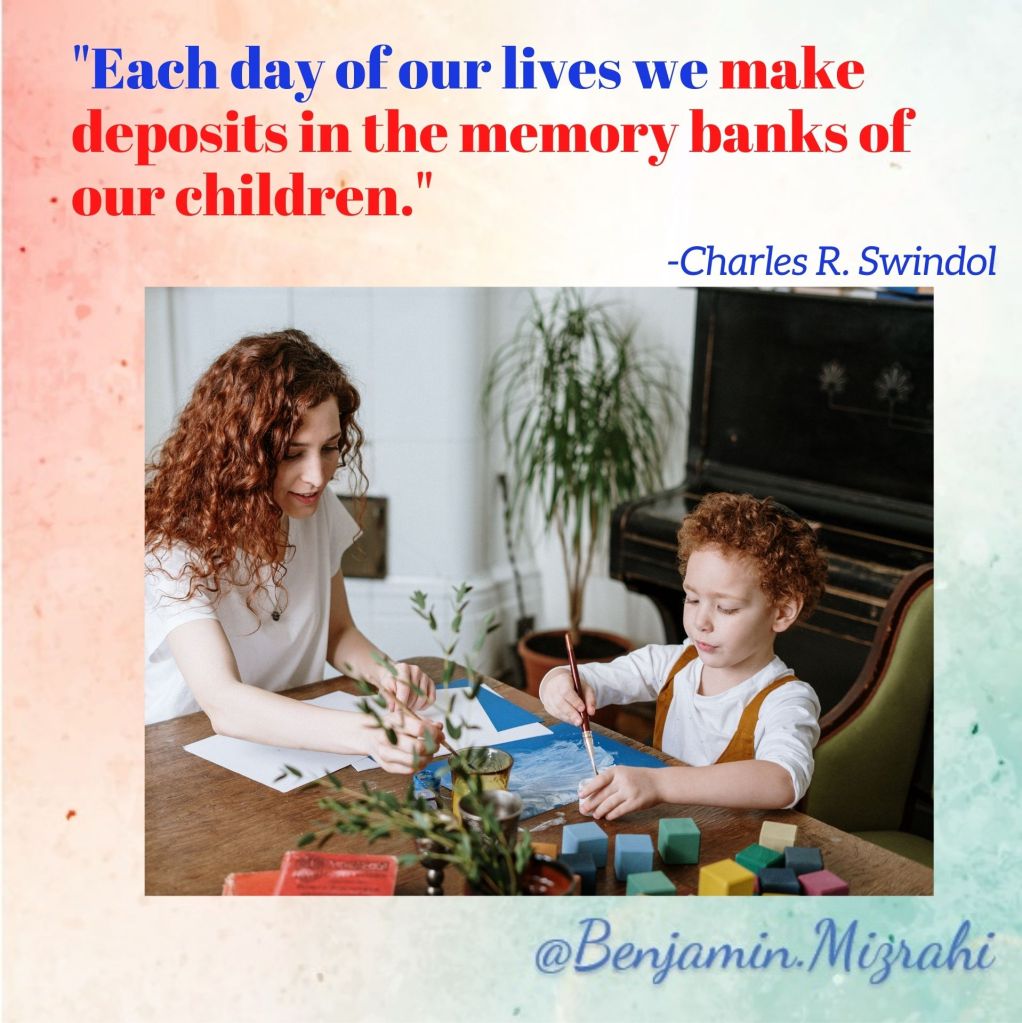
It’s quite scary to think back at all of the things your children might remember about you…but you can start making positive memories from this day forward.  It’s difficult to erase the negative ones but if you fill your children’s memory banks with many more positive ones then you can at least hope that some of the negative ones will be forgotten. 

By regularly depositing happy, positive memories into our kids’ memory banks, we can ensure that there will be healthy dividends that will last for life. 

5 Ways to Make Happy Family Memories 

  1. Notice and highlight positive attributes and behaviors: There are plenty of opportunities to correct, reprimand or discipline a child or teen. If a child is to be emotionally healthy and strong, those times need to be over-balanced with positive comments from those who love him or her. Notice when they have made their best effort and when they have been kind or generous or forgiving. Highlight the times when they share. Show interest in what they are interested in. Paying attention to the positives creates a family atmosphere that nurtures our children’s resilience and shows them how to be a positive force in the world. 
  1. Play with your kids: Do whatever you like to do that makes everyone laugh and enjoy themselves. Make that fort with the sofa cushions. Get on the floor and be goofy. Boogie in the kitchen. Go out in the rain and splash in the puddles. When you read to them, make funny voices for characters in the stories. Do such things regularly and often. Happy times with their parents build kids’ confidence and feelings of self-worth. 
  1. Make a big deal about little things: Your child sees a bug. Is it just a bug? Or is it a BUG? If you walk by, it’s not memorable. But if you stop to look at it together, comment on how many legs it has, try to get it to hop on a stick, wonder aloud whether it has a family, etc. — well, now it’s a memorable event. To a growing child, there are new and important things happening every day. It’s up to us to notice and to share in their excitement. 
  1. Go on adventures: Unusual adventures tend to stand out in people’s memories. That doesn’t mean you have to spend tons of money or go somewhere special (though, if you can afford it now and then, that’s fun too). If done with a light heart and a sense of adventure, almost any activity can become memorable. One mom I know takes her kids with her to do grocery shopping. Each week, one of the kids gets to choose a food that no one in the family has ever eaten before. When they get home, they figure out how to cook it and try it. All this is done in the spirit of adventure and fun. I’d like to imagine that they will do the same thing with their kids someday. 
  1. Take time every night to be grateful: It’s too easy to take the positive things that happen every day for granted. A study has shown that people who take the time before bed to write down 3 things for which they are grateful are more optimistic, resilient and emotionally healthy. Create a family journal where each member writes down something that happened during the day that made them feel glad or grateful. The journal helps everyone in the family keep things in perspective. 

Coach Benjamin Mizrahi. Educator. Learning Specialist. Family Coach. Father. Husband.  

More articles on www.MrMizrahi.blog

Tantrum Tip

When your child is melting down, it’s important to realize that they need your support in that moment. 
 
Trying to discipline or teach your child in the midst of a tantrum is only going to frustrate both of you more and escalate the situation. 
 
Wait until your child is calm before addressing any behaviors that might need to be addressed. 
 
Instead of trying to correct your child, the best thing you can do during a tantrum is to support them. 
 
They need your help. 
 
Pause and ask yourself what your child might need from you. 
 
Your child may simply need space and time to express their emotions. When they are too young to do this verbally, this might look like a tantrum. 
 
Your calm, close presence may be just what they need to feel safe and supported. 
 
Your child might need you to help them implement a calming strategy like deep breathing, squeezing a stress ball, or engaging in some other soothing sensory activity. 
 
Your child might need you to keep them safe physically by preventing them from hurting themselves or others. 
 
Over time you’ll get to know your child’s needs and you’ll find it easier to help them through their tantrums. 
 
As frustrating as it can be, you can really build trust and connection with your child when you are able to support them through some big feelings. 

Coach Benjamin Mizrahi. Educator. Learning Specialist. Family Coach. Father. Husband.   

More articles on www.MrMizrahi.blog  

Teach Kids How To Practice Flexibility

Now that kids are home for longer periods of time, it is a wonderful time to teach them one particular executive function skill: Flexibility. 
 
One of the ways to teach kids how to practice flexibility is through playing old school games in therapy (like Operation) 
 
Skills like: ️ 
 
1. Being Adaptable: What do you do when you can’t get that piece out without setting off the buzzer? 
 
2. Learning how to Reset: Now you have set off the buzzer, what do you do next time? What strategy will you use? 
 
3. Re-frame the Problem: What can you learn from this challenge? 
 
4. Get Unstuck: Use a different strategy (since the one you are currently using leads to more buzzing) 
 
5. Develop your Feelings Vocabulary: Use your words, not your behaviors, to express how you feel (“I’m frustrated I can’t get this piece out” or “I’m disappointed I lost the game”). 
 
Then, encourage them to generalize these skills to various situations with different people. 
 
Didn’t know you could learn so much from a game of Operation? 
 
What are some ways YOU have taught your kids to be more flexible?