
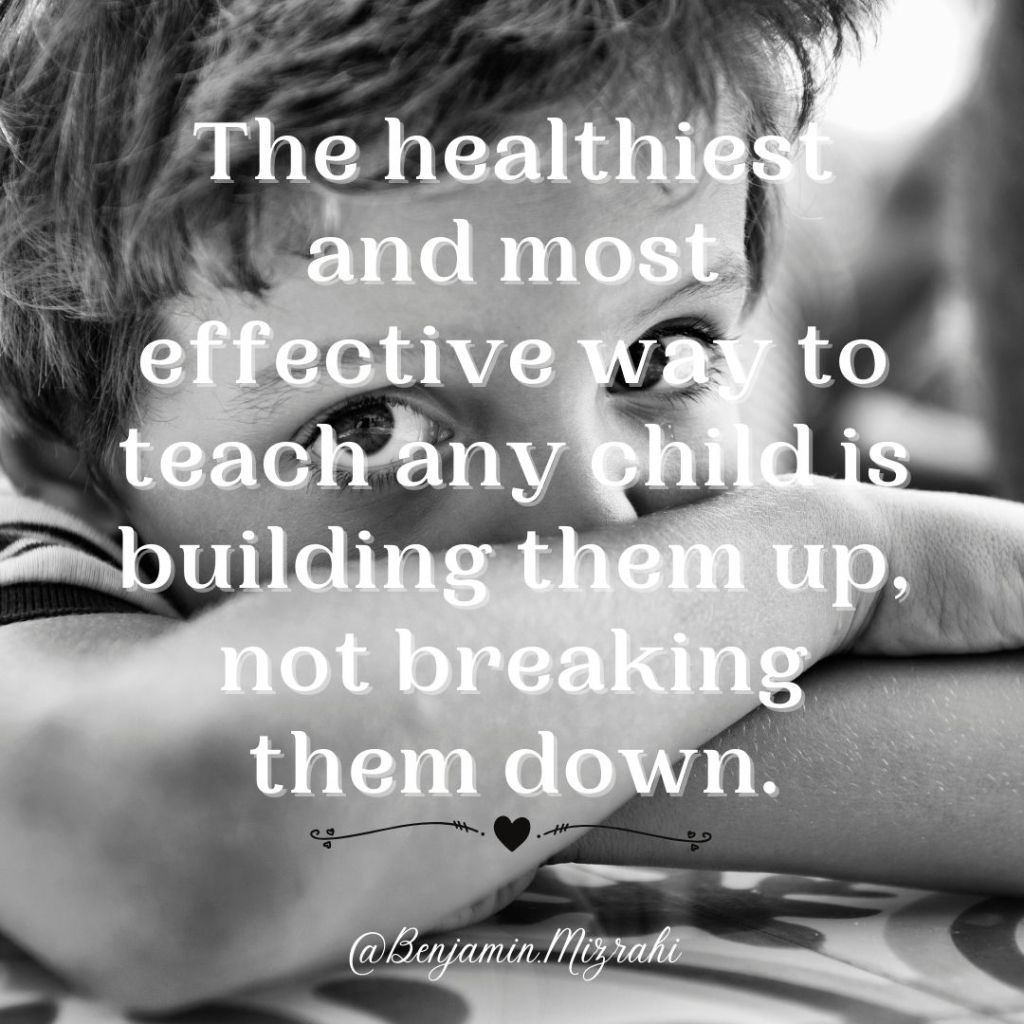
Very often consequences are just punishments in disguise, or at the very least, unpleasant power plays that take away a child’s sense of capability, well-being and trust. Instead of helping and inviting cooperation, consequences are more often than not used in a way that chips away at your relationship with your child.
If chosen well, sometime consequences can help your child learn and make better behavior choices. The wrong kind of consequences just don’t motivate children to behave well. Your child might actually feel discouraged or so frustrated that their behavior gets worse instead of better.
Things to try when no consequence seems to work:
1. Know that you are not alone:
This isn’t really something to try, but something that’s just a relief to know. There are many parents who are struggling to find an effective consequence for their child. You are not alone. Strong-willed children are a joy and a challenge to raise. One of those challenges is finding something that does work for your child.
If you have a child with anxiety, depression, or trauma they may not respond as well to consequences. We recommend you try the ideas below. If you continue to not see change, seek a competent professional to help you and your family.
2. Customize consequences to your specific child.
Discipline is not a one size fits all. Each child is born with different strengths, weaknesses, temperaments, and motivations. Therefore, you will need to customize your approach with each child. The process of customizing does include some trial and error. That can feel really frustrating and take some time. However, if you stick with the process, you will eventually find something that works.
When testing out different consequences, you need to try it CONSISTENTLY and for at least a couple of weeks before you adjust and try something different.
3. Try some rewards, but not the typical reward you’re thinking of.
Sometimes when we’re working on extinguishing negative behaviors, we get too focused on ONLY negative behaviors. If a child feels like their parents don’t see any good in them, it can lead to more negative behaviors. Our kids need us to tell them what they are doing well. Do a quick self-evaluation. Are you pointing out at least 5-10 things each of your kids do well each day?
4. Try at home play therapy to help your child feel more connected to you.
Children generally behave better when they feel connected to their parents. At home play therapy is a heavily researched way to connect deeply and quickly with our kids of ALL ages.
It helps your child feel special to you and SEEN by you. It also helps your child feel safe showing you what’s important to them. That creates a special bond between you and the child.
Play therapy also helps parents. During the play therapy session, you get to just enjoy your child. You don’t have to tell them what to do or what not to do. You aren’t focused on their negative behavior. Rather, you just get to see how beautiful they are. It’s also kind of relaxing. Grown-ups don’t take a lot of time to just relax and be in the present. This allows you to do just that.
5. Learn about more options
Know that there is something that works for each child you just might not have found it yet. You may need some extra tools from a professional or from another parent you trust.
Imagine that you are trying to build a house using only a screw driver. That would be a challenging experience. It would be easier if you had a screw driver, a hammer, a saw, etc. The same is true of parenting. You may be working really hard at trying to find a consequence that works, but you may need someone to give you some additional tools, tools you’ve never thought of before. Needing additional tools doesn’t make you a bad parent. In fact, we think that seeking out tools makes you a great parent! Wouldn’t it be nice to have a tool belt full of options?
6. Think about what motivates your child.
Some consequences don’t work because they are too small and the child doesn’t care about it. On the other hand, some consequences don’t work because they are so extreme that the child loses hope and motivation. The best consequences are big enough to motivate the child to not misbehave, but small enough that the child isn’t in trouble all the time.
Coach Benjamin Mizrahi. Educator. Learning Specialist. Family Coach. Father. Husband.
More articles on www.MrMizrahi.blog


 EXECUTIVE FUNCTIONS COACHING