Normalize Apologizing to Your Children

Most parents teach their kids to say “sorry” from a young age. Half the time our kids don’t really feel remorse when they make amends, yet we push them to do it anyway. So how do you set a good example? 

The best way to set a good example is to model it. Kids mirror your behavior. When you have done something wrong, regardless of your position, you should correct it and apologize. We don’t force apologies; we model them when needed. Apologizing is a way to show someone they matter to you, it builds trust, helps them feel heard and can deepen your connection. 

  • Admit what you have done wrong and ask for forgiveness. 

A better example is something like, “Mommy lost her temper. I am so sorry. I should not have acted that way. Will you forgive me. I will do better next time.” A good apology is one that owns the offense, asks for forgiveness, and makes effort to change in the future. 

  • Don’t blame or shame your child. 

Make sure your words are words of love and healing, not blame and shame. After that, appropriately deal with the disobedience. 

  • It is not about winning and losing 

Stop thinking you are on opposing teams. You are in this together as a family. Don’t ignore the power of apologizing. 

Do you apologize to your children when in the wrong? 

Coach Benjamin Mizrahi. Educator. Learning Specialist. Family Coach. Father. Husband.   

More articles on www.MrMizrahi.blog  
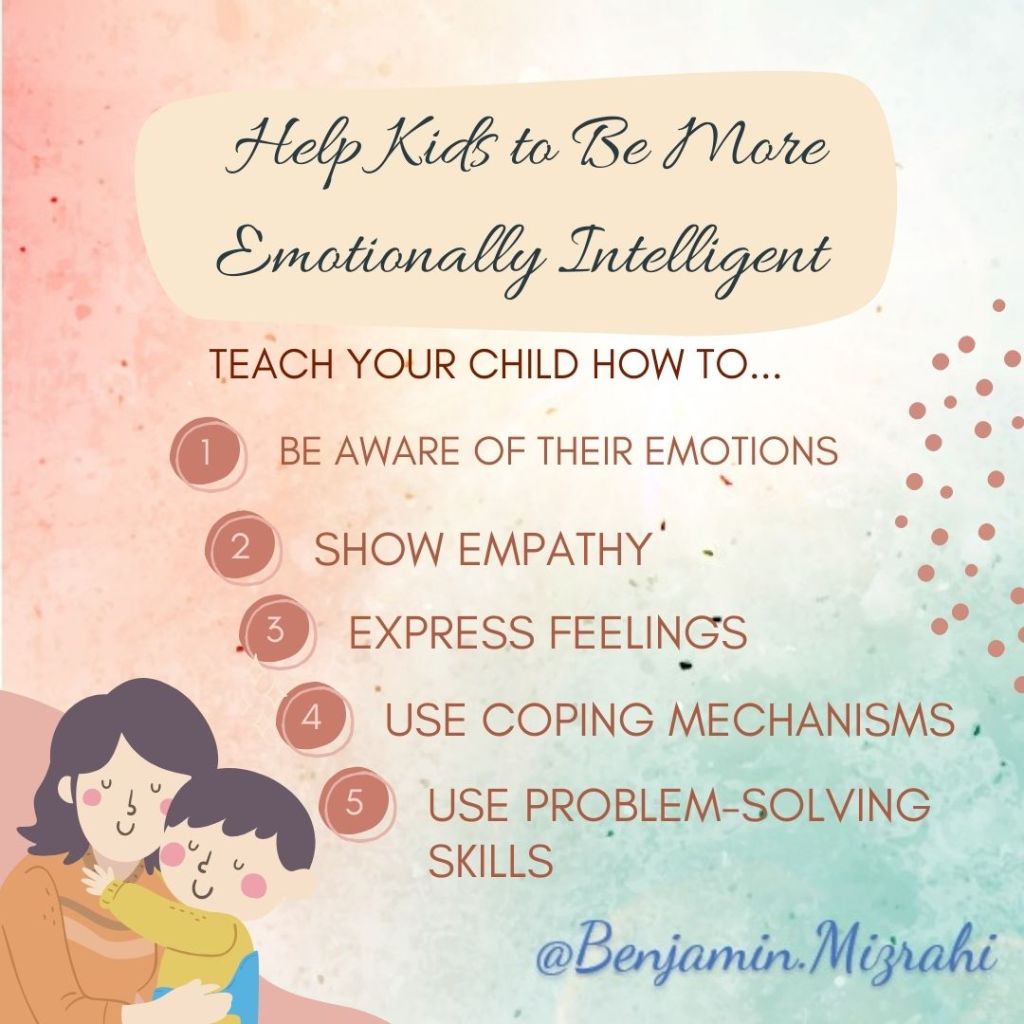
Ways to Help Kids Be More Emotionally Intelligent

Strengthening your kid’s emotional intelligence matters because his inability to manage his emotions can create a domino effect in other aspects of his life. Emotional intelligence is relevant for kids, and there are many simple ways to start fostering your kid’s emotional awareness starting today. 

1. Help your child to be aware of their emotions: When your child displays a certain emotion, and even more so when they are upset or displaying a negative emotion, acknowledge it and label what they are feeling. This will help them understand their own emotional state better, and eventually, they will learn to regulate this same emotion with more control. 

2. Acknowledge their emotions and show empathy: When you respond to your children’s emotions empathetically, they learn the appropriate response to situations too. This also validates their feelings and helps them understand their own behavior better. Thus, teaching them to self-regulate their emotions. 

3. Model appropriate ways to express feelings: In addition to knowing that their feelings are understood, kids also need to learn how to appropriately express their emotions. This helps them learn how to deal with their emotions and to move past them instead of holding them in or repressing them. 

4. Teach them healthy coping mechanisms: Teach your children how to respond to negative emotions. Teach them to breathe or count to ten when they are feeling a negative emotion.  

5. Teach them problem-solving skills: Once feelings are acknowledged and understood, there sometimes comes a need to problem-solve or address any issues that need to be dealt with. Initially, you can take the lead but eventually, step back and act as a guide while they navigate their problems themselves. 

Coach Benjamin Mizrahi. Educator. Learning Specialist. Family Coach. Father. Husband.   

More articles on www.MrMizrahi.blog  

Effective Alternatives to Physical Punishment

Emotional hypersensitivity is a core ADHD trait, so the physical act of spanking can lead to emotional hurt. As challenging as it sometimes is to do, taking a positive approach can be more effective in teaching your child to act her best.  

While spanking has been shown to negatively impact bonding with parents, a positive approach ensures that, when it’s time to discipline your kids, they’ll be more receptive to your authority, not afraid of you. 

Here’s how you can respond to your child’s behavior instead of spanking: 

  1. Choose appropriate, effective punishments. 
    If possible, choose a punishment that is a natural consequence of the misbehavior. If you find that a particular “punishment” does not seem to work even when applied consistently, it is not “punishing” for your child, and you should try another. 
  1. Ignore misbehavior that is not harmful. 
    When you have all harmful behavior under control, you can gradually start to work on other annoying behaviors – one behavior at a time. 
  1. “Time-Out” works best when used to prevent the child from getting rewarded for misbehavior. 
    Use this technique to remove the child from the room where other children are likely to provide praise, laughter, etc. Make sure to use it immediately and as unemotionally as possible. 
  1. Rewarding a child’s good behavior is much more effective than punishing bad behavior. 
    Reward has the added advantage of helping a child feel good about himself; whereas punishment tends to make a child feel bad about himself and resentful toward you. 

Coach Benjamin Mizrahi. Educator. Learning Specialist. Family Coach. Father. Husband.   

More articles on www.MrMizrahi.blog  

Ways to Meditate with a Busy Brain

Meditation is an active process that trains the brain to focus and be present. If you or your child has attention deficit hyperactivity disorder (ADHD), the possibility of meditating may seem challenging. 

Even children and adults with ADHD can strike a peaceful state of mind with these steps. 

1. Use music as your focus. 

Meditation need not happen in silence. 

Practice breathing in and out mindfully to the melody of an instrumental song. 

2. Acknowledge and release clamoring thoughts. 

When your attention drifts to something else, gently disengage and return your focus to your breaths. At first, you will repeat this process a lot, and that’s OK. 

3. Don’t “should” yourself. 

If meditation is hard at first, repeat these mantras: 

  • “Meditation is a practice.” 
  • “There are no wrong ways to meditate.” 
  • “I will refrain from judging myself.” 

4. Try moving meditation. 

Calm your antsy body with a simple, repetitive motion – like walking – while you meditate. 

5. Start small. 

Begin by meditating for five minutes, a few times a day. 

When that becomes comfortable, increase the length of your session. 

6. Make it a habit. 

Enlist a coach, a friend, or an app to encourage you to stay on track until the practice is part of your daily routine. 

7. Use mindfulness in your daily life. 

Meditation can help you manage strong emotions at work or at home. It teaches you to step back from the noise and put your attention on your chosen focus. 

Coach Benjamin Mizrahi. Educator. Learning Specialist. Family Coach. Father. Husband.   

More articles on www.MrMizrahi.blog  
TIPS FOR TEACHING KIDS TO READ

Children at the ages of 3-5 are at the critical stage for reading growth. They begin to build their vocabulary and necessary skills for language literacy such as associating words to objects and actions and the learning of the alphabet. Here are some tips in helping your child to develop their reading and writing skills: 

 
Use nursery rhymes to build phonemic awareness 

 
Nursery rhymes are good practice for reading because it helps children to recognize and recite the proper enunciation of words and syllables which helps them to read words aloud. 

 
Make use of word cards 

 
Proper reading starts small. Write out simple one syllable words on flashcards and practice reading with your child. It is important to help them properly enunciate these words to instill the proper way of reading and pronouncing. 

 
Play word games for pastime 

 
Playing word games helps to build their word recall. Some ideas for these are asking questions like “what words rhyme with hat?” or “what color sounds like hello?”. 

 
Build their vocabulary with constant, practical examples 

 
The best way of remembering a concept is constant exposure to it. When introducing a new word to a child, it is best to help them remember by citing the word whenever you encounter that word, such as saying “look, it’s a building!” when passing by one. 

 
Print out or buy individual letters for word-building exercises 

This practices the child’s letter arrangement and spelling when formulating words. It is an exercise that emulates writing. 

 
These are only some ways of teaching very young children in reading and writing. It is important to note that these two skills are not separate, but rather both develop simultaneously as the child develops their skills in language literacy. The most important tip of all however, is to be patient with your child. Everyone is unique and develops at their own pace and pressuring them to learn will not make the experience pleasant. 

 
Coach Benjamin Mizrahi. Educator. Learning Specialist. Family Coach. Father. Husband.   

More articles on www.MrMizrahi.blog  
WHAT IS YOUR PARENTING STYLE?

According to Baumrind, there are four distinct parenting styles, each having their own strengths and weaknesses. These are: 

 
Authoritarian 

Authoritarian parents are thought of as strict disciplinarians. They are unbending, little to no negotiation is possible, communication is one way. Their expectations need to be met or else punishment is enforced. Children of authoritarian parents most often obey the rules, but at the price of a lower self-esteem because their opinions are not valued. 

 
Authoritative 

These types of parents set clear and reasonable expectations yet set definitive consequences for failing to achieve these. The reasons behind the rules are explained, and communication is frequent between parent and child. This mode of child-rearing most often results in the children becoming responsible adults who feel free in expressing their opinions. 

 
Permissive 

Permissive parents allow children to do what they want with limited guidance or direction. Expectations are minimal or not set at all. They become more of a friend than a parent, and most often the children struggle academically due to lack of direction and expectation. This type of parenting has an environment of great freedom but does not enforce responsibility, and that can lead to behavioral or health problems for their children. 

 
Uninvolved 

Uninvolved parents give their children freedom to do what they want and are often out of the way of their development. They often have no knowledge of what their children are doing and expect them to raise themselves. Often, these types of parents are overwhelmed or struggling with themselves or perhaps don’t know what to do in raising their child. Children most often do poorly in school and have low self-esteem. 

 
Coach Benjamin Mizrahi. Educator. Learning Specialist. Family Coach. Father. Husband.   

More articles on www.MrMizrahi.blog  
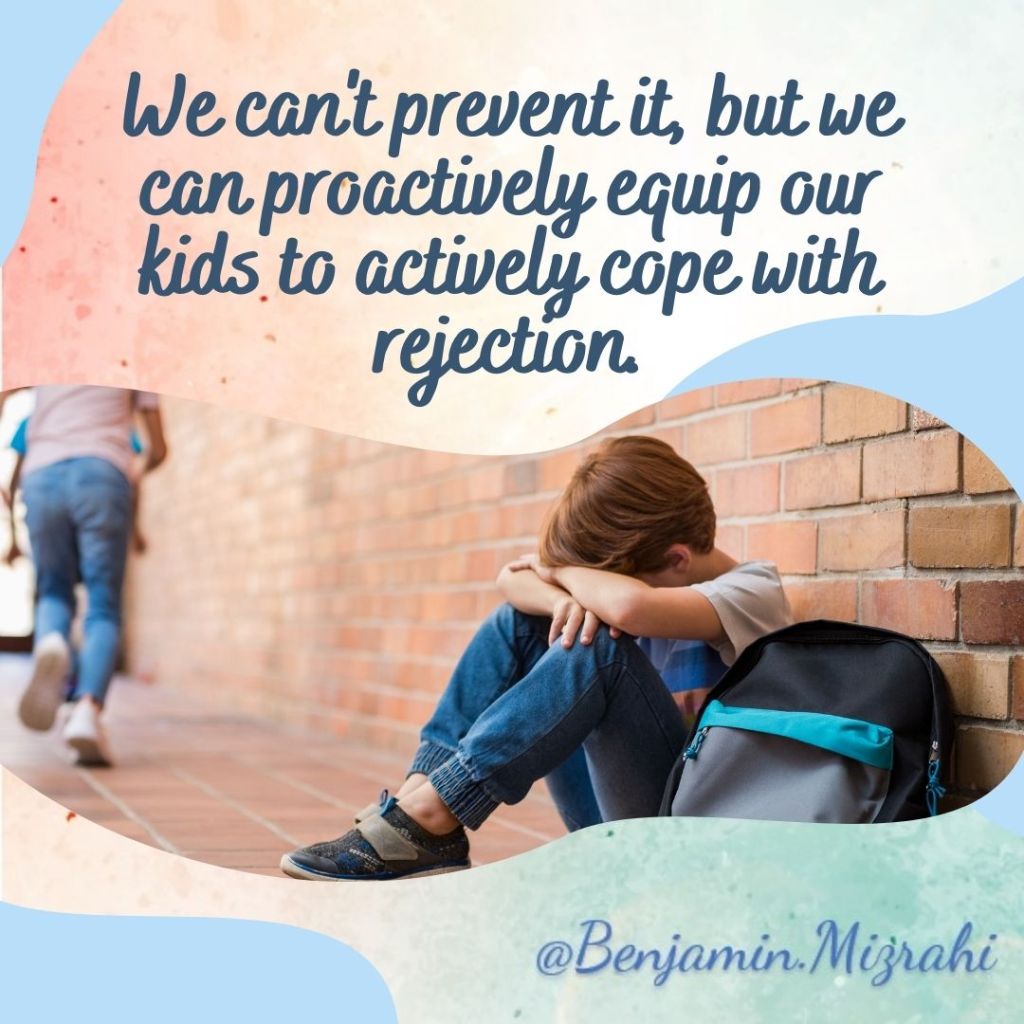
How You Can Help Your Child Cope with Rejection

Rejection is hard enough to deal with as an adult, but it can be even harder for children. What can we do to help our precious children deal with all the emotions that come with feeling rejected? There are ways you can help your child learn to put rejection into perspective and move past it. Here are some things you can do: 

🔹 Not everyone will like you… and that’s ok. Teaching our children that rejection says nothing about them as a person is invaluable because they need to avoid labeling themselves based on superficial interactions. We should encourage our children not to give someone, (who probably doesn’t even know them that well), influence over their self-image. 

🔹 Share stories about rejection and getting over it. Teach resilience. Help your child come up with a plan to move forward. Coping strategies will make your child stronger and more resilient when faced with setbacks in the future. 

🔹 Surround your child with people that genuinely care about them. Children deal with rejection much better if they know that they are surrounded by people that genuinely love and care about them. It is important to place a team of caring individuals around our children to help support and encourage them.  

🔹 Help a child understand their self-worth.  
On a regular basis spend quality time with your children; taking every opportunity to tell them how unique, valuable, special and priceless they are and that there is no one else in the whole world exactly like them. THEY are important, even if someone else doesn’t see it.   

Coach Benjamin Mizrahi. Educator. Learning Specialist. Family Coach. Father. Husband.   

More articles on www.MrMizrahi.blog  

Tips for Parenting Shy Children

Parents can play a critical role in helping children moderate or overcome shyness and fearfulness. Labeling a child as “shy” can shape the child’s destiny from a young age. The best response to help children overcome their shyness and caution is to provide measured experiences to help children explore the world safely in order to gain confidence and feel supported through gentle coaching. 

A few tips for parents and caregivers on how to help shy children: 

  • Nurture your child by noticing her needs and responding to them. 
  • Encourage playdates, either at your house or a friend’s house. If your child is invited to a friend’s house, he might feel more comfortable if you go with him at first. You could gradually reduce the time you spend with him at other people’s houses. 
  • Practice show-and-tell or class presentations with your child at home. This will help your child feel more comfortable when she must stand up in front of her class. 
  • Encourage your child to do some extracurricular activities. Try to find the ones that encourage social behavior – for example, Scouts, Girl Guides or sports. 
  • Coach your child to express her needs and stand up for herself in social situations. 
  • Empathize with your child’s worries and avoid shaming him. 
  • Avoid negative comparisons with more confident siblings or friends. 
  • Help to build your child’s self-esteem by encouraging even small steps towards being less shy. 

Coach Benjamin Mizrahi. Educator. Learning Specialist. Family Coach. Father. Husband.   

More articles on www.MrMizrahi.blog  

PARENTING TIPS FOR 10-12 YEAR OLDS

This stage in their childhood marks a period of transitioning from dependent to independent, childish reasoning to signs of maturity, and the hallmark of this age is the beginning of puberty. There may be some things you can adjust about handling kids at this phase of their life. 

 
🟡 Nutrition 

There may be a spike in food intake at this stage of their development due to the possible growth spurts that require an increased number of calories. Provide them with a variety of food that will help them meet the necessary nutrients for their growth. However, this is not an excuse to overfeed your child as this may lead to health problems in the future. 

🟡 Physical Activity 

It is recommended that children at this age get at least 60 minutes of physical activity each day. They should partake in aerobic activities such as riding a bike, jogging, or other sports that make them move around. 

🟡 Socializing 

At this age, kids enjoy spending an increased amount of time with their peers. This doesn’t mean they dislike spending their time with you, but rather they are comfortable enough with their family that they feel free enough to spend time with friends, since they know you will always be there for them. 

🟡 Sleep 

Children at this age need at least 9-12 hours of sleep a day. But their sleep cycle may be affected by factors such as school, technology and the web, video games and the like. To improve their sleep schedule, you may have to limit their screen time and help them to budget their time more efficiently. 

Remember, tweens should learn how to become independent in terms of taking care of their own hygiene, responsibilities and establishing their role in the household. You do not need to micromanage every aspect of their growth, but instead to foster a nurturing home that helps them achieve their goals and ideal self. 

Coach Benjamin Mizrahi. Educator. Learning Specialist. Family Coach. Father. Husband.   

More articles on EXECUTIVE FUNCTIONS COACHING (mrmizrahi.com)

TIPS FOR ENCOURAGING YOUR CHILD’S INTERESTS

Childhood is an essential phase in a person’s life. Oftentimes their deepest ambitions are rooted from this point in time, and often these are not developed to maturity. As parents, you should be the guiding hand that encourages them to pursue their passions. Here are some tips for cultivating your child’s interests: 

  1. Let the child explore 

Oftentimes parents want to protect their child from the world, and it is their duty to do so. However, there should also be leniency in allowing children to be exposed to different aspects of the world and see where their passions lie. 

  1. Engage the child in their interests 

Be supportive in their interests, answer their questions about the subject, if you do not know the answer then find it together. Buy them the equipment for that hobby or take them somewhere that allows them to perform it like guitar shops or basketball gyms. 

  1. Enjoy the process 

Your child will have many interests during their childhood. There may come a point when you yourself will lose interest in their curiosities. Thus, as a parent, it may be helpful to also enjoy the process of it, so that you may see it not as a chore, but a mutually beneficial experience for both of you. 

Coach Benjamin Mizrahi. Educator. Learning Specialist. Family Coach. Father. Husband.   

More articles on www.MrMizrahi.blog  

The Best Way to Compliment Your Kids

Too many compliments or the wrong kind of praise can do more harm than good. When a child is branded as being “great” at something, he or she puts less effort into the assignment and may even dodge more difficult tasks that include that skill in the future, to continue receiving praise later. 

So, what compliments and praises are good for your children to hear? These three praising strategies will boost children’s self-esteem while still allowing them to challenge themselves at various tasks. 

 
🟡 Be specific. Generalities don’t make for great compliments, so make sure to point out exactly what they did well or what you liked. This will come across as more genuine. It will also show your child that you’re really paying attention by offering them clear and specific praise. 

🟡 Focus on effort, not outcome. Most compliments refer to the outcome rather than what it took for the child to reach it. But that makes praise ineffective unless the outcome is stellar. Praise your child no matter the outcome by speaking about their effort. This works better because a child can’t always control the outcome, but they can control their effort. 

 
🟡 Remark on good strategy. Good praise is not person-oriented, but process-oriented. In addition to praising your child’s effort, another helpful method is to speak highly about the strategy they used. 

Coach Benjamin Mizrahi. Educator. Learning Specialist. Family Coach. Father. Husband.   

More articles on www.MrMizrahi.blog  
Positive Affirmation for Kids

There are many benefits of teaching our children words of affirmation. As they grow and learn different behaviors, words of affirmation can be hardwired into their brains to create a nurturing self-belief in what is happening to themselves. 

Using affirmations is a great way for kids to start the day or to deal with challenging situations that come up during the day. Repetition of affirmations can help kids to interrupt negative or anxious thinking patterns that come with worry in order to refocus attention and change outlooks.   

🔸 Using affirmations to practice positive thinking can turn your day around 

The more positive thoughts your child has, the better they’ll feel, and the better their day will go. 

🔸 Affirmations for kids strengthen the ‘control center’ of the brain 

When your child uses affirmations for kids, they are literally disengaging their ’emotion brain’ and re-activating the part of the brain responsible for problem-solving, impulse control and emotional regulation. 

🔸 Affirmations with kids builds lifelong resilience 

The more your child practices intentional positive thought, the easier time their neurons will have traveling this path in the future. Essentially, you’re helping your child build a neurological on-ramp to resilience on the ‘highway’ of their future challenges. 

Coach Benjamin Mizrahi. Educator. Learning Specialist. Family Coach. Father. Husband.   

More articles on www.MrMizrahi.blog