It’s after midnight and your hyperactive toddler isn’t showing any signs of slowing down. You close your eyes and wonder how you will ever get to sleep if he refuses to go to bed. Knowing your friends’ kids have already been asleep for hours makes it more difficult to cope. Having a hyperactive toddler can be stressful; however, knowing that you can take steps to help him get to sleep can significantly reduce your stress level.
Designate a bedtime for your toddler. Put her to bed at the same time every night to establish a routine.
Give your toddler a bath one hour before the appointed bedtime. This will help relax him and will signal that the bedtime routine has begun.
Encourage your toddler to take part in quiet-time activities such as cuddling or reading a favorite book together. Make this a nightly activity that occurs right after the bath so she understands that bedtime is approaching.
Put your toddler to bed, turn on some soft music and leave the room. Do not return unless there is an emergency. Follow the same routine every night, until he accepts it.
Find a special song or poem that you and your toddler can recite each night just as you leave the bedroom. It will establish that the day has ended and it will provide security for your little one.
Do not deviate from the routine until your toddler has accepted it completely. The first few nights will be rough because the routine is new. Refuse to give in, refuse to deviate from the steps, and your toddler will accept the routine and begin looking forward to the special bath and reading time she has with her parent each night before going to sleep.
Google announced this morning it’s expanding its two-year-old digital safety and citizenship curriculum for children, “Be Internet Awesome,” to now include media literacy — specifically, the ability to identify so-called “fake news” and other false content. The company is launching six new media literacy activities for the curriculum that will help teach kids things like how to avoid a phishing attack, what bots are, how to verify that information is credible, how to evaluate sources, how to identify disinformation online, spot fake URLs, and more.
The new media literacy classes — which frankly, some adults should read through as well — were developed in collaboration with Anne Collier, executive director of The Net Safety Collaborative, and Faith Rogow, Ph.D., co-author of The Teacher’s Guide to Media Literacy and a co-founder of the National Association for Media Literacy Education.
“We need the right tools and resources to help kids make the most of technology, and while good digital safety and citizenship resources exist for families, more can be done for media literacy,” writes educator and teachmama.com founder Amy Mascott, in an announcement on Google’s blog today. “I’ve worked alongside dozens of educators who believe that media literacy is essential to safety and citizenship in the digital age, but agree that it’s a topic that can be tough to cover.”
The courses offer kids not only instruction, but also a combination of activities and discussion starters aimed at helping them develop critical thinking skills when it comes to pursuing online resources.
Its overall theme, the course material explains, is to help kids understand that the content they find online isn’t necessarily true or reliable — and it could even involve malicious efforts to steal their information or identity.
The kids learn how phishing works, why it’s a threat, and how to avoid it. They then practice their anti-phishing skills by acting out and discussing reactions to suspicious online texts, posts, friend requests, pictures, and emails.
In the bots’ section, they learn about how A.I. works and compare and contrast talking to a bot versus talking to a human being.
In the following media literacy sections, kids learn what a credible source is, how to figure out what a source’s motives are, and learn that “just because a person is an expert on one thing doesn’t make them an expert on everything.”
In a related classroom activity, the kids pick a question related to something they’ve seen online or are learning in class and try to get the answers online, while figuring out if the sources are credible.
They also learn to fact check credible sources with other credible sources as a way to look for a variety of sources.
“If you can’t find a variety of credible sources that agree with the source you are checking, you shouldn’t believe that source,” the curriculum explains.
Kids are additionally taught how to spot fake information using clues like deceptive URLs as well as checking the sources for credibility. They’re told that some people don’t know how to do this, and share fake information online — which is how it spreads.
“There are a lot of people and groups who are so passionate about what they believe that they twist the truth to get us to agree with them. When the twisted information is disguised as a news story, that’s disinformation,” the curriculum says.
Kids are also informed that some of the fake news organizations are hard to spot because they use names that sound like they’re real.
And the course delves into various tricks some websites use — like using photos that don’t relate to the story, using clickbait words like “shocking” or “outrageous” which they know make people curious,” using bold, underline, exclamation points or ALL CAPS, to convince you to agree with them.
This section concludes with an online game, Reality River, that asks kids to use their best judgment in order to cross the river rapids. This takes place in Interland, the game developed as a companion to Google’s digital safety and citizenship curriculum.
The overall goal of the media literacy course is to encourage the kids to make checking all news and information a habit — not just those they think seem suspicious.
Google says the new curriculum is available online for both teachers and families alike to use, and are offered in English, Spanish and eight other languages.
Google is partnering with the YMCA and National PTA across multiple cities to host online safety workshops, as well.
Which side speaks to you? There’s honestly no “one” way to feed a family. Both of these strategies work in different situations! Lately a lot of my clients have been struggling with two things: Meal routines and new food exposures, so I figured a lot of us here are too 🙋♀️ Depending on what you may be struggling with, you may alternate these strategies🤷♀️. Find what works for YOUR family. Holding loving boundaries around a meal routine isn’t easy (or tantrum-proof)🙈. Benefits for boundaries with meal routines: -Kids feel safe with a predictable eating pattern (knowing when food is or isn’t coming) -Kids learn to tune into their bodies! If they are extra hungry they learn to eat a bit more because another meal won’t be coming for a bit. Or, if they ate a lot earlier in the day, they may not eat as much. Offering a quick pre-dinner fruit/veggie: -Is a great way to expose them to new foods -Can prevent a meltdown -Keeps them pre-occupied!
Making sure your ADHD child listens and follows directions begins with helping them understand proper decision making. For your children, when you tell them to do something, they find themselves with a decision to make. They can either choose to obey or choose to disobey.
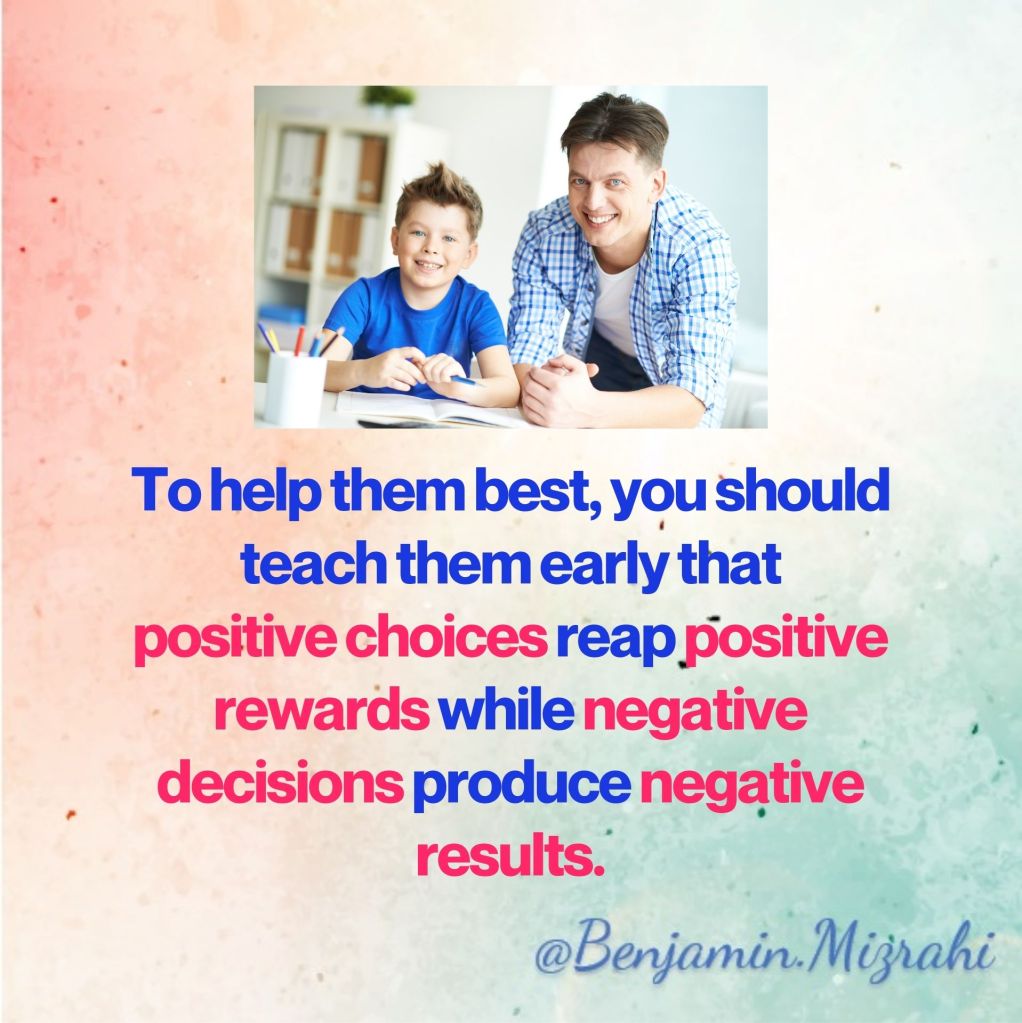
To help them choose well, you need to let them know about decision making. They need to have a basic foundation of how decisions and consequences function. To help them best, you should teach them early that positive choices reap positive rewards while negative decisions produce negative results.
Start teaching this at an early age. Whenever you ask your child to do something, and they appear indecisive, you should instruct them that they have a decision to make. They can choose to listen and obey or choose to not listen.
As you explain this, explain to them also the consequences of each choice. For instance, with choosing to obey, they can play video games for an extra 15 minutes. In not obeying, though, they will not be able to watch TV.
With providing your child clear results and teaching decision making, you help your child understand that choices matter. This also instructs them to identify when they face a decision-making opportunity. With these skills, your child will better be able to know when you want them to follow directions and how they need to respond.
Coach Benjamin Mizrahi. Educator. Learning Specialist. Family Coach. Father. Husband.
There’s a lot of talk on the internet about sensory issues and sensory activities. With all this noise, you may be wondering if you really need to seek out sensory activities for your child with autism.
Many children with autism benefit significantly from sensory stimulation. It has a positive effect on learning and helps them adapt to sensory input. Sensory activities should either increase or decrease the intensity of stimulation, depending on what works best for your child. Let’s look at some activities that stimulate each of their senses!
Sensory issues in children with autism
Sensory sensitivity is a common characteristic of autism. A child with autism may be either over sensitive (hyper-sensitive) or under sensitive (hypo-sensitive) to the sensory input happening around them. This can involve all the child’s senses including sight, smell, sound, taste and touch.
Hyper-sensitivity
When a child is hyper-sensitive to sensory input, the world around them can become overwhelming and even painful at times. Lights may appear too bright. Sounds that might go unnoticed to some can blend with other noises, making it hard for the child to distinguish one sound from another. Sudden loud noises such as an alarm or a siren can be painful. Tastes and textures of certain foods may be intolerable. And a child with autism experiences all of this at once.
Hypo-sensitivity
While hyper-sensitivity is common, so is hypo-sensitivity. Children with autism often have low sensitivity to pain, which can be dangerous if they aren’t aware when they have been injured. Hypo-sensitivity can also lead to balance problems and cause the child to appear clumsy.
What is sensory stimulation for autism?
Children with autism often engage in self-stimulating behavior to help regulate their sensory input. Sensory stimulating activities for children with autism work in a similar way and can have a calming effect on your child. The intensity of these activities should be adjusted to meet the needs of the individual child. You can increase or decrease the amount of stimulation for these activities depending on whether your child is hyper-sensitive or hypo-sensitive.
These activities are often highly enjoyable for the child and can often be used as a reinforcer. As such they can serve to motivate your child to engage with others or encourage your child to do things they might not otherwise choose to do.
Sight/Visual
A child who seeks visual stimulation will enjoy looking at lights and colors. They might enjoy watching spinning or moving objects. While all children are different, these children generally like watching things like bubbles or pinwheels. Lava lamps or glasses with tinted lenses would be a fun way to stimulate their sense of sight.
Smell/Olfactory
Smells are everywhere and what one person considers a pleasant smell can have the opposite effect on another. The same is true with children with autism. When seeking to stimulate their sense of smell, be sure to consider what your child perceives as an agreeable scent. Poke holes into the lid of an empty jar and place items with the desired scent inside (be sure to glue the lid closed so your child can’t open it!). Use potpourri or cotton balls soaked in different smells.
Sound/Auditory
Children with autism often have difficulty distinguishing sounds, filtering out unimportant sounds and focusing on one important sound (such as someone speaking to them). To help with these types of activities try equipping your child with headphones so they can hear just one thing and take a break from all the other distracting noises.
Taste/Oral
Like smell, the sense of taste is highly personal. What you might perceive as bland, may have an offensive taste to your child. Alternatively, foods you perceive as distasteful may appeal to your child. In addition, your child might enjoy the sensation of chewing or having things in their mouth. For these children, you can purchase special chewable jewelry or use food in various colors, shapes or flavors (sweet, spicy, sour, etc.) to engage your child in oral stimulation.
Touch
The sense of touch may be the easiest to include in sensory-focused activities. It’s almost impossible to do an activity without engaging this sense! However, focus on expanding play to include various textures. Use a plastic bin to hold a variety of items for your child. Include things that are hard and others that are soft; some that are rough and others that are smooth.
What are the benefits of sensory activities for children with autism?
Sensory activities benefit children with autism in many ways. They can:
Have a calming effect
Help desensitize your child to sensory input
Improve social skills such as communication and cooperation
Teach your child pretend or symbolic play
Improve coordination (both fine motor skills and gross motor skills)
Teach self-control
Sensory activities for toddlers
When selecting sensory activities for very young children, be sure to stay with items that are safe if they end up in the child’s mouth. If you find a fun activity that involves shaving cream, consider using whipped cream instead.
Sensory activities for elementary-grade children
Children of elementary age might still be tempted to place items in their mouth (this is another sensory experience for them after all!). IF your child has outgrown some of the safer food-play activities, try creating a sensory bottle. Use your imagination (or Google) to come up with limitless possibilities.
Sensory activities for teenagers
Older children and teenagers have more of a sense of what they like (and don’t like) and are less likely to engage in an activity just because you suggested it. For this reason, it’s important to find activities that appeal to their individual interests. This age group might prefer activities such as maze books or hidden picture puzzles. Have your child draw and create pictures using an app on a tablet or a computer. Throw a dance party in your living room, or provide an exercise ball for your child to sit on while doing homework. The key for these activities is to really focus on what your child enjoys.
Sensory activities are important for your child with autism – and it can be a fun way to share experiences with your child. For more benefits, include siblings or classmates and build social skills while engaging in sensory play. Remember, your child needs and deserves all the support from people who surround them on a daily basis. Research fun and safe activities for everyone to experience. Let your imagination soar!
Coach Benjamin Mizrahi. Educator. Learning Specialist. Family Coach. Father. Husband.
How many times have you had to referee a blowup because your preschooler took a friend’s toy or refused to share with her sister? Children are born believing that the world revolves around them. So, the sooner you help them understand that everybody has feelings and emotions, the less likely they’ll be to behave in ways that annoy or hurt other people.
Celebrate your child’s acts of kindness. In general, it’s best to find natural opportunities to teach empathy. Any time your child shows regard for someone else, you should reinforce her inclination with a simple narrative. For example, if you see your preschooler covering her doll with a blanket, say, ‘it was so kind of you to make sure that your dolly is warm and cozy. She must have been very cold.’
Ask, don’t tell. You can’t explain empathy to a toddler, but you can begin to get her thinking about other people’s feelings. Kids this age won’t understand lectures, but if you pose questions to them you can raise their awareness level. For instance, if your child won’t let her friend play with her stuffed animals, ask, “How do you think Emma-Rose feels when you won’t share your things with her?”
Help them read body language. Being able to interpret gestures and facial expressions is one of the basic ways that we develop empathy. Give your toddler pointers: “See how Aunt Margaret looked when you shared your cookie with her. Did you notice that she was smiling? You made her feel so good.” Your child may not fully understand at first, but when she does, she’ll be clued in to other people’s reactions — and better able to notice how her own behavior can affect others.
Coach Benjamin Mizrahi. Educator. Learning Specialist. Family Coach. Father. Husband.
There are good ways to discipline a child with ADHD. Nagging, yelling, and punishing are not among them.
Parenting a child with ADHD can challenge a parent’s patience — and good judgment. Just like all kids sometimes make bad choices regarding their own behavior, parents can make bad decisions disciplining this misbehavior. Instead of using firm and compassionate approaches, parents of kids with ADHD are often driven into the ignore-nag-yell-punish cycle. Sound familiar? Try these child discipline strategies to break that cycle once and for all.
💟 Do: Get Involved, Quickly
Quickly move people or objects to prevent bad behavior. For example, if your children start quarreling over a toy, you might say, “Alex, sit over there. Maria, stand here. I’ll take this and put it up here.” Similarly, if your child comes in from outside for supper and refuses to wash his hands before eating, immediately take his plate off the table and silently point to his hands.
💟Don’t: Ignore Your Child’s Misbehavior
You should respond to your child’s behavior, when it’s good and bad. Otherwise, your child may read your silence as “I won’t give you my attention or concern” or even “I reject you.” She might also assume that your silence means you approve of what she is doing — even when you don’t.
💟 Do: Be Brief
Keep your words to a minimum when disciplining. Some of the best parenting advice that can be given is summed up in the following statement: The fewer words you use to discipline your child with ADHD, the more effective (and heard) they will be. Tell your child once, very clearly, what you expect of him. Then stop talking.
💟Don’t: Be a Chatterbox
It’s important that you don’t go on and on about what your child is doing wrong. Words are like tires: Each time they rotate against the pavement, they lose tread, and become less efficient at starting, stopping, and steering. Eventually, they will have no “traction” at all — as tires will eventually become bald.
💟 Do: Keep Calm
Don’t let your own anger get the best of you. Tell yourself that you won’t open your mouth until you’re calm enough to speak at a normal volume and in a cordial tone. To calm down, spend a few minutes alone — something as simple as excusing yourself to get a glass of water may do the trick.
💟 Don’t: Shout
Try not to bark orders like a drill sergeant. Yelling shows a child that you, the almighty parent, have lost control. Shouting also opens up the door to your child to return the favor and to yell back.
💟 Do: Punish Fairly
Use appropriate punishment when responding to a misbehavior. The consequence for spilling milk might be that your child cleans up the mess, and then pours another glass and sets it in a safer place on the table. No reason to blame or yell at him, or even withhold food from him.
💟 Don’t: Overdo It
It’s important that you don’t go overboard with punishment. In most cases, harsh punishments, like spanking, encourage children with ADHD to become sneaky so as not to get caught next time. They may even cause your child to doubt your love for him — something you want to avoid at all costs.
Coach Benjamin Mizrahi. Educator. Learning Specialist. Family Coach. Father. Husband.
If you’re raising a child who has ADHD, you probably spend a lot of time focusing on his weak points — intentionally or not. There’s nothing wrong with trying to work on your child’s impulsivity or lack of focus — in fact, it’s important for parents to do so.
But focusing too intently on your child’s shortcomings may be doing a number on his self-esteem. How can you keep him believing in himself while also respecting the rules?
Nagging doesn’t work. Neither does yelling or spanking.
Why? These punishments only tear down children — which is particularly counterproductive for kids with ADHD.
So how can you boost your child’s self-esteem — and still enforce the rules? Start with these positive parenting techniques.
1. Be a behavior detective.Pay close attention to what your child does well. Find ways to extend those accomplishments to other areas.
2. Use the right words at the right time.The key to effective praise is timing. Lauding every action will seem phony. Offer authentic encouragement when your child truly succeeds.
3. Set up a rewards system.Reward successes with gold stars that your child can cash in for a reward. This gives your child real-world goals and long-term motivation.
4. Expand your definition of success.Straight A’s aren’t the only measure of intelligence or talent. Your child may be a natural artist, or a four-star chef in the making.
5. Discipline fairly and consistently. Positive parenting isn’t giving your child a free pass. It’s consciously noting the good alongside the bad – even when punishment is necessary.
Coach Benjamin Mizrahi. Educator. Learning Specialist. Family Coach. Father. Husband.
When it comes to discipline, kids with ADHD do need the security of limits even if they don’t seem to pay much attention to the ones you’ve set. Over and above those things he really can’t help, your child needs to be held responsible for bad behavior you know he can control – but you need to approach discipline carefully.
Keep the focus on helping your ADHD child be good rather than punishing him for being bad, and establish a brief set of house rules – with consequences – that you stick to. Bear in mind that you can’t simply give your ADHD child an instruction and then go to do something else while he does what he’s told – he very likely won’t. You need to structure the situation, sustain your child’s motivation and reward his positive behavior.
Don’t just tell your child it’s bedtime. Say that bedtime is at 8pm, that you’ll be telling her it’s time to get ready for bed at 7:30 and that this will be her signal to put on her pjs and brush her teeth. Then she needs to report to you and the rest of the time up until 8pm is story or chat time. This structure gives your child a clear idea of what she’s supposed to be doing once you’ve given her notice, at 7:30. This structure and the hope of a reward – the story or chat – helps your child stay focused and motivated until she’s ready for bed. Provide encouraging and reinforcing comments as needed after your first announcement about bedtime: ‘Wow, you’re really moving along there!’. These verbal rewards help sustain your child’s motivation.
Follow these tips:
Keep it positive Instead of making your house rules a list of don’ts, make them a list of dos – for example, instead of phrasing it like this: ‘Jake must not interrupt if Mom and Dad are talking’ do it like this: ‘Jake can wait a minute’ and then say “Excuse me” if he needs Mom or Dad when they’re talking; instead of ‘Jake must not shout’, say, ‘Jake can ask nicely if he wants something’.
Score good behavior It’ll give him the incentive he needs to co-operate if he gets an immediate reward in the form of points. Draw up a reward chart with pictures of what he’ll get when he has enough points and keep it doable – for example, 10 points could win him a new comic book. This works better than promising an unspecified reward at the end of the week if he tidies up his toys every evening – that objective is too far off and he’s likely to forget what he’s working towards and how well he’s doing.
Use visual reminders Children with ADHD are easily distracted from the task at hand, whether it’s getting ready for school or concentrating on homework. A kitchen timer is a useful little tool for keeping their minds on the job: you can say they have until the bell rings to get dressed, complete a page of homework and so on.
Take one step at a time Don’t reel off a list of instructions to your ADHD child – they can’t manage multi-tasking and he’ll find it difficult to absorb anything after the first request. Tell him what you’d like him to do one thing at a time. The same goes for doing: turn off the TV if he’s studying; play with one toy at a time; tidy up after one game or activity before moving onto the next.
Show, don’t tell When it comes to new tasks or activities, he’ll find it easier to pick things up if you demonstrate how to do them one action at a time, with any spoken instruction kept very brief and clear. You may need to repeat yourself, but use a clear slow tone and try not to get impatient if he’s having difficulty following you.
Keep playdates painless Children with ADHD are particularly excitable, so having a whole platoon of friends over is a recipe for a discipline disaster. Restrict it to just one or two other children and invite them to your home, where you’ll be better able to supervise your child. Make sure the other children’s parents know that you have a few simple rules for your child and that his friends will need to follow them too.
Set aside a sanctuary Try to set aside one corner of a room in your house as his calm down spot. Keep it low-key, without bright paint colors or busy wallpaper: perhaps a table and chair facing a blank wall. If he’s overstimulated and unable to calm down enough to behave, take him to sit there for a few minutes to help him focus.
Coach Benjamin Mizrahi. Educator. Learning Specialist. Family Coach. Father. Husband.
Do you ever just have one of those crappy days where you’re just not feeling it and the people around you can tell by the look on your face that maybe they should stay far, far away from you or bring you some carbs and fuzzy socks?
As adults, we’re allowed to have those days.
We know that no one feels happy and energetic all the time and we don’t expect them to.
Hopefully the people in your life support you well when you’re feeling blue or angry or anxious.
Think about what helps you feel supported when you’re having big emotions.
It’s likely that you just want someone to listen to you without judgement or without trying to fix you.
You might want the presence of a comforting person you love…or you might need some space.
Our kids are the same way.
Oftentimes we don’t allow them to have crappy days or moments to feel angry or upset.
This might be because we’re still learning that it’s ok to have our own emotions and we’re afraid we won’t know what to do to help them.
So, we try to shut it down and don’t give them space to feel.
Can you imagine what it would feel like if someone did this to you when you were feeling sad or angry or worried?
We must allow our kids to feel their feelings.
We can hold space for them by being present, listening, and not judging.
It’s really that simple.
Support your kids the way you would want to be supported.
Coach Benjamin Mizrahi. Educator. Learning Specialist. Family Coach. Father. Husband.










 EXECUTIVE FUNCTIONS COACHING