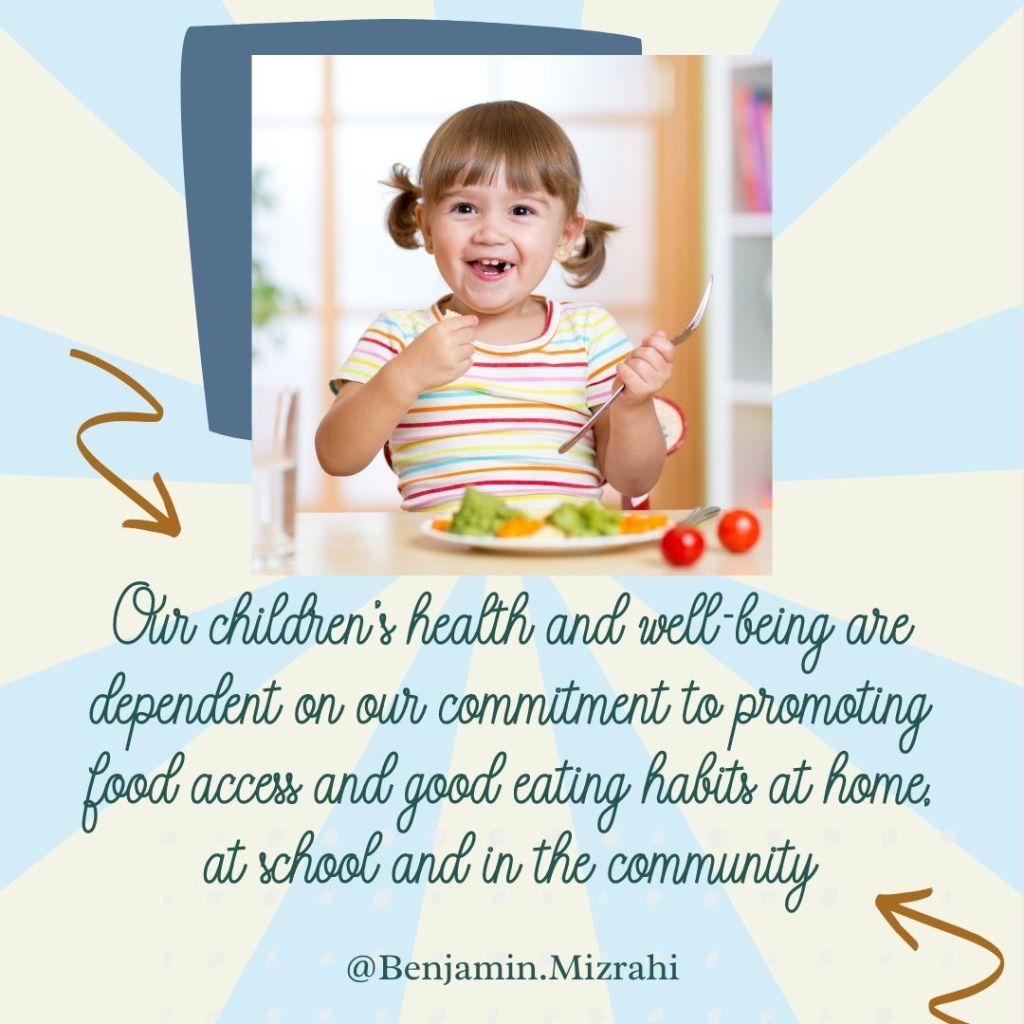
We want the best nutrition for our kids, but our daily pleas to “Eat your vegetables” seem to fall on deaf ears, or worse yet result in a tantrum or other power struggle. Can we really convince our children to make smart food choices and eat healthy without seeming like a wicked witch?
Here’s how to get kids to eat healthy by using these three tips:
Control the cupboard by stocking it with healthy choices. It’s much easier for your kids to make smart snacking decisions when the unhealthy foods are not in the house. Keep your pantry full of your children’s favorite fruits, vegetables, and other wholesome foods right at an eye level and leave the sweet stuff on the store shelves.
Offer options as you plan your meals, letting your kids have some say in what they’ll be eating. Chicken or fish? Peas or carrots?
Avoid the arguments that lead to power struggles over food. However much we beg, bribe, or outright demand, can force our kids to eat. On the contrary, these efforts actually encourage our kids to wage dinnertime battles by rewarding them with attention. Remove that payoff by letting your child know in advance that you won’t respond to his refusal to eat, and that you also won’t be giving him more food until the next scheduled snack or meal – even if it’s breakfast. He won’t starve overnight, but next dinnertime, he will remember the consequence of not eating.
With a little planning and cooperation, your family will be on the Yellow-Brick Road to healthier eating habits and fewer mealtime fights.
We always want what’s best for our kids. However, when dealing with children who are chronically anxious, it’s a bit more challenging. It will be absolutely disheartening to cause them even the teensiest bit of suffering, right?
Here are a few tips for helping our kiddos when they’re anxious:
🧹 HELP THEM CLEAN UP THEIR SPACE.
Rearranging spaces can help keep them occupied and feel productive.
🧍♂🧍♀ TELL THEM TO STAND UP STRAIGHT.
Many of us take this for granted, but posture plays a major role in improving one’s mood and esteem. Simply standing up straight may help your kids feel better about themselves.
🗒 ENCOURAGE THEM TO KEEP A JOURNAL.
This works both for your kids and for you as well. Sometimes, there’s so much going on in our heads that we can’t put them into words. Putting them in writing can help you and your kids gain control over the emotions.
🕯 LIGHT A CANDLE UP.
Just the sight of a candle flame helps us get into a meditative state. What more if the candles we use are scented? Some amazing scents to choose from that can help relax both the body and the mind are lavender, orange, lemon, peppermint, frankincense, and sandalwood. Just remember to keep it out of reach of your little ones and to blow out any candles that may be left unattended.
📵 PUT THE PHONES ASIDE AND CONNECT.
This works for both parents and children. Set your phones aside for a few minutes and TALK. It will help reduce anxiety and serve as a bonding moment as well.
Coach Benjamin Mizrahi. Educator. Learning Specialist. Family Coach. Father. Husband.
As parents, the way we speak to our children is incredibly important. Words can build kids up, and they can just as easily tear them down. Which is why finding positive things to say to your child matters!
In a world were saying “no” is a heck of a lot easier than saying “yes”, we need to be especially careful that we use language which demonstrates to our kids that positivity has a higher value than negativity.
Children imitate what they see and hear. Meaning, they will imitate kindness if kind words are spoken at home.
Show your child you believe in them by using words of encouragement daily. It helps kids feel supported and loved and gives them a sense of empowerment that will stick with them into adulthood.
By making a habit of using positive phrases around your little ones you’ll be building their confidence and self-esteem
Here are the positive phrases to usedaily to help them feel confident and loved.
Outside is a good place for being loud (No Shouting Inside the House!)
Let’s try to breathe through these yucky feelings (Calm Down, Stop Crying, No Whining)
Let’s use kind words, please (Don’t say that, don’t talk like that)
Shoes are for your feet, remember? (Stop throwing your shoes around the house)
Why don’t you ask if you can use it when he is finished or You really want to play with that, don’t you? What could you say to her instead?’ (No fighting!)
It’s windy outside today, let’s check the weather and see if tomorrow is good to take a walk (No, we can’t walk today)
Your toy car will be waiting for you at home when we are all finished with our grocery shopping (No, you can’t bring your toy car)
Let’s play at the park a different day, today we have so many other things we need to get done and I need your help! (No park today)
Remember to walk in the house, please (No running in the house!)
If we eat all the popsicles in one day, there won’t be any left for tomorrow. And if you have too many, your tummy might get sore! Let’s save some for tomorrow. (No more popsicles)
There are a few more things that we need to do before we can watch a show, let’s go do them now and I’ll put on your favorite show right after. (No TV right now)
Are you feeling frustrated when the boxes fall? How can you solve this problem? (Stop crying, they are just boxes)
Coach Benjamin Mizrahi. Educator. Learning Specialist. Family Coach. Father. Husband.
We are ALL just trying to do the best we can with the information we’ve been given. Maybe you didn’t even know what a baby container was until this week. Or maybe you didn’t know placing your baby on the floor was where they would thrive best. Maybe the baby gear industry has led you to believe that containers are the only place your baby is safe. If that resonates with you, I beg you to never feel an ounce of guilt. Because we cannot do better until we know better. If we weren’t given the information to begin with, how can we be expected to know all the things or do all the things? We can’t. This applies to so many areas of being a parent. We all make mistakes. You are the best Mother and Father for your babies. We are all just trying to figure this thing out one day at a time. So, the next time you come across a new piece of information, promise me this: use it to do better tomorrow, but never to guilt yourself for today.
Coach Benjamin Mizrahi. Educator. Learning Specialist. Family Coach. Father. Husband.
A gentle reminder: Not every emotion needs an explanation. It seems fitting after two days of sharing scripts to share this reminder. Words are helpful and if we are consciously engaging with our child and ourselves, scripts can help us understand the framework from which we want to parent and shift our mindset. And yet, words can also be our crutches. Words can be what we use to prevent us from engaging with what is happening in the present moment. Words can keep our anxiety at bay. If we are predominantly left-brained, words and logic are what feels comfortable and safe. We want to understand, rationalize, analyze, and get to the root of our child’s emotions. Naming the emotion. Validating the emotion. Trying to help our child uncover the root of the emotion. All very valuable! But we may miss the opportunity to teach our child another valuable lesson: emotions are not a part of us, we can experience them, notice them, and let them go. While this language is too sophisticated for a toddler, the goal is integration. Integrate the left and the right brain. As parents this means that our presence is more important than any words we share with our child. Empathy is communicated by our presence and body language, not only our words. When your child is experiencing an emotion, pause and notice: How is your breathing? What facial expressions are you communicating? What are your body movements communicating? Worth noting: if we are predominantly right brained and tend to get stuck in our emotions or our child’s emotions, integrating the left-brain or logic and reason is the goal. What about you, are you predominantly left ⬅ or right ➡ brained?
Coach Benjamin Mizrahi. Educator. Learning Specialist. Family Coach. Father. Husband.
The most important relationship to a child is the one they develop with their parent. Children learn about the world around them through a positive parent-child relationship. As they are growing and changing, children look to their parents to determine whether they are safe, secure, and loved. It is also the foundation from which they will build their future relationships.
You can build a positive parent-child relationship by being in the moment with your child, spending quality time together, and creating an environment where they feel comfortable to explore. There is no secret handbook or guaranteed approach to get this relationship right, and you’ll likely find hardships along the way. However, if you keep working on improving your relationship, your child will surely blossom.
Being in the moment is about tuning in and thinking about what’s going on with your child. It shows your child that you care about the things that matter to them, which is the basis for a strong relationship.
Here are some ideas for being in the moment with your child:
Show acceptance, let your child be, and try not to give directions all the time. If your child wants to pretend the building blocks are people, that’s OK. You don’t have to get your child to use them the ‘right’ way.
Notice what your child is doing and comment on or encourage it without judgment.
Listen to your child and try to tune in to your child’s real feelings. For example, if your child is telling you a long story about lots of things that happened during the day, they might really be saying that they like the new teacher or that they’re in a good mood.
Stop and think about what your child’s behavior is telling you.
Part of being in the moment with your child is giving your child opportunities to take the lead.
Coach Benjamin Mizrahi. Educator. Learning Specialist. Family Coach. Father. Husband.
Parenting is an ongoing journey, and parents need to keep enriching and educating themselves as their child grows from an innocent baby into a mature adult.
Life is in a constant flux and many parenting skills or practices from your childhood, or those you may have picked up along the way in dealing with your child, could now be considered outdated or unsuitable for the stage your child is in. For example, fear-based methods of parenting were popular in the past, but nowadays, most experts agree that these methods are ineffective and that getting children to self-regulate is best.
While the basics are similar across different ages, the approach used should be tailored to each individual child to suit his age and stage of development. Stay abreast of current parenting practices and any other knowledge related to parenting and child health.
Do stay on top of things by monitoring what influences your child’s thoughts and/or behaviors. This includes the friends he spends time with, his use of the internet and social media, the type of entertainment or reading materials he enjoys, as well as how he spends his leisure time.
As your child grows and matures, you should be able to gradually give less and less supervision and guidance. Continue to be there for her whenever she needs you but let her have the freedom to approach problems with her own solutions.
The thought of your child growing up and becoming independent too quickly may seem scary. Parenting is never stagnant, nor does it end when your child grows up into an adult.
The most important skill any parent needs is communication. Remember to communicate often with your spouse and your child. This is often the best method to gain feedback on how effective your parenting methods or strategies have been. Nevertheless, don’t ignore problems either, especially if there are long-standing issues that cannot be managed despite your best efforts. This could be due to a child’s developmental issues that may require professional assistance.
Coach Benjamin Mizrahi. Educator. Learning Specialist. Family Coach. Father. Husband.
Wander any playground or mall, and at some point, you are likely to observe a parent coaching her child to take deep breaths in and out to calm herself down or directing her to “use her words” versus hitting, kicking, or grabbing. These are indeed good parenting strategies for helping children learn to manage and express their emotions in healthy ways, a critical but not easy task.
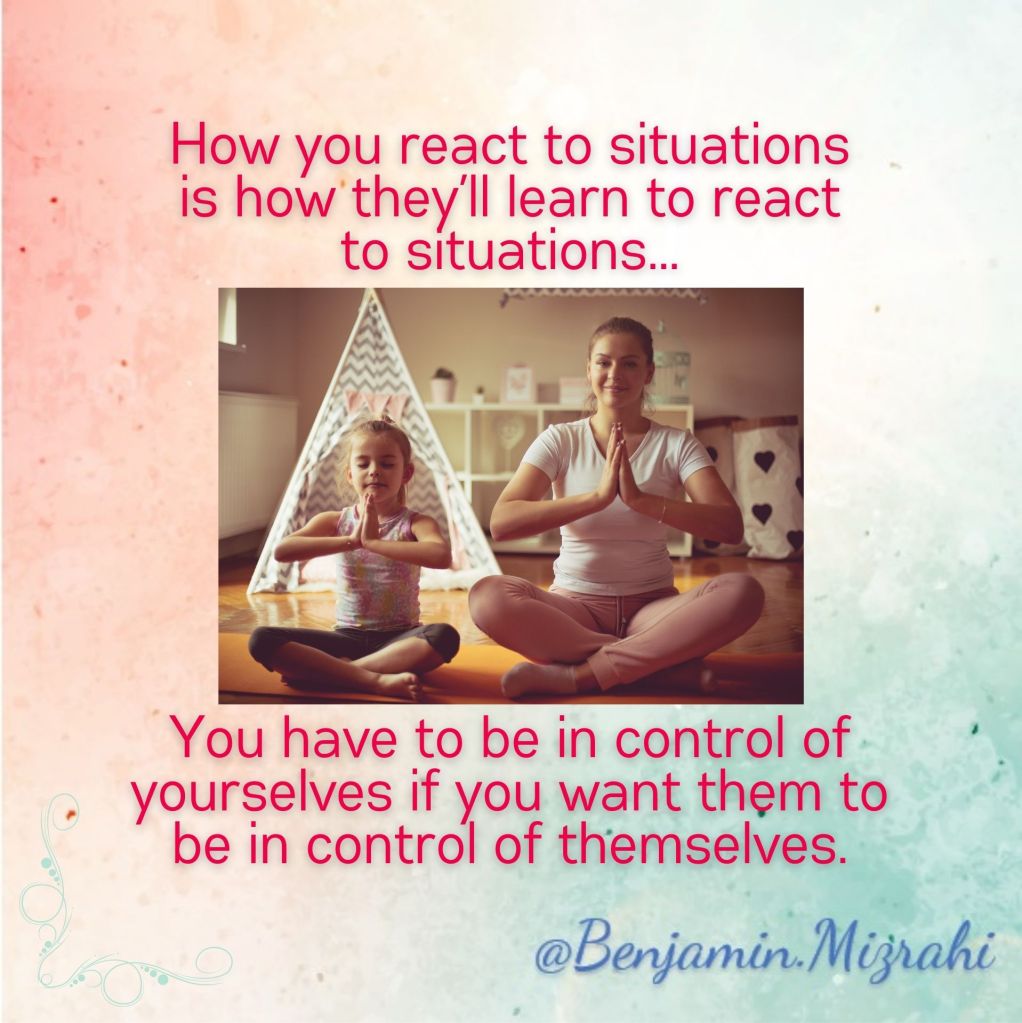
It is important to tune in to and manage our feelings, because how we react in these moments deeply affects our children’s ability for self-regulation, self-control, and overall emotional health far into the future. Research (and real life) shows that when parents react harshly and with emotional intensity, children’s distress tends to escalate and, whatever the problem at hand, it is less likely to get resolved.
Here are some strategies that can help:
👉 Tune in to your feelings.
Tuning in to your feelings allows you to make a conscious decision—instead of a knee-jerk reaction—about how best to respond. In this case, it might mean taking some deep breaths to clear your head, then calmly telling your child that you know she is disappointed, but it’s not possible to always go first and that she will be okay communicating confidence in her ability to cope.
Remaining calm allows you to stay connected with your child rather than increasing her distress by experiencing an emotional break with you; she feels understood, not shamed, which makes her more open to accepting the limit being set; and when you react calmly, it decreases the stress hormone in her own brain, which helps her calm down more quickly.
Staying calm also results in a lot less remorse for having lost control, and many fewer nights going to bed feeling like all you did that day was yell and stress out your kids—a common and painful experience for many parents.
👉 Do the unexpected.
This can reduce the stress and tension of the situation and doing something totally unexpected can also put a stop to the unwanted behavior. This is not coddling or giving in.
If your child is telling you he hates you because you won’t let him have 5 more minutes to play (and he hasn’t finished his game yet! he just needs 5 MORE MINUTES!) and you approach him with a bear hug while saying, “It looks like you need a big mommy hug,” you are letting him know you hear his frustration and empathize with it. You are not giving him five more minutes which would be “coddling” or rescuing him from having to cope with a limit he doesn’t like.
It may surprise you how this can turn the tides doing the opposite of what he expects when he is in a provocative mode. Or don’t respond to his “bait” and just turn on some music and start to do a silly dance, all the way to the dinner table you are trying to transition him to. Simply say, “Join me,” and move along. It may sound hokey, but it can be very effective—and again relieve both his stress and yours.
👉 Give yourself a time-out.
It allows you to remain present even in the face of the negative emotional intensity these situations often arouse. It also serves as a very powerful role-modeling for your child on how to manage strong emotions—exactly what you are trying to teach him. This gets you out of a reactive state and gives you time to think about the meaning of your child’s behavior and what you want him to learn from the experience. It’s much more likely you will come up with a response that sets the limit or guides your child’s behavior while remaining nurturing.
Managing strong negative emotions is surely much easier said than done. But it’s worth the effort, because the payoff is huge, for you and your child.
Coach Benjamin Mizrahi. Educator. Learning Specialist. Family Coach. Father. Husband.
Is your kid feeling extra nervous, extra clingy, next level melting down in new situations or small social gatherings? A friendly neighbor saying hi, going to Grandma’s house, going back to school? Shoot, my girl was even terrified melting down over a new slide she wanted to try but was too nervous to go down. Maybe your child has always been the nervous/shy type, or maybe COVID has brought on a totally new nervous/scared/shy side to your normally outgoing kid. Listen, we all want outgoing, social, brave kids. We’ve seen them laugh and play with kids before, and we KNOW they can do it! But not all kids feel comfortable in social situations right away, especially if it’s been a while since they’ve been in social situations. Sometimes, it takes them a moment to get comfortable – and THAT’S OK.
Real talk: it takes us a while to get comfortable in new/social situations as adults too. So, when your kid is in a new situation, or a social situation, and is clinging to you, or crying or whining, it can be REALLY tempting to push them into the situation. As an adult, we can objectively see: “this IS NO BIG DEAL, we do this all the time! Nothing is even happening; you’re going to love it!!!!!!” But when we pressure them to get in there and play sooner than they’re ready to, they’ll only end up feeling MORE overwhelmed and MORE nervous. They’ll cling to your leg even harder and longer. So instead, to get your kid over the nervous hump, and into confident mode: Let them feel exactly how they feel – without pushing them- and assure them that they have our support. In doing this, we increase their comfort level a million times over. And with that comfort, comes the confidence to get out there and play, to get out there and do the new thing.
Be their safe person. Be their homebase. Validate those feelings and encourage them to trust themselves.
Coach Benjamin Mizrahi. Educator. Learning Specialist. Family Coach. Father. Husband.
When it comes to family life, everyone strives to figure out how the relationship between parents and children can become ideal. Positive parenting techniques work well for raising children with discipline and good moral values and are every parents’ dream. However, it is not an easy feat. And it is important to know that the parent child relationship is a two-way street, in other words, it is a partnership between a parent and their child.
A garden with different flowers becomes beautiful when it blossoms. Similarly, if parents learn how to be a ‘gardener’ and can recognize their child’s personality and nourish it, then their ‘garden’ will become fragrant! This is what positive parenting is all about!
Coach Benjamin Mizrahi. Educator. Learning Specialist. Family Coach. Father. Husband.
We can make a child say thank you, but we can’t make them feel grateful. We can make them share their toys, but we can’t make them choose generosity. We can make them apologize, but we can’t make them be kind.
If we want to support kids in developing gratitude, generosity, and kindness, we need to model thanking fully, giving generously, and responding kindly.
Forcing a kid to share, say thank you, and apologize is directly counterproductive to the development of gratitude, generosity, and kindness; these traits can only exist if chosen freely.
How does it feel to get a “thank you” from someone who has been forced to say it? An apology from someone who doesn’t feel sorry?
Instead of pushing, we can make our presence a place where gratitude, generosity, and kindness can grow.
💧 We can water them by saying things like:
🌱 “Thank you for spending time with me.” and “I’m so happy to have your help”
🌿 “Would you like to borrow my warm scarf?” and “Here, you can use my bucket.”
🌳 “I’m sorry for yelling earlier. I’d like to be more gentle with my words.” and “I’m so sorry I threw that away, I’m hearing how important it was to you.”
Help your child become happier, more confident, and more empathetic by teaching them healthy ways to express their feelings.
Amid worrying about our kids’ academic success, it’s easy to lose sight of their emotional development. But research suggests a child’s emotional intelligence is every bit as important as reading, writing, and ‘arithmetic. Why? Because kids with a high emotional intelligence have mastered the other three Rs: responsibility, resilience, and respect.
Since they’ve developed more coping skills, these kids are more able to control their emotions and behavior when things don’t go their way. This in turn makes them happier, more self-confident, and more respectful of others. Not surprisingly, children with a high EQ (or emotional quotient) also tend to do better in school. They pay attention, easily take in information, stay motivated, and get along with teachers and classmates.
Is this just a matter of inborn temperament? Perhaps in some cases, yes. But research shows emotional intelligence can be taught. Students who have gone through school-based EQ training average 11 percentile points higher on academic test scores. As a parent, you can also teach your kid to handle challenging emotions like anger, sadness, and frustration. From books and toys to family games, here are five creative ways to help your child become an EQ whiz kid.
👉 Play the “What-if” game
During family car rides or as a conversation starter at the dinner table, the “What would you do if…?” game gets kids thinking about ways to respond to different situations. Ask questions that encourage your child to behave with more emotional smarts: “What would you do if you saw someone grab a toy away from your friend? Or if I blamed you for something you didn’t do? Or if your brother hit you for no reason?”
Asking these questions when emotions aren’t running high gives your child a chance to come up with ideas on how to best respond – and for you to offer some ideas of your own. Since you can tailor questions to fit your child’s age, this works for younger and older kids alike.
👉 That’s emo-tainment!
Don’t tell the kids, but books and movies can be more than just entertainment. San Francisco-based childhood social skills teacher Dominique Baudry says that reading books and watching movies with children present ideal opportunities to talk about emotions and behavior. ” When reading together, ask your child, ‘What do you think he’s feeling?’ Talk about a character’s motive and intention. ‘Why do you think he did that?””
Similarly, after watching a movie together, ask your child why a character was angry, frustrated, sad, or excited. These conversations all present an opportunity to expand “emotional literacy,” so that children get used to talking about why people behave the way they do and how they might have responded differently. What’s more, doing this with make-believe characters makes it that much easier for kids to be emotionally fluent when talking about their own emotions – which is the whole idea.
👉 Read it with feeling
Not only can you use stories as a launching pad to discuss feelings, but you can also get books that address emotions directly. One of the best “I’m feeling bad!” books for young kids: When Sophie Gets Angry – Really Really Angry. As happens with many children, Sophie’s anger is too much for her and her family: She rages, kicks, and screams. To find her way out of her overwhelming emotions, Sophie takes time to be alone and calm down, then returns to her family more cheerful and encouraged.
👉 Give everyone a do-over
Admit it: When parents – and kids – get angry enough, they yell or throw tantrums. Angry outbursts make everyone in the family feel terrible and usually solve nothing. It is recommended that all family members should be allowed a chance to have a “do-over.”
Anyone in the family is allowed to say, ‘That came out really mean. I’m going to do a do-over. Here’s what I wanted to say.’ Do-overs allow kids and grownups a way to gain more self-awareness by practicing less hurtful ways of expressing difficult emotions. Allowing for do-overs lets the whole family help one another try again in a kinder, better way. It’s also a very kind way to cut each other some slack.
👉 Work on playing
With less free playtime at and after school, kids today have fewer chances to practice the social skills that are important for learning emotional intelligence and dealing with difficult issues like bullying. Give your child as many opportunities as possible for unstructured, cooperative and imaginative play with siblings and other kids. Building a fort, putting on a play or a variety show or playing ‘restaurant’ or ‘barber shop’ together give kids lots of opportunities to practice communicating their desires and resolving conflicts.
As your child grows older, talk about real-life situations—whether it’s things they’re encountering in their daily life or it’s a problem you’re reading about in the news. Make it an ongoing conversation. Use your child’s mistakes as opportunities to grow better. When they act out because they’re angry or they hurt someone’s feelings, take time to talk about how they can do better in the future. With your ongoing support and guidance, your child can develop the emotional intelligence and mental strength they’ll need to succeed in life.






 EXECUTIVE FUNCTIONS COACHING