The Importance of Chores for Your Kids

As a parent, do you feel strongly about the importance of chores for your kids, or do you think kids should be kids and not worry about responsibilities?   

Well, I would say that most of us feel like kids need opportunities to be kids, but they also need to learn about age-appropriate responsibilities. Here are the 5 Essential Skills Learned Through Chores. 

🔷 Independence 

As parents, it’s our job to teach our children these skills to create independent, autonomous adults. But the key is that we must model correct completion of the chore.  

🔷 Confidence 

Getting a chore done and doing it well can give your child a major sense of accomplishment. 

🔷 Initiative 

Initiative almost always follows confidence. By teaching our kids how to do new things, we are giving them confidence in themselves. That confidence will translate into a willingness to try new things and a whole lot of initiative. 

🔷 Perseverance 

If you want your children to acquire knowledge in life skills, like sweeping, washing dishes, mowing the yard, and laundry, they need to be shown, step by step, the correct technique for completing each task.  Then they need to be given ample opportunities to do it repeatedly! The repeated act of proper task completion teaches our kids persistence. 

🔷 Responsibility 

The only way we can effectively teach our kids how to become responsible is by giving them a task (chore) to complete on their own. If you have taught your kids how to complete specific tasks, but they consistently perform the task incorrectly, show them again.  

After showing them several times, they are responsible for completing the chore correctly. 

Ultimately, this is the only way they will understand the importance of chores, learn to take responsibility for their chores, and grow as a person. 

Coach Benjamin Mizrahi. Educator. Learning Specialist. Family Coach. Father. Husband.   

More articles on EXECUTIVE FUNCTIONS COACHING (mrmizrahi.com)

Accept Your Child’s Emotions

#Repost from https://www.instagram.com/australianpsychologist/
https://www.instagram.com/australianpsychologist/

There isn’t a single piece of research that shows that rejecting, ignoring, dismissing, invalidating, resisting, ridiculing, punishing or attempting to shut down children’s emotions is good for them or for the parent-child relationship. There is, however, decades of research showing just the opposite: that when we accept our children’s feelings and help them organize their emotions by offering our presence, connection, nurturance, understanding, and guidance, they develop into more secure, confident, and socially and academically competent adults who tend to be able to better regulate their emotions and respond with sensitivity to others’ emotions. 

For both kids and adults, having our emotions rejected or dismissed usually leads to the amplification of the intensity of emotion. In kids, “meltdowns” and “tantrums” (emotional dysregulation, stress, and overwhelm) are likely to be more intense and occur for longer when their emotions are rejected rather than accepted. Accepting your child’s emotion and responding with sensitivity, with presence, empathy, and nurturance, can help to soothe and contain your child’s emotion, and help them organize their emotional experience; this process is called ‘coregulation’ and is the foundation required for children to gradually learn to regulate their own emotions. 


‘Oh, but what about when they are engaging in undesirable behavior?’, I hear you say. ‘Should I set limits when they are expressing their emotion in bad behaviors?’ Children can’t effectively or consistently regulate their behavior before they have learnt to effectively regulate their emotion…and let’s be real here, many adults haven’t mastered this skill. Your child is much more likely to be able to regulate their behavior (engage in healthy, adaptive behavior) when they can effectively regulate their emotions, and, for them to be able to regulate their emotions, they need to have their emotions accepted and supported by their caregivers— on this the research is clear. 

Reasons why Listening is Important for Your Child’s Growth


Young children are inquisitive and curious, we all know that. This is because they are blank slates. The world is still an amazing place for them, and they want to know more about it, about everything. 

In these formative years, children are limited in mobility and other sources of communication, as well as gaining information. So, they turn to the easiest way of gaining new information, listening. 

Let us gain in-depth understanding of how listening is essential in the growth ages, years 1-5, of every child. 

1. Listening Improves Concentration and Memory 

Listening is one of the prime senses of our body. Although visual memories are stronger, our body also retains auditory memories or echoic memories. It helps stabilize the mind and improves concentration. 

2. Improves Vocabulary 

As children grow older, their need to speak and communicate grows rapidly. However, this development is strongly rooted in the initial phase of their childhood. During this phase, listening plays an important role in developing their vocabulary and language processing. 

3. Adds Clarity to Communication and Thought 

This allows them to express themselves more clearly and understand what they want. The ability to communicate clearly and understand the reason strengthens the bond between children and parents. 

4.  Builds Confidence 

One aspect of listening is that it builds confidence. While listening seems like an ordinary thing, most of us listen to reply than to understand. 

Conscious listening decreases speech errors or response errors, thus improving confidence levels. Clarity of thought and concise, but perfect communication allows children to speak their mind. 

5. Improves Relationships 

Communication is the foundation for any relationship. Children with good vocabulary can speak openly with their adults. Their ability to understand reason helps parents to understand their children better as well. 

6. Optimal Method for Growth 

The most important factor of listening is that children between ages 2-4 have limited sources of gaining information and since they cannot read, they prefer listening. 

7. Enables Experiential Thinking 

One of the most important aspects of listening is that it triggers experiential learning. 

Audio plays a primary role in the beginning growth in children. Long before visuals start taking effect, audio plays a key role in developing the early experiences of children. 

Listening is a key-factor in children’s growth and empowers children in multiple ways to process information and interact with their surroundings better. 


Coach Benjamin Mizrahi. Educator. Learning Specialist. Family Coach. Father. Husband.   

More articles on www.MrMizrahi.blog 


How to Smooth Transitions and Avoid Meltdowns

Turning off the TV, leaving the playground, giving back the iPad, or ending a play date — any of these may provoke a tantrum. Why? Many children with autism and ADHD have difficulty moving from one task to another, especially when they must stop an enjoyable activity. Behavior intervention strategies can help smooth the transitions. 

  1. Define Expectations 

Clearly identifying your objectives and setting attainable short- and long-term goals are the first steps to any behavior change plan. 

Let’s take the LEGO example. The expectation may be: When the time comes to shift to another activity, my child will comply when he is asked, without resisting, crying, shouting, or throwing things. 

  1. Create a Schedule 

A written or a visual schedule can help your child follow the order of events for a specific time period. But posting a schedule does not automatically mean your child will follow it. Checking off the events in a schedule should be accompanied by positive reinforcement. 

  1. Reinforcement 

Once you have thought of possible reinforcers for your child (you can create a visual depicting the reinforcers for your child to see), try simultaneously presenting the reward as the transition time is occurring, before your child can resist. Besides offering tangible items, positive reinforcement should also include behavior-specific vocal praise. 

If your child already starts to fuss when the announcement is made to start a new activity, don’t promise the reinforcer. It is very important that the engagement in a challenging behavior never results in receiving a pleasurable item or activity. Reinforcers should only follow desired behaviors. As transitions are consistently paired with reinforcement, the new desired behavior can become more of the “norm.” 

  1. Plan 

Prepare in advance to reap the benefits from your intervention plans. Know how you will present the transition, what items or activities will be effective reinforcers to motivate a successful transition, and how you will respond if your child does not go along with the shift in activity. 

  1. Give Choices When Possible 

Offer options to help your child with transitions. You might say, “Do you want me to help you clean up, or do you want to do it by yourself? It is almost time to leave for baseball practice,” â€œWe are ready to finish TV time and have lunch.” It also helps to see things from your child’s perspective. If a game is just about to end, or there are three minutes left on his TV show, be flexible when possible. 

When a parent’s emotion run high, the child’s emotion will, too. Demonstrate the behaviors you want your children to engage in. Urging a child to “Come on, hurry! We are going to be late,” can have a negative effect. Stay calm and steady. 

Coach Benjamin Mizrahi. Educator. Learning Specialist. Family Coach. Father. Husband.   

More articles on www.MrMizrahi.blog 

8 Things to Try Before You Yell

What else would you add?⁣⁣ 
⁣⁣ 
Yelling is something many parents struggle with and wish they did less of. Why do we yell? Here are a few possible reasons:⁣⁣ 
⁣⁣ 
👉Old patterns⁣⁣ 
⁣⁣ 
👉Last resort⁣⁣ 
⁣⁣ 
👉Exhaustion⁣⁣ 
⁣⁣ 
👉Overwhelmed⁣⁣ 
⁣⁣ 
👉Unprocessed emotions⁣⁣ 
⁣⁣ 
If we are prone to yelling and our child is not responding, it’s possible they’ve developed a defense against it in order to protect themselves. If there is no imminent danger, before you yell pause & notice what you’re experiencing.⁣⁣ 
⁣⁣ 
Pausing may look like closing your eyes, taking an exaggerated deep breath (exhalation being longer than the inhalation), or walking away.  
 
“I see the drawing on the wall and I’m experiencing some big feelings, I need a break. I will be right back.”⁣⁣ 
⁣⁣ 
Then notice what you’re experiencing. ⁣⁣ 
⁣⁣ 
If you’re overwhelmed because your child has destroyed the room – that makes sense.⁣⁣ 
⁣⁣ 
If you’re angry because your children keep fighting – that makes sense.⁣⁣ 
⁣⁣ 
As we make sense of our own experiences we can return to our child and ask a question rather than yell. Or we may reflect on how we would have liked to have been approached when we were little in a similar situation.⁣⁣ 
⁣⁣ 
Remember to care for yourselves, even if it means three minutes of deep breathing in the morning while you sit alone in the bathroom!⁣⁣ 

Coach Benjamin Mizrahi. Educator. Learning Specialist. Family Coach. Father. Husband.   

More articles on www.MrMizrahi.blog  

Build Your Child’s Confidence

Confidence is one of the greatest gifts a parent can give their child. As such, parenting has a clear impact on how children see themselves and build confidence.  
 
When a child encounters hardship, parents should point out how enduring these challenges will increase his resilience. It’s important to remind your child that every road to success is filled with setbacks.  

Praising your child is one of the ways by which his self-confidence is developed. However, overpraising him may not be good as it might lead either to an inflated view of one’s own capabilities or, equally possible, could lead to feelings of anxiety and inferiority. A child knows when the way he is being described does not reflect reality. It is a given fact that those with grandiose views of themselves, with high self-esteem that borders on narcissism, tend to be more aggressive when their egos are threatened.  
 
The most important way to boost your child’s confidence and self-esteem is to honor his feelings. If a child does not get accurate feedback and that he only gets positive feedback, then, he can never improve in an area of performance. Your child must get honest feedback which is straightforward and allows for improvement where necessary. 
 
Children need to live with people they love and who love them, people who have realistic expectations of them. This is what will boost a child’s self-esteem. 


Coach Benjamin Mizrahi. Educator. Learning Specialist. Family Coach. Father. Husband.   

More articles on www.MrMizrahi.blog  

Why Kids Hit and What to Do About It?

We admit, it’s hard to see past a child’s behavior, especially when it comes to hitting. 
 
When we are physically hit, it can trigger wounds from our past that remind us of unmet needs we may have had as children. We may not have gotten hit, but the physical force can make our bodies travel back into time to unconsciously remember painful memories. 
 
A FEW IMPORTANT THINGS TO REMEMBER 
-Hitting is a developmental expectation for kids 1-5. 
-When a child hits, it means they are requiring your attention. 
-Hitting is not a personal attack on you. 
-You’re still a great parent if your child hits. 
 
THE KEY TO STOPPING HITTING 
-Be very consistent and predictable with how you respond. 
 
VALIDATE THEIR EMOTIONS OR THE NEED WE SEE 
“I see your body has a lot of wiggles it wants to express.” 
 
TEACH THEM WHAT TO DO INSTEAD 
“Our hands are not for hitting. We use gentle hands when we touch people’s faces. Here, show me gentle hands, please.” 
 
PRAISE THE GOOD 
“You did it! You just showed me gentle hands!” 
 
 
There are so many ways to support our children during their hitting moments. We hope these ideas help you. 


Coach Benjamin Mizrahi. Educator. Learning Specialist. Family Coach. Father. Husband.   

More articles on EXECUTIVE FUNCTIONS COACHING (mrmizrahi.com)

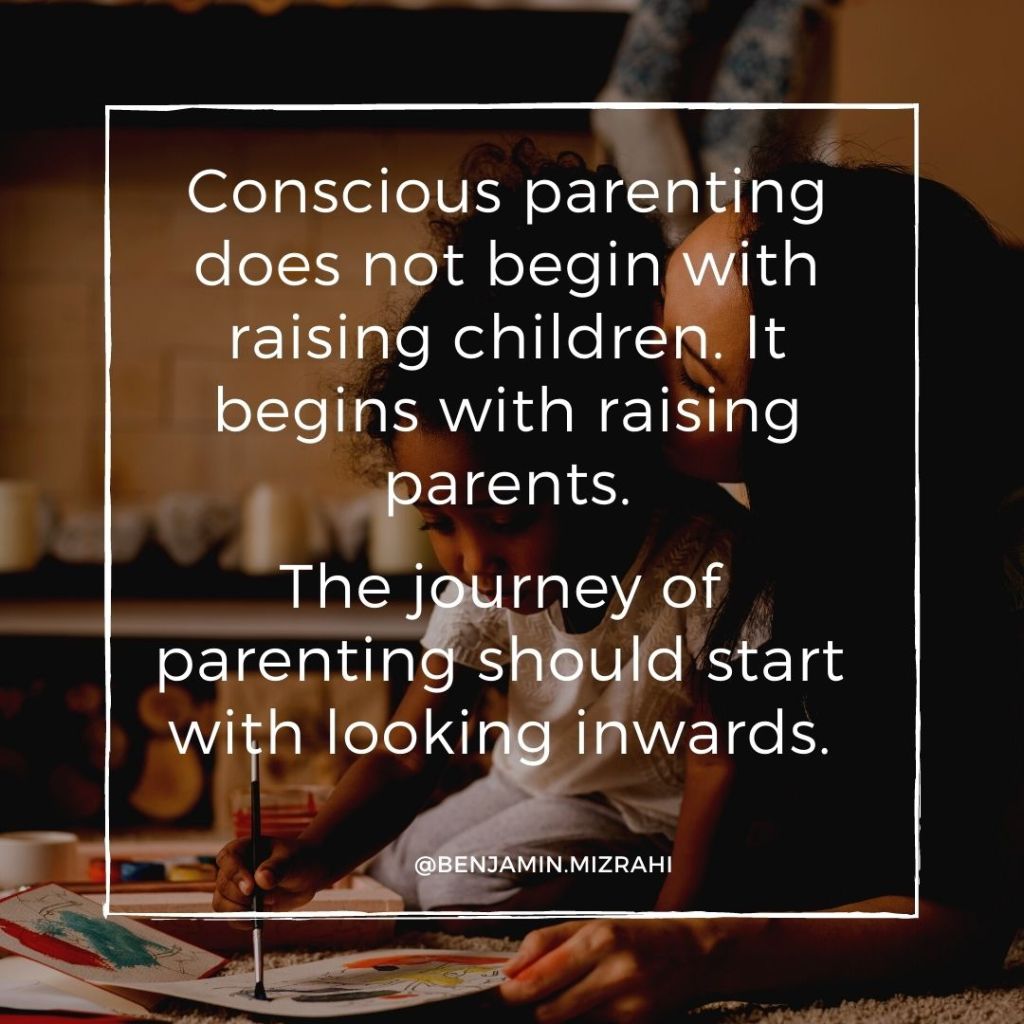
Conscious Parenting

I hear from parents every day trying to break old patterns from their childhood and parent more consciously. If you are struggling to remove yourself from the ways you were parented and the negative cycles you’d prefer to leave behind, I want to encourage you. The only parent you are destined to become is the one that you decide to be. 
 
Your past doesn’t get to choose your legacy. 
 
Committing to breaking cycles from our childhood and parenting consciously can lead to imposter syndrome bringing self-doubt into the mix, “Am I doing this all wrong?” No one is fully conscious all the time. Making unconscious decisions and falling back into old habits is natural. Parenting is the best self-development course you will ever take. 

Coach Benjamin Mizrahi. Educator. Learning Specialist. Family Coach. Father. Husband.   

More articles on www.MrMizrahi.blog  

6 Ways to Show Faith in Your Child

Positive Things to Say to Kids

Words are a powerful thing. They can tear someone down. They can build someone up. And for children, hearing words of affirmation can literally affect their overall development and perception of who they are and who they will be. Whatever parenting style you follow, using positive words are much more likely to result in a positive outcome. Read on below for just a few things you can say to your little one today! And share this with a friend who might want to see it too! 
– 
I believe in you. 
You are important. 
What an amazing listener you are! 
You are such a kind person. 
I couldn’t have done this without you. 
I trust you. 
You are very brave. 
I love how you can make me laugh! 
I am impressed at how responsible you are. 
You are loved. 

Coach Benjamin Mizrahi. Educator. Learning Specialist. Family Coach. Father. Husband.   

More articles on www.MrMizrahi.blog  

How to Support Your Child with Learning Disabilities

Studies show that family involvement plays a big role in getting kids ready to enter school, promoting their school success and preparing them for university. 

Of course, as a parent, discovering that your child has a learning disability can bring on a mix of emotions, from fear that he or she will be labelled as lazy or slow to feelings of guilt or despair. 

If this sounds familiar, here are some tips for supporting your child’s learning. 

1. Learn as much as possible about your child’s disability 

Parents can benefit from conducting their own online search to learning as much as they can about their child’s reading, learning or behavioral disability. 

If parents become familiar with local organizations online or in person, they can participate in workshops, information sessions and support groups. 

If you’re not sure where to begin, try signing up to relevant websites to receive newsletters and joining local groups and parent groups, which can be a wealth of knowledge and connect you to further community services and help. 

2. Collaborate with teachers 

Another thing that can be beneficial is getting to know your child’s teachers before the school year begins and then communicating with them throughout the school year. You can write an introductory letter to introduce yourself and your child. This establishes with the new teacher that you’re an active parent and that you care. 

Introducing yourself creates the opportunity to detail what strategies have worked well with your child so far and get across that you look forward to being involved in your child’s education. 

Be sure to provide all your child’s medical and academic records, as that’s the ‘go-to’ place for learning support specialists and it is imperative that they can read about your child and the diagnosis. 

Let your child be as active as possible by joining the school’s Facebook page, reading the school’s newsletters, attending parent-teacher interviews and participating in any school or community events. 

3. Find out how you can help 

It’s also a good idea to talk to your child’s teachers about what he or she is learning and how you can support their learning at home. 

If there are fundamental or foundational skills your child needs to learn, meet with the class teacher or learning support team from school and learn how to scaffold that learning for your child. 

Many times, learning moves fast at school, and whilst teachers try hard to differentiate a child’s learning at their level, it can only help if parents are prepared to learn what to do and help at home. What greater gift would there be than to work with your child and give them this time? 

4. Provide opportunities for your child to use his or her strengths 

Children with learning disabilities can suffer from low self-esteem, so one way to combat this is to help them focus on and develop their natural strengths and abilities. 

All children have different skills and things they are good at. Some may be good at running or swimming, while others are good at reading or listening; but they should all be allowed to feel good about themselves and their different talents, strengths and skills. 

Try to work together with your child to figure out what they feel good about doing, whether it’s sports, singing, painting or photography, and then provide more opportunities for them to develop these talents, as this can help them build confidence in other areas too. 

 
Coach Benjamin Mizrahi. Educator. Learning Specialist. Family Coach. Father. Husband.   

More articles on EXECUTIVE FUNCTIONS COACHING (mrmizrahi.com)

Ideas to Help Improve Executive Functioning in Kids

If a child has Executive Functioning Disorder or delays, it does not mean that all the skills and tasks are negatively impacted. A child may be delayed in one skill or all skills. 

Since there are many other diagnoses associated with EF skills, such as, ADD, ADHD, ASD, and Traumatic Brain Injury, many tend to look at the larger diagnosis and not look through the EF lens. This can lead to missed opportunities to assist a child with gaining independence and confidence. Often a child may be called “lazy”, when in fact they have EF difficulties and are unable to plan out how to do something. 

Here are some great tools to help a child that may be experiencing EF difficulties: 

1. Rationale: When a child learns new skills, provide the rationale behind them or things like planning for the task might feel like a waste of time. 

2. Outline steps: Support the child by defining the steps involved in tasks ahead of time to make a task less daunting and more achievable. 

3. Use aids: Use tools like timers, computers, iPad, or watches with alarms. 

4. Visuals: Prepare visual schedules and review them several times a day. 

5. Provide 2 types of information: Provide the child with written (or visual) instructions as well as oral instructions. 

6. Create checklists and “to do” lists, estimating how long tasks will take. Use checklists for getting through assignments. For example, a student’s checklist could include items such as: get out pencil and paper; put name on paper; put due date on paper; read directions. 

7. Use calendars to keep track of long-term assignments, due dates, chores, and activities. 

8. Improve working environment: Assist the child to organize their workspace and minimize clutter and distractions. 

9. Establish routines to try to consolidate skills and memory of what needs to be done. 

10. Cut and paste projects requiring multiple steps in which they must complete tasks in a sequential manner. 

11. Mind mapping to assist the child to get ideas down on paper strategically. 

12. Games: Planning and problem-solving games such as puzzles or games like ‘Go Getter’ (River & Road game). 

13. Lotus diagrams: Use lotus diagrams with the child to help with structuring thoughts on paper whilst creating clear expectations as to how much to write. 

14. Block building: Get the child to copy block designs from a picture or a 3D model. 

15. Drawing: Draw a picture as a model. Then draw an incomplete version of the same picture and ask the child to finish the picture to make it look like the model. 

16. Practice goal setting with the child (e.g., Help the child to set attainable goals that are well-defined). Break goals down into smaller steps and talk about alternative approaches with the child. 

17. Recall games that require the child to recall information such as Memory: “I went to the shops and bought a…” 

18. Multi-tasking: Practice doing several activities at once (it may be helpful to number the activities) to encourage the child to learn to shift from one activity to another. 

Coach Benjamin Mizrahi. Educator. Learning Specialist. Family Coach. Father. Husband.   

More articles on www.MrMizrahi.blog 

Praise Is Important for Children with ADHD

Praise nurtures your child’s confidence and sense of self. By using praise, you’re showing your child how to think and talk positively about themselves. You’re helping your child learn how to recognize when they do well and feel proud of themselves. 

Giving your child words of praise is like offering him a ticket out of the fear and self-doubt that plague him. 

The key to effective praise, the kind that is transformative rather than simply pleasant — is placement. If you applaud everything your child does, your praise sounds phony and loses its power. If, however, you withhold acclaim for only those occasional moments, you may lose the chance to draw out more from a child than he knew he had in him. 

And what if your child does little to deserve praise? Help him to succeed, to go beyond himself. Praise is especially important for children who have ADHD because they typically get so little of it. They undergo testing and are expected to feel grateful for constructive criticism. 

Children with ADHD carry buried treasures and hidden talents that must be excavated to be developed. Praise is one of the best pickaxes in this important mining expedition. 

A reward is a consequence of good behavior. It’s a way of saying ‘Well done’ after your child has done something good or behaved well. It could be a treat, a surprise or an extra privilege. For example, as a reward for keeping their room tidy, you might let your child choose what’s for dinner. So, when you praise or encourage your child’s behavior and then reward it, the behavior is more likely to happen again. 

Coach Benjamin Mizrahi. Educator. Learning Specialist. Family Coach. Father. Husband.   

More articles on EXECUTIVE FUNCTIONS COACHING (mrmizrahi.com)